

Growing wealth is only part of the picture. To understand what a wealth manager does, look at how investment decisions connect with retirement, tax, estate, insurance and risk planning, as well as business succession and transferring wealth to family. The aim is to bring these decisions into one financial plan instead of treating each in isolation.
It’s natural to think first about portfolios and returns. But a business sale, a change in family circumstances or plans to pass on assets can also affect your financial needs. This article explains how wealth management works in Singapore, how a wealth manager’s role compares with that of a financial consultant or financial planner, and when coordinated planning may help. It also explains why succession and wealth transfer deserve attention early, rather than only when a major transition is near.
Key Takeaways
- See how investment choices, including i12 investments, fit into a wider plan for building and protecting wealth.
- Understand how retirement, tax, estate, insurance and risk considerations can shape financial decisions in Singapore.
- Compare the broader coordination role of a wealth manager with the work of a financial consultant or financial planner.
- Explore why business succession and wealth transfer planning matter when ownership, income or family responsibilities change.
What Is Wealth Management?
Wealth management connects investment decisions with financial planning based on your goals. In Singapore, this can mean considering your investment portfolio, time horizon, risk tolerance and financial priorities together.
Investment Strategies and Portfolio Management
An investment strategy sets out how a portfolio is built, managed and adjusted to support your goals. Investment management puts that strategy into practice. Rebalancing adjusts the portfolio toward its intended mix after market changes or shifts in your needs.
For example, an investor’s portfolio might include shares and bonds alongside alternative investments, such as private-market funds or property-related holdings. The right mix depends on the investor’s goals, risk tolerance and access to each investment. Consider how any proposed investment fits your overall plan, rather than judging it on its own.
Wealth Management Services
A wealth manager may coordinate investment advice and portfolio management with financial planning, including retirement, tax, estate, insurance and risk planning. This matters because a decision in one area can affect another. For instance, an investment choice may influence how you plan to draw income in retirement.
Ask what the service includes and how recommendations relate to your goals. Regular reviews help you assess whether your portfolio and financial plan still fit your circumstances.
Requirements, Regulation, and Qualifications
Requirements, regulation and qualifications can help you assess a wealth manager’s suitability. Wealth management firms in Singapore serving high-net-worth clients commonly require minimum investments in the millions of Singapore dollars. Requirements vary by service model and account or portfolio management. The title “wealth manager” alone does not establish a particular qualification or the regulatory status of the firm or activity.
When evaluating a wealth manager, compare relevant credentials, experience, services, fees and communication expectations. Ask how recommendations are tailored and how the professional reviews your goals and risk tolerance. The Institute of Banking & Finance Singapore recognises credentials held by financial professionals. The Certified Financial Planner certification is globally recognised for financial-planning expertise. Consider these credentials alongside the firm’s services and approach.
Tax, estate, retirement, insurance and risk planning
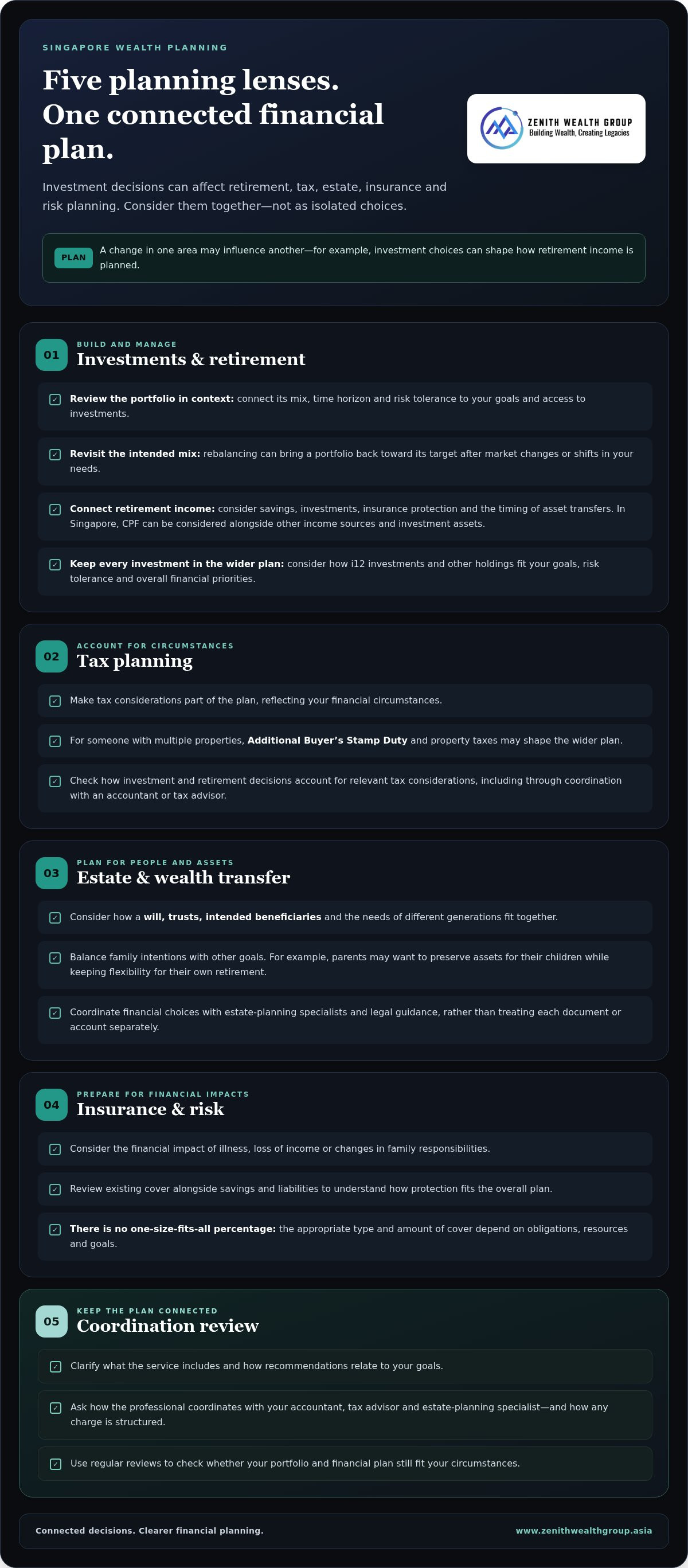
A wealth manager connects decisions that can affect the same financial goal. Retirement income, for example, depends on savings, investments, insurance protection and the timing of asset transfers. Coordinating these areas helps clarify how a change in one may affect the others.
In Singapore, retirement planning can take CPF into account alongside other income sources and investment assets. Tax planning also needs to reflect your financial circumstances. For someone with multiple properties, Additional Buyer’s Stamp Duty and property taxes may shape the wider plan. A wealth manager can coordinate with accountants and tax advisors so investment and retirement decisions account for relevant tax considerations.
Estate planning looks beyond current income to how assets may be managed and transferred. A plan can consider a will, trusts, intended beneficiaries and the needs of different generations. For example, parents may want to preserve assets for their children while keeping enough flexibility for their own retirement. Wealth managers can coordinate with estate-planning specialists to align financial choices with legal guidance, rather than treating each document or account separately.
Insurance and risk planning consider the financial impact of events such as illness, loss of income or changes in family responsibilities. Reviewing existing cover alongside savings and liabilities can show how protection fits into the overall plan. The appropriate amount and type of cover depend on a person’s obligations, resources and goals, not a one-size-fits-all percentage. A financial consultant or financial planner can explain how recommendations fit the wider picture.
Ask how the professional coordinates with your accountant, tax advisor and estate-planning specialist, and how any charge is structured. If you’re bringing these decisions together, discuss your planning priorities as a starting point.
Wealth managers compared with financial planners
To understand what a wealth manager does, compare the scope of work rather than relying on a job title. Wealth management combines investment management with broader financial planning. Asset management focuses mainly on investments, while a financial planner may build a plan around goals such as retirement income, education costs or debt. These roles can overlap, but their responsibilities depend on the services provided.
For affluent clients, a holistic plan may connect complex assets, family responsibilities and succession decisions. A business owner preparing to sell, for example, may need to consider how proceeds could support retirement, how investments should be managed and how wealth could pass to family. Bringing these questions together shows how a business transition may affect personal finances and future income.
The question of what a wealth manager does becomes clearer when you ask how the professional coordinates your financial plan. A financial planner may also help with personal goals, while wealth management can involve coordinating investments with other financial needs. Wealth managers may serve fewer clients than financial planners because clients can have more needs and require more attention. The title alone doesn’t define the service.
Focus on the actual work. Ask whether the professional considers your income, assets, goals and risk tolerance together, and how they review progress. Clarify who handles each part of the plan and how investment choices connect with retirement or succession priorities. A family with investments and a privately owned business, for instance, may need help considering both personal finances and a future ownership transition. If you only need portfolio management, a narrower service may be more suitable.
Business succession and wealth transfer
A business sale can reshape both wealth and income. The owner may receive a large influx of funds as business income falls, creating linked investment and retirement decisions. A wealth manager can connect succession planning with the owner’s personal financial plan. Planning might consider how sale proceeds support future income, how assets are invested and what wealth the owner hopes to transfer.
Start by clarifying the transition: will ownership pass to family, a successor or a buyer? Each option affects the timing and form of the owner’s financial decisions. A family handover, for instance, may involve balancing the next generation’s role with the current owner’s financial needs. A sale may shift wealth from a concentrated business interest into investment assets under management.
Discuss tax planning before a transfer or sale, not as an afterthought. A wealth manager can coordinate with accountants and other relevant professionals to consider how a transaction fits the owner’s financial picture. This connects potential proceeds with retirement income, insurance needs, estate planning and legacy goals, rather than treating each decision separately.
Wealth transfer planning also considers how assets should support family members across generations. Parents may want to fund their children’s education while preserving resources for their own retirement. A financial planner or certified financial planner can help frame these priorities within a wider plan. A practical first step is to map the business, personal assets, expected income changes, intended beneficiaries and family priorities, then identify decisions that need professional coordination.
Plan the transition while you have time to compare options and align business and personal goals. Discuss your business succession planning and wealth transfer priorities.
Zenith Wealth: Retirement Planning
Zenith Wealth can help connect retirement planning with the financial decisions around it. Turn to the team when you’re reviewing how your savings, investments and future income fit together, or when a change in family responsibilities shifts your priorities.
Planning may also include education funding, wealth protection and legacy planning. For example, parents balancing future education costs with retirement goals can consider both in a broader financial plan. Those preparing to pass wealth to family can discuss legacy priorities alongside their long-term plans.
Start with the goals you want your plan to support and the decisions you’re weighing. Contact Zenith Wealth to discuss your planning priorities.
Make your next financial decision with intention
Your next move doesn’t need to resolve every financial question at once. Start by identifying the decision most likely to shape your plans: a change in work, family support or what you want your wealth to make possible. A clear priority gives your conversation with a financial planner a useful starting point.
Knowing what a wealth manager does can help you decide whether you need coordinated guidance or focused help with one decision. Zenith Wealth offers Retirement Planning, Education Funding and Wealth Protection. These offerings can support planning as your responsibilities and priorities evolve. Revisit your goals when circumstances change, so your next choices still reflect what matters to you.
Bring your priorities, questions and current plans into the conversation. Contact Zenith Wealth to discuss your plans and the decisions ahead. Take the next step at a pace that feels right, with a clearer sense of where you want to go.
Frequently Asked Questions
How does a wealth manager create a financial plan?
A wealth manager starts by mapping your goals, income, assets, debts and financial responsibilities. They identify priorities and connect them to a strategy for saving, investing and protecting wealth. For example, someone changing careers may need to balance an income gap with ongoing household costs. Revisit the plan as circumstances change so recommendations continue to reflect current priorities.
How do wealth managers invest and manage portfolios?
Wealth managers select and monitor investments based on a client’s objectives, time horizon and risk tolerance. They may review how each account supports a different need. For example, money needed for near-term tuition costs may call for a different approach from assets intended for long-term growth. Ask how the manager explains investment choices and responds to changes in market conditions.
What is the difference between a wealth manager, financial consultant, and private banker?
The main distinction is usually the scope of work, although titles can vary between firms. A wealth manager typically coordinates investment decisions with wider financial needs. A financial planner focuses on building a plan around goals such as retirement or education funding. A private banker commonly provides banking services through a relationship-focused role. Compare the actual services and responsibilities, not the title alone.
Who needs a wealth manager and what assets are typically required?
There’s no single asset threshold that applies across Singapore. Firms serving high-net-worth clients commonly set minimum investments in the millions of Singapore dollars, while wealth management can also suit people seeking to grow savings or begin investing. Consider whether your finances involve connected goals such as business assets, family support and retirement income. The firm’s service model determines its minimum requirement.
What risks and conflicts of interest should clients watch for?
Pay attention to how a professional is compensated and whether recommendations can generate commissions. Wealth managers may charge fees, receive commissions from investments they sell or combine these arrangements. Ask what you pay for, whether investment or product costs are separate, and how recommendations are assessed against your goals. Clear explanations help you understand incentives before deciding.
How does wealth management handle tax, retirement, and estate planning in Singapore?
In Singapore, a coordinated plan can consider CPF alongside other retirement resources, while tax planning reflects your circumstances. For property owners with multiple homes, Additional Buyer’s Stamp Duty and property taxes may affect the wider financial picture. Estate planning can address how assets are managed and transferred, with accountants, tax advisors and estate-planning specialists contributing their expertise.


