

The agreement alone doesn’t fund a share purchase. Using insurance to fund a buy-sell agreement means arranging life insurance so a payout can provide money to buy a deceased owner’s shares from their estate. The agreement sets out how the ownership interest will be handled and the terms of the buyout.
The details depend on who buys the shares. In a cross-purchase arrangement, the remaining owners buy the deceased owner’s interest. In an entity-purchase arrangement, the business buys it. Policy ownership and beneficiaries should match the chosen approach, so the proceeds reach the buyer responsible for completing the purchase.
This guide explains what a buy-sell agreement does, how insurance proceeds can fund a share purchase, and what to consider when setting up the arrangement. It also covers how to value the shares and address any difference between the insurance payout and the agreed purchase price.
Key Takeaways
- A buy-sell agreement sets out what happens to an owner’s interest when a specified event triggers a buyout.
- Compare cross-purchase and entity-purchase arrangements to understand who owns the policies and who receives the insurance proceeds.
- Align the insurance coverage with the business interest’s value, and define how any shortfall or surplus will be handled.
- Consider business succession alongside wealth protection and legacy planning, including the role of i12 investments in that broader picture.
What is a Buy-Sell Agreement?
A buy-sell agreement sets out what happens to an owner’s share if they die or leave the business. It can name the buyer, establish purchase terms, and specify whether insurance will fund the transfer.
Cross-Purchase Agreement Structure
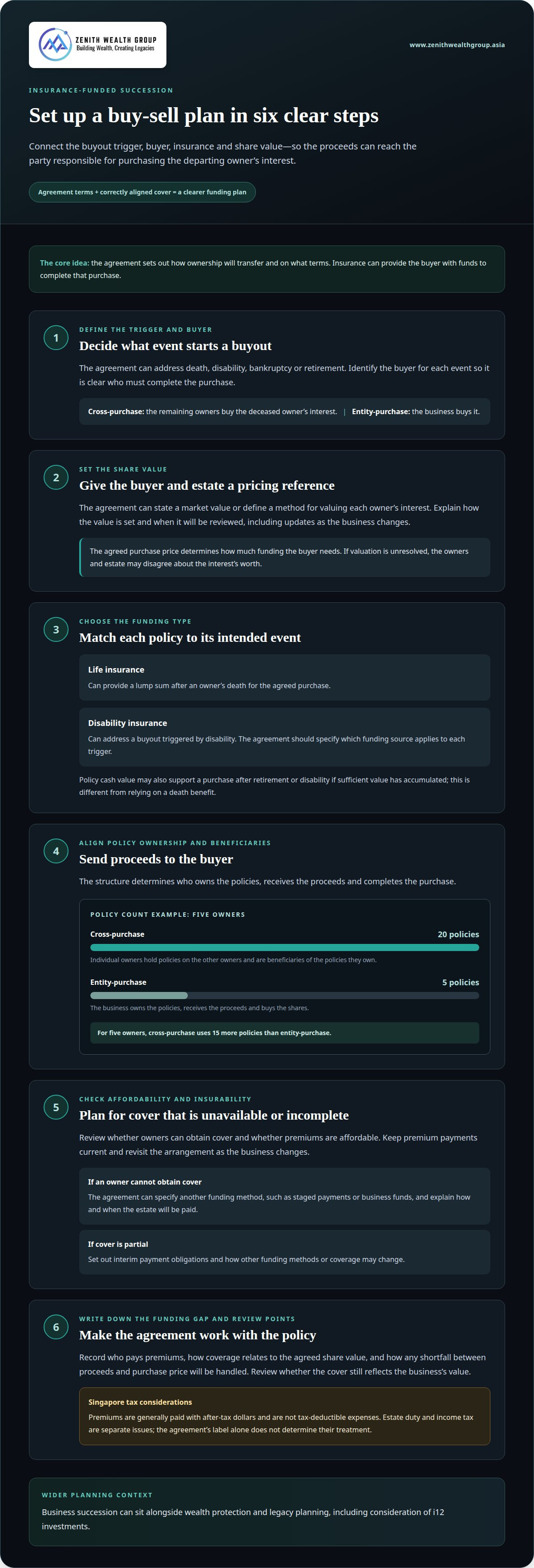
In a cross-purchase plan, each co-owner buys life insurance policies on the other owners and is beneficiary of the policies they own. If an owner dies, the surviving owners use proceeds to purchase the deceased owner’s ownership interest from the estate. The policy count is owners multiplied by one less than the number of owners. For five owners, that means 20 policies.
The structure determines who receives the funds and completes the purchase. A buy-sell agreement should identify possible triggers, such as death, disability, bankruptcy, or retirement. It can also set a price and payment terms, helping owners plan for a transition instead of leaving the ownership interest unresolved.
Comparing Cross-Purchase and Entity-Purchase Plans
In an entity-purchase plan, the business owns policies on its owners, receives the proceeds, and buys the deceased owner’s shares. An entity arrangement for five owners requires five policies. A cross-purchase arrangement for five owners requires 20, or 15 more policies.
The choice affects policy ownership, beneficiaries, and administration. Cross-purchase plans place policies and proceeds with individual owners, while entity-purchase plans place them with the business. A wait-and-see agreement can combine both methods. Each structure affects how the purchase is funded and who holds the shares afterward.
Insurance can fund a buy-sell agreement through life or disability cover. In Singapore, premiums and payouts raise separate tax questions. Consider who owns the policy, pays the premiums, receives the proceeds, and uses the payout. Estate duty and income tax are distinct issues, and the agreement’s label alone does not determine their treatment.
Set out policy ownership, beneficiaries, and premium responsibilities in the purchase agreement. For a cross-purchase plan, identify which owner holds each policy and which co-owner receives the benefit. For an entity-purchase plan, name the business as policy owner and beneficiary. Specify who pays premiums, how coverage relates to the agreed share value, and how any shortfall between proceeds and purchase price will be handled.
Funding a buy-sell agreement with life insurance
Life insurance can provide a lump sum when an owner dies, giving the named buyer funds for the agreed purchase. The funding plan should also address disability, retirement, and owners who cannot obtain cover.
Life and Disability Insurance Funding
A buy-sell agreement can use life or disability insurance to provide funds after a covered event. Life cover can fund a purchase after death, while disability cover can address a buyout triggered by disability. Connect each policy to its intended purpose. Otherwise, an event could occur without funding in place for the departing owner’s interest.
Consider the event, buyer, and policy proceeds together. A policy’s cash value may also support a purchase after retirement or disability if sufficient value has accumulated. This differs from relying on a death benefit, so the agreement should state which funding source applies to each trigger.
Advantages of Life Insurance Funding
When a death triggers a purchase, insurance can provide a lump sum instead of requiring surviving owners to find the full amount immediately. This can help preserve the business’s operating cash while the remaining owners complete the transaction. In a redemption structure, the proceeds can go to the business to fund its purchase.
There are trade-offs. Premiums are generally paid with after-tax dollars and are not tax-deductible expenses. Coverage may also stop matching the value of the business interest as the company changes. Review the coverage amount and premium payments as part of maintaining the arrangement.
Funding When a Shareholder Is Uninsurable
If a shareholder cannot obtain cover, insurance alone will not provide the expected funds for that owner’s interest. The agreement can specify another funding method, such as staged payments or business funds, and explain how the estate will be paid. The terms should make clear who bears any shortfall and when payment is due.
Partial cover is another possibility when full coverage is unaffordable. The agreement can address interim payment obligations and how coverage or other funding methods may change. This matters because policy proceeds may fall short of the purchase price.
Setting Up Insurance-Funded Agreements
In Singapore, start by identifying the buyout triggers and the buyer for each event. Then choose a method to value the interest, decide whether life or disability cover fits, and align policy ownership and beneficiaries with the chosen structure. Record who pays premiums and how any difference between proceeds and the purchase price will be handled.
Review affordability and insurability before relying on a policy. Keep premium payments current and revisit whether coverage still reflects the business’s value. These steps help expose risks such as insufficient proceeds, missed premiums, or reliance on cover that an owner cannot obtain. For help connecting succession planning with broader financial decisions, discuss your planning needs.
How insurance proceeds fund a deceased owner's shares
After an owner dies, the agreement directs the insurance proceeds to the buyer. The buyer then pays the estate for the ownership interest under the agreed terms.
Valuing Ownership Shares
A buy-sell agreement can establish a market value or a method for valuing each owner’s interest. This gives the estate and remaining owners a reference point for the purchase. Explain how the value is set and when it is reviewed. For example, owners can specify a valuation method and update it as the business changes.
A clear valuation method matters because the agreed purchase price determines how much funding the buyer needs. If the agreement leaves valuation unresolved, the estate and owners may disagree about the interest’s worth when a transfer is due.
Matching Coverage to Share Value
Life insurance coverage should generally match the value of the insured co-owner’s business interest. This links the expected proceeds to the purchase obligation. If the business value changes, coverage may no longer match the amount needed, so owners should review the valuation and policies together.
The agreement should also explain how to handle a shortfall or surplus. For example, it can state whether the buyer will pay any remaining balance through another funding method. Premium payments also need monitoring to keep the policy in force.
Continuing the Business After a Death
Insurance proceeds can provide liquidity when an owner dies, helping the business or remaining owners complete the purchase without relying only on operating cash. The agreement can pair this funding with a management transition plan, so responsibilities and ownership changes follow clear terms.
The estate receives cash for the deceased owner’s interest, while the buyer receives the shares. This can support business continuity and give the family money instead of an ownership stake that may be difficult to sell.
Keeping Ownership Within the Business
A buy-sell agreement can require the deceased owner’s interest to be sold to the business or remaining owners. This can prevent the estate from transferring shares to an outside buyer. Insurance proceeds help fund the purchase, linking the ownership restriction to a practical source of payment.
Owners should align the transfer terms, valuation method, and insurance coverage. If proceeds do not meet the agreed value, the agreement should explain how the estate will receive the difference. These terms affect both the family’s payment and who controls the business after the transfer.
How life insurance funds a buy-sell agreement
Using insurance to fund a buy-sell agreement connects a policy payout to the purchase obligation. The policy’s owner, insured person, and beneficiary determine how the proceeds reach the buyer. In a cross-purchase arrangement, one owner’s policy can pay another owner directly. Under a redemption agreement, the business receives the proceeds and purchases the shares. The structure must match the agreement’s named buyer.
Premium funding follows the same structure. In a cross-purchase plan, individual owners generally pay premiums on the policies they own. In an entity-purchase plan, the business typically pays for policies it owns. Keep a record of each policy, insured owner, beneficiary, and premium payer. This makes it easier to confirm that the intended buyer can access the funds when a death triggers a purchase.
Policy duration also matters. Term life insurance with a 20- to 30-year term is one way to address a need for coverage over time. Age, health, policy type, and coverage amount affect cost and availability. Owners should consider insurability before relying on this funding method. Premiums are generally paid with after-tax dollars and aren’t tax-deductible expenses.
Review the arrangement as the company changes. Valuations can change, owners can leave, and policies can lapse if premiums are not paid. Track premium payments and reassess whether coverage still reflects the business’s value. Policy cash value may support a purchase after retirement or disability if sufficient value has accumulated. Surrendering a policy may involve charges and tax implications.
For a Singapore business, don’t assume overseas tax examples determine local treatment. Policy ownership, premium payer, beneficiary, and use of proceeds all matter when assessing tax consequences. The agreement should coordinate these details with its redemption terms. For a broader discussion of ownership and personal planning, discuss your planning priorities, including how i12 investments fits your wider financial picture.
Zenith Wealth: Education Funding
Zenith Wealth Group can help connect business succession decisions with personal financial priorities. A buyout may affect how owners plan for family needs, education costs, retirement, and the transfer of wealth. Consider these goals together rather than treating the business agreement as a standalone decision.
Turn to education funding when providing for a child’s future remains important alongside business planning. Wealth protection and legacy planning can also help frame how business interests fit into wider family plans. Discuss how i12 investments relates to your broader financial picture, alongside the priorities you want your plan to address.
Bring your succession and personal planning questions together in a conversation. Contact Zenith Wealth.
Bring Business and Personal Plans Together
Using insurance to fund a buy-sell agreement is one part of preparing for a change in business ownership. Consider how the plan fits alongside the financial priorities you want to protect over time. Business succession decisions can form part of a wider plan for family, education, and retirement goals.
Zenith Wealth offers Wealth Protection, Education Funding, and Retirement Planning. These areas can help frame conversations about how business ownership connects with personal priorities. You can also discuss where i12 investments fits within your broader financial picture.
Start a conversation about the planning questions that matter to you. Contact Zenith Wealth to discuss your options. A clear next step can help you move forward with greater purpose.
Frequently Asked Questions
How does life insurance fund a buy-sell agreement between business owners?
Life insurance pays a benefit to the policy’s named beneficiary, who can use it to complete the agreed purchase. For example, if an owner dies, a surviving owner named as beneficiary can use the proceeds to buy shares from the estate. The agreement and policy should align so the intended buyer receives the funds, rather than depending on another party’s payout.
How much life insurance coverage should each business owner have?
Coverage should reflect the insured owner’s interest and the purchase obligation set by the agreement. If co-owners hold different ownership percentages, their interests may have different values, so identical coverage amounts may not match each buyout. The valuation method and purchase terms should work together, giving each policy a clear funding purpose instead of setting amounts without reference to the shares.
What happens to a business if an owner becomes disabled or critically ill?
The business’s next steps depend on whether its agreement treats disability or critical illness as a buyout trigger. Disability cover can provide funds for a purchase when the policy and agreement apply to that event. Critical illness does not automatically mean an ownership transfer. The agreement should define the trigger, buyer, and payment terms, and clarify who manages the business during the transition.


