

A higher-yielding investment isn’t automatically an effective inflation defence. Inflation reduces what your money can buy, so investment strategies for high inflation in the Philippines may combine fixed income with equities, commodity producers and value stocks rather than relying on a single asset type. At Zenith Wealth, we understand that the right mix depends on your goals, time horizon and comfort with risk.
It’s reasonable to want your savings to keep pace with living costs while avoiding decisions driven by short-term market moves. This guide explains how different investments may respond to inflation, the role each could play and why diversification matters.
You’ll also learn how to consider inflation-aware investing in the Philippine context, including the trade-offs between seeking income, preserving purchasing power and pursuing long-term growth. Use these ideas to shape a considered approach, not as a one-size-fits-all portfolio recipe.
Key Takeaways
- Consider fixed-income options for income and potential inflation protection, while weighing how their terms and returns fit your needs.
- Keep accessible savings for near-term needs, then consider investing additional funds in a diversified mix aligned with your time horizon.
- Explore how commodity producers and value stocks may respond to inflation, while remembering that their performance can vary.
- Assess utilities, energy and consumer staples for pricing power and financial resilience, and consider how i12 investments may fit into your broader investing research.
1. Fixed-income investments and inflation protection
Inflation raises the cost of goods and services, reducing the spending power of fixed income. Inflation-protected securities may help preserve capital by adjusting income with inflation. Before investing, compare their terms, adjustment method and expected income. A fixed payment that stays unchanged may buy less if prices rise faster than its return.
For business cash reserves not needed for six months or more, Philippine Treasury bills are one option to consider. Match each bill’s maturity to when the business expects to use the funds to help avoid selling early to meet expenses. Keep operating cash separate from money committed to longer-term investments.
For Philippine residents, assess applicable tax treatment and transaction or fund fees before comparing net income. These costs affect how much remains for spending, so compare investments after accounting for them. The details depend on the asset and your circumstances.
Philippine REITs can add property-related income to a portfolio. A REIT must invest at least 75% of its total assets in real estate and distribute 90% of taxable income to investors. That distribution rule doesn’t make payouts inflation-adjusted or guarantee steady income. Property earnings, financing costs and market demand can all affect performance.
Philippine stocks, REITs and dividend shares don’t all respond in the same way to high inflation. Companies may face higher costs, while businesses able to adjust prices may protect earnings more effectively. REIT income depends on property operations and financing conditions. Dividends can change, so assess the underlying business rather than treating past payments as assured future income.
For retirement income, avoid relying on a single payment stream. Combine suitable fixed-income holdings with other assets, and align investment maturities with planned withdrawals. For example, an upcoming retirement expense may call for money that’s more accessible than funds intended for later years. Diversifying income sources can reduce dependence on one issuer, sector or property market. This approach connects income planning with wealth protection and keeps essential spending in view.
2. Investing instead of relying only on savings
A savings account keeps money accessible, but its interest may not match rising prices. Compare the account’s return with inflation over the same period, taking applicable taxes and account conditions into account. If prices rise faster, your balance can grow while buying less. Choosing investment strategies for high inflation in the Philippines means weighing that loss of purchasing power against the uncertainty and potential growth of investments.
Keep emergency savings separate from investment capital. A planning target is six months of expenses, while people supporting a family may aim for nine months to a year. Set your reserve according to essential spending, income stability and family commitments. This can help you avoid selling investments at an inconvenient time to cover an urgent bill.
Start saving and investing early where possible. Compounding allows returns to generate further returns over time, though it doesn’t remove market risk. The planning guideline is to hold savings equivalent to two years of expenses before investing additional money. A practical way to apply investment strategies for high inflation in the Philippines is to match each investment’s risk and accessibility to its intended goal.
Pag-IBIG MP2 returns can outpace inflation when the dividend return exceeds inflation over the same period. Dividends vary, so compare the potential return with inflation and understand the scheme’s access terms and risks before committing funds.
Give future savings plans a clear purpose and timeframe. Money for a near-term expense needs more access than capital intended for long-term growth. A diversified portfolio across stocks, bonds, commodities and other assets can spread risk. For help aligning savings with your goals, discuss your investment planning.
3. Commodity producers and value stocks
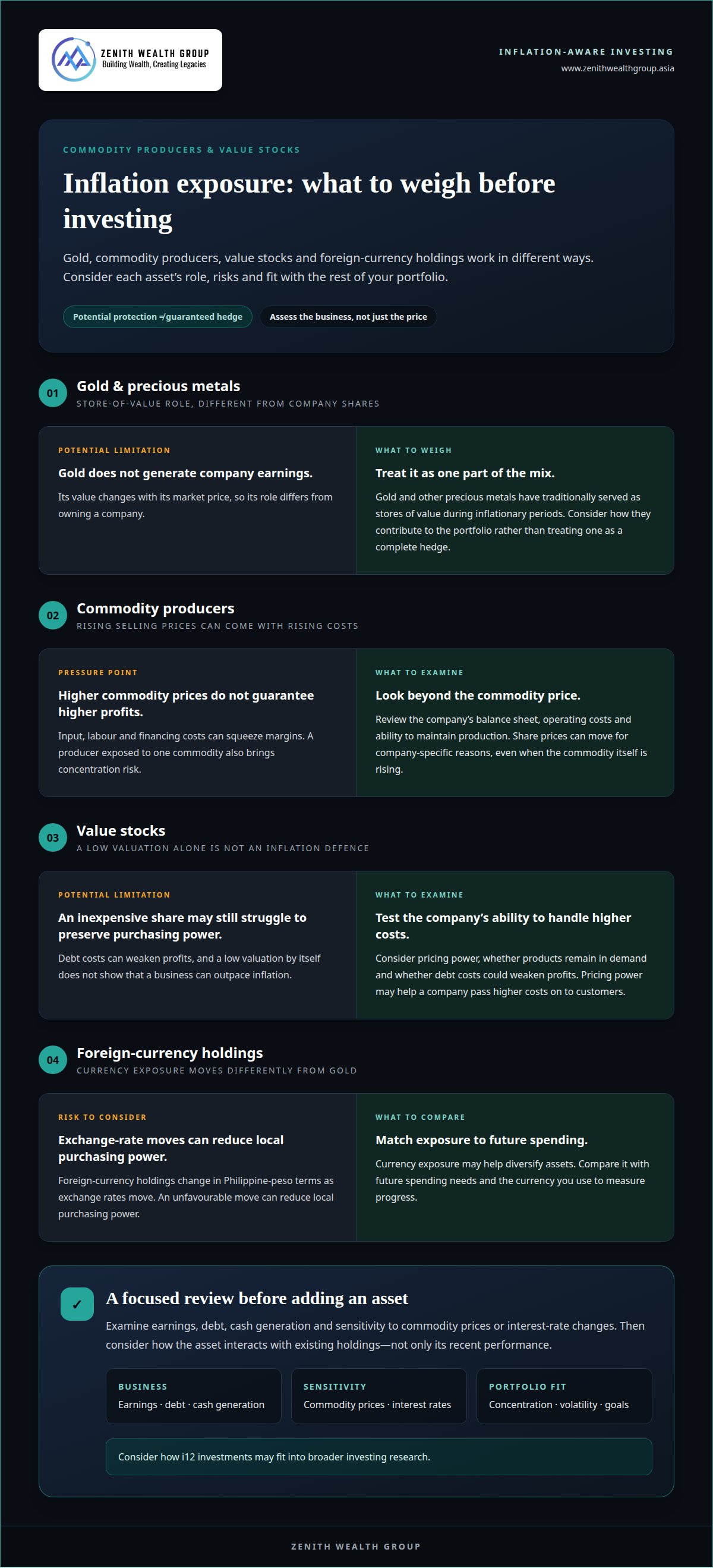
A practical inflation-aware shortlist can include gold, commodity producers, value stocks and diversified equities. Gold and other precious metals have traditionally served as stores of value during inflationary periods. Their role differs from shares: gold doesn’t generate company earnings, while a producer’s returns depend on its business and commodity prices. Consider how each asset contributes to your portfolio rather than treating one as a complete hedge.
Commodity producers may benefit when selling prices rise, but higher input, labour and financing costs can squeeze profits. Review the company’s balance sheet, operating costs and ability to maintain production. A producer exposed to one commodity also brings concentration risk. Its share price can move for company-specific reasons, even when the commodity itself is rising.
Value stocks are shares that appear inexpensive relative to measures such as earnings or assets. During inflation, a company with pricing power may protect revenue by passing higher costs on to customers. Check whether its products remain in demand and whether debt costs could weaken profits. A low valuation alone doesn’t show that a business can preserve purchasing power or outpace inflation.
For Filipinos, gold and foreign-currency investments work through different mechanisms. Gold’s value changes with its market price; foreign-currency holdings change in Philippine-peso terms as exchange rates move. Currency exposure may help diversify assets, but it can also reduce local purchasing power if exchange rates move unfavourably. Compare these exposures with your future spending needs and the currency you use to measure progress.
To assess a candidate, examine its earnings, debt, cash generation and sensitivity to commodity prices or interest-rate changes. Then consider how it interacts with existing holdings, rather than judging it only by recent performance. These measures can help you weigh potential inflation protection against concentration and volatility. Discuss investment planning to consider how different assets fit your goals.
4. Equities in utilities, energy and consumer staples
Utilities, energy companies and consumer-staples businesses sell services or goods people continue to need. Their shares may suit investors assessing inflation, but a sector label alone doesn’t show whether a company can protect purchasing power. Focus on established businesses with pricing power, sustainable competitive advantages and strong balance sheets. Pricing power means a company can adjust prices without losing too much customer demand.
Each sector faces different cost pressures. A utility may depend on infrastructure and operating costs; an energy producer faces shifts in fuel prices and supply. Consumer-staples companies sell everyday products, but higher ingredient, packaging or transport costs can reduce margins. Assess how a business responds to these pressures during inflationary periods rather than assuming essential demand will preserve profits.
Review a company’s financial position before buying its shares. Compare revenue growth with operating costs, examine debt and cash flow, and consider whether customers have alternatives. Then look at the company’s record of adjusting prices while maintaining demand. A strong balance sheet can provide flexibility, but rising costs can still affect earnings and share prices. These checks help distinguish operating resilience from a stock that merely appears defensive.
Set an allocation target that reflects your goals and tolerance for market swings. A bank deposit offers access to cash, while equities expose capital to changing company results and share prices. Don’t treat utility, energy or consumer-staples shares as a substitute for emergency savings. Consider how their sector and company risks combine with your other assets, and review the allocation as your circumstances change. Discuss an investment approach for inflation.
Zenith Wealth: Investment Management
Zenith Wealth’s Investment Management can help you shape an approach around your goals, time horizon and comfort with investment risk. It may be a useful next step if inflation has prompted you to review your portfolio or consider how different assets fit together. The focus is on making investment decisions part of a wider financial plan, not treating one asset as a complete answer.
Connect your investment choices with Retirement Planning, Education Funding and Wealth Protection. For example, a retirement income plan may need different investment priorities from savings intended for a child’s education. If you’re exploring i12 investments, consider how they fit your objectives and broader financial picture.
Contact Zenith Wealth to discuss your investment planning.
Make your next investment decision with purpose
Make your next step a clear plan for what your money needs to do. Building suitable investment strategies for high inflation in the Philippines means connecting investment choices with your time horizon, future spending and comfort with market changes. Review your priorities as your circumstances shift instead of reacting to every headline. Decisions grounded in your goals can make it easier to stay consistent through changing conditions.
Your plan may also need to account for the people and milestones you’re preparing for. Zenith Wealth can connect Investment Management with Retirement Planning, Education Funding and Wealth Protection, so investment choices fit within a broader financial picture. Consider where your priorities overlap and what deserves attention first. A financial consultant can help turn those priorities into a practical direction.
Contact Zenith Wealth to discuss your options. Take the next step with clarity, and build a plan that reflects the future you want to prepare for.
Frequently Asked Questions
What is Inflation?
Inflation is a sustained rise in the general prices of goods and services. In the Philippines, when groceries, transport and household bills cost more, the same peso amount buys less. That loss of purchasing power affects how far income and savings go. Consider your spending pattern, since each household’s experience depends on which prices matter most to its budget.
With higher interest rates, will a bank account protect my savings?
A higher deposit rate helps, but protects purchasing power only if the return keeps pace with inflation after applicable taxes and account conditions. A bank account can still suit money needed for regular bills or emergencies because access matters. Treat the interest rate as one factor, then compare it with your goals and how long you expect to keep the funds deposited.
How does Philippine inflation affect savings, purchasing power, and investment returns?
Philippine inflation can reduce the real value of peso savings when prices rise faster than returns. It can also raise company costs, change consumer demand and affect earnings, which may influence share and bond prices. For example, a business facing higher delivery expenses may see narrower margins unless it can adjust prices. The effect on your portfolio depends on its holdings and timing.
How do Philippine Treasury bills, bonds, and Retail Treasury Bonds compare with inflation?
Compare each instrument’s return after taxes and fees with inflation over its holding period. Treasury bills are short-term government securities, while bonds generally have longer terms; Retail Treasury Bonds make government borrowing accessible to individual investors. A fixed return can lose purchasing power if prices outpace it. Market prices can also change before a bond matures, so match the term to when you need the funds.
Is real estate or rental property an effective inflation hedge in the Philippines?
Property can provide rental income and exposure to property values, but it isn’t a dependable hedge in every market. Rent growth depends on local demand, tenant affordability, location and property condition. Maintenance, vacancies and financing costs can reduce the income retained. Assess whether expected rent covers your ownership costs, and remember that property is less readily converted to cash than many listed investments.
How should investors in the Philippines build a diversified portfolio for high inflation based on time horizon and risk tolerance?
Start by separating money for near-term needs from capital intended for long-term goals. Savings for expenses due soon generally need accessibility and stability; money invested for five years or more can be assessed for a broader mix of bonds, shares and other assets. Choose exposure based on your ability to withstand losses, then review how each holding supports a specific goal.


