

What if a sudden shift in global interest rates could delay your retirement by five years? For many investors in Singapore, the economic outlook for 2026 feels like a moving target. It's natural to feel anxious about how local assets might react to global volatility or whether your savings will truly last. That's why performing an investment portfolio stress test isn't just a technical exercise; it's a vital step in securing your future. You've worked hard to accumulate your wealth, and you deserve to know exactly how it will stand up to pressure.
We understand that the fear of outliving your retirement funds is real. In this guide, we'll show you how to identify vulnerabilities in your current strategy, including how to optimize i12 investments for maximum resilience. You'll gain a clear roadmap of actionable steps to strengthen your wealth protection. By the end, you'll have the clarity needed to sit down with your financial consultant and move forward with total confidence. We're going to break down the mechanics of market simulations and show you how to keep your long-term financial goals firmly on track.
Key Takeaways
- Shift your focus from average annual returns to worst-case simulations with a comprehensive investment portfolio stress test.
- Identify how 2026 market shifts, including persistent inflation, specifically affect your Singapore-based assets and bond holdings.
- Learn to aggregate private wealth with your CPF and SRS funds to create a unified, resilient roadmap for your future.
- Secure your legacy planning against bear markets by addressing "sequence of returns" risk well before you transition into retirement.
- Discover how a dedicated financial consultant uses i12 investments to build a personalized wealth protection strategy that prioritizes your goals.
What is an Investment Portfolio Stress Test?
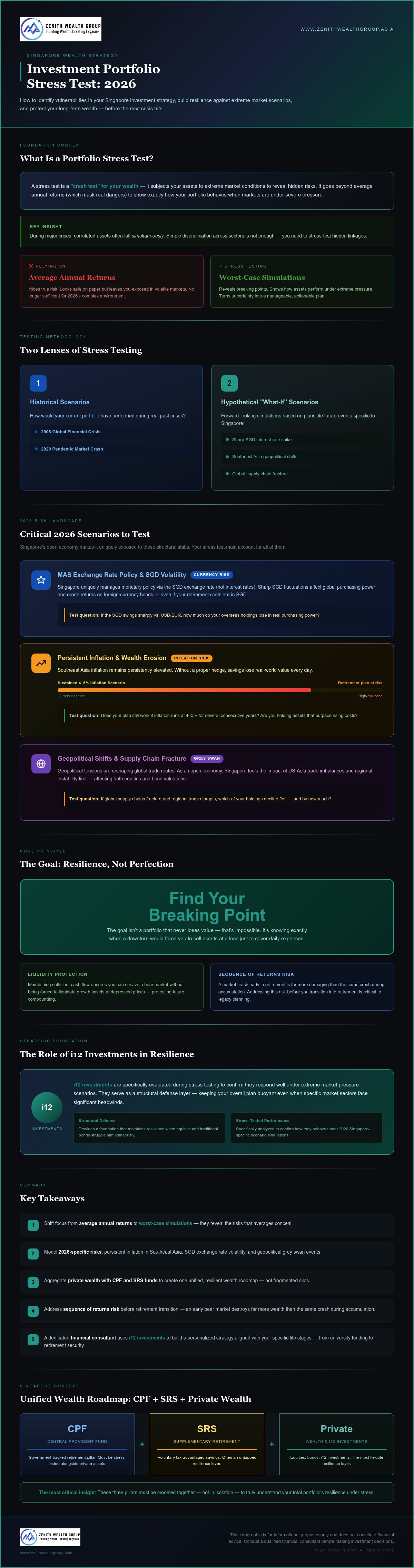
Think of an investment portfolio stress test as a rigorous "crash test" for your wealth. Just as engineers push a car to its limits to ensure passenger safety, this simulation subjects your assets to extreme market conditions. It moves beyond the comfort of "average annual returns," which can often hide significant risks. In 2026, relying on historical averages is no longer enough. The financial world is moving faster, and your strategy needs to keep pace.
Many investors in Singapore assume that spreading money across different sectors provides total safety. However, during major crises, correlated assets often fall at the same time. A financial consultant uses stress testing to identify these hidden links. By preparing for the worst-case scenario today, you ensure your long-term goals stay on track regardless of tomorrow's headlines. This proactive approach turns uncertainty into a manageable plan.
Historical vs. Hypothetical Scenarios
Effective testing uses two main lenses. First, we look at historical events like the 2008 financial crisis or the 2020 pandemic. We analyze how your current mix would have behaved during those specific months of turmoil. Second, we create hypothetical "what-if" scenarios. These might include a sudden spike in Singapore's interest rates or significant geopolitical shifts across Southeast Asia. We pay close attention to how i12 investments respond to these pressures, ensuring they continue to serve as a reliable foundation for your growth.
The Goal of Resilience, Not Perfection
The objective isn't to build a portfolio that never loses value; that's impossible. Instead, we look for your "breaking point." We want to know if a market downturn would force you to sell assets at a loss just to cover daily expenses. Maintaining liquidity is a core part of this process. It ensures you have the cash flow needed to survive a bear market without compromising your future. Ultimately, an investment portfolio stress test is a diagnostic tool for long-term survival.
Interpreting this data requires a human touch. While software can generate numbers, a financial consultant provides the context. They help you understand what those numbers mean for your specific life stages, from funding a child's university degree to securing your retirement. If you're ready to see how your plan holds up, it's time to start the conversation at our contact page.
Critical 2026 Scenarios to Test for Your Portfolio
2026 isn't just another year on the calendar. It's a period where global shifts meet local realities in a way we haven't seen in decades. An investment portfolio stress test must account for more than just a standard stock market dip. We need to look at the structural changes in the global economy that could impact your wealth. Geopolitical tensions are reshaping trade routes. If global supply chains fracture or US trade balances shift significantly, Singapore's open economy feels the impact first. Your portfolio needs to be ready for these "grey swan" events before they happen.
We also need to consider how different asset classes react to volatile cycles. While traditional equities might struggle, specific strategies like i12 investments are built to maintain resilience. They provide a structural layer of defense that helps your overall plan stay buoyant even when specific sectors face pressure. Preparing for these scenarios now ensures you aren't making emotional decisions when the market gets noisy.
Interest Rates and the MAS Exchange Rate
Singapore's monetary policy is unique because it focuses on the exchange rate rather than interest rates. While the US Federal Reserve's moves impact global liquidity, the Monetary Authority of Singapore (MAS) manages the SGD against a basket of currencies. A proper stress test simulates what happens if the Singapore Dollar fluctuates sharply. This impacts your global purchasing power and the value of your overseas holdings. If your bonds are denominated in foreign currencies but your retirement expenses are in SGD, currency volatility can quietly erode your returns. Strategic positioning helps you navigate these fluctuations with confidence.
Inflation and Wealth Erosion
Inflation in Southeast Asia remains a persistent challenge for many families. Imagine if inflation stays at a sustained 4% or 5% for several years. Does your current retirement plan still work? Testing for these price hikes is a core part of wealth protection in Singapore. Without a proper hedge, your hard-earned savings lose their real-world value every single day. We identify assets that have the potential to grow faster than the rising cost of living. It's about ensuring your future lifestyle isn't compromised by a higher grocery bill or rising healthcare costs.
A professional financial consultant can help you model these specific 2026 scenarios using your actual data. They'll show you exactly where your plan is strong and where it might need a bit more support. It's much better to find those vulnerabilities now while you still have time to adjust your course. If you want to see how your current strategy measures up against these 2026 risks, let's start a conversation today.
How to Conduct a Portfolio Stress Test
Executing an effective investment portfolio stress test follows a logical, data-driven sequence. It's not about making guesses; it's about building a mathematical model of your financial life. This process allows you to see the gaps in your strategy before the market finds them for you. Follow these five steps to begin your assessment:
- Step 1: Aggregate your assets. Look at your wealth as a single engine. This includes your CPF Ordinary and Special accounts, SRS funds, and all private brokerage holdings.
- Step 2: Define your timelines. Map out your core life goals. A S$5,000 monthly retirement payout requires a different resilience level than a S$150,000 education fund due in three years.
- Step 3: Apply stress factors. Simulate specific shocks, such as a 20% equity market drop or a 10% devaluation of the Singapore Dollar against major currencies.
- Step 4: Analyze your Success Probability. Use these simulations to determine the likelihood of reaching your goals without running out of capital.
- Step 5: Adjust your allocation. If the probability is too low, we often integrate i12 investments to provide a more stable foundation during those simulated storms.
The Role of Technology and Data
Static spreadsheets can't capture the complexity of modern markets. Professional strategic investment management uses dynamic modeling software to move beyond simple math. We use real-time data to see how 2026 market shifts impact your specific holdings. This technological edge ensures your portfolio adjustments are based on current economic realities rather than outdated assumptions. It's about having a clear, live view of your financial health at all times.
Collaborating with a Financial Planner
Data provides the evidence, but a financial planner provides the wisdom. It's easy to look at a simulated market crash and feel the urge to sell everything. A professional perspective prevents these emotional mistakes that can derail years of progress. Your planner tailors the stress test to your unique risk tolerance, ensuring the results lead to a roadmap you actually feel comfortable following. They translate complex risk data into a clear, action-oriented plan for your family's future. This human connection is what turns a technical report into a reliable strategy.
Integrating Stress Tests into Retirement and Legacy Planning
An investment portfolio stress test is not just about numbers; it's about the people you love. If you're within five years of retirement, the "Sequence of Returns" risk is your biggest hurdle. A major market crash in your first year of retirement can deplete your capital much faster than a crash ten years later. By simulating these timing risks, we ensure your lifestyle remains stable even if 2026 brings a bear market. It's about building a buffer that protects your peace of mind when you need it most.
We also look at how volatility affects specific timelines like education funding. If your child starts university in 2026, you don't have time to wait for a market recovery. You need liquid, stable funds ready to go. Similarly, we optimize your SRS account to ensure it provides tax-efficient growth that doesn't crumble under pressure. A financial planner coordinates these different buckets of money to ensure they work together rather than in isolation. This holistic view is what separates a generic plan from a resilient one.
Retirement Security in Singapore
Medical inflation in Singapore often outpaces general price increases. When we look at retirement planning, we test if your private savings and CPF Life payouts can handle these rising costs over a 30-year horizon. i12 investments play a crucial role here by providing a stable base that balances the guaranteed nature of CPF with the growth potential of private markets. This balance ensures you don't have to choose between paying for healthcare and enjoying your golden years. We want you to feel confident that your income is secure, regardless of market noise.
Safeguarding Generational Wealth
True legacy planning goes beyond writing a will. It requires ensuring estate liquidity so your family isn't forced to sell assets at a loss to pay for immediate needs. Legacy planning relies on a portfolio that can withstand short-term shocks to ensure your beneficiaries receive what you intended. A financial consultant can help you layer in wealth protection and insurance to act as a buffer for your generational wealth. This ensures your hard-earned assets pass to the next generation exactly as you planned. If you want to ensure your legacy is protected against the uncertainties of 2026, book a strategy session with our team today.
Navigating Uncertainty with Zenith Wealth
Market volatility doesn't have to be a source of constant anxiety. Once you understand your vulnerabilities, you move from a place of fear to a place of quiet confidence. At Zenith Wealth, we believe an investment portfolio stress test is the bedrock of that confidence. As an authorized representative of finexis advisory, we combine institutional-grade data with a boutique, human-centric approach. We prioritize your family's unique needs. We don't just provide reports; we start conversations. Our team is ready to engage and grow alongside you. We avoid the cold, institutional atmosphere of traditional firms, opting instead for an open-door policy. This creates an environment where you feel comfortable asking the tough questions about your financial security.
Our firm functions as your Modern Professional Guide. We understand the specific challenges Singaporean investors face, from MAS exchange rate fluctuations to complex CPF integrations. We don't just rely on software. We apply professional judgment to ensure your wealth protection strategy is robust enough for the 2026 economic landscape. By focusing on i12 investments, we help you build a portfolio designed to withstand the shocks we've analyzed in this guide. This proactive stance ensures you are prepared for shifts before they impact your bottom line.
A Partnership for Long-Term Growth
Your life goals should always drive your financial strategy, not the latest market noise. Our financial consultants prioritize your personal milestones. This might be a comfortable retirement or a legacy for your grandchildren. We provide access to institutional-level insights and tailor them to your personal portfolio. In a fast-changing 2026 economy, regular reviews are vital. We stay proactive. We believe that transparency is paramount in advisory services. This means explaining the "why" behind every adjustment. When we simulate a currency devaluation or an interest rate spike, we show you the direct impact on your cash flow. This partnership approach ensures you aren't just following a plan; you're understanding the mechanics of your own wealth.
Take the First Step Toward Resilience
Securing your wealth doesn't have to be a solo journey. We invite you to a complimentary introductory consultation to explore your current standing. In this session, we'll look at your asset allocation. We'll discuss how an investment portfolio stress test can reveal hidden risks. It's a low-pressure way to see if your current roadmap is truly built for the long haul. You'll gain a clearer perspective on your success probability. You'll learn how to optimize your holdings for maximum resilience. We ensure your plan evolves alongside global shifts so you never feel left behind. Contact our financial planners today to secure your future.
Secure Your Financial Future Today
Market dynamics in 2026 require more than a hopeful outlook. You need a strategy that stands strong when global interest rates shift or inflation persists. By performing a comprehensive investment portfolio stress test, you gain the clarity needed to protect your hard-earned wealth. This process ensures your retirement income and legacy goals remain achievable despite short-term volatility. It moves you away from the uncertainty of average returns and toward a resilient, data-driven plan for your family's future.
As an authorized representative of finexis advisory, Zenith Wealth specializes in navigating the unique Singaporean retirement and legacy frameworks. We emphasize i12 investments to provide that essential layer of structural resilience for your assets. Our financial consultants are here to translate complex risk data into a clear, human-centric roadmap. Don't wait for the next market cycle to find your breaking point. Book a Portfolio Resilience Review with a Zenith Financial Consultant to start your journey toward confidence. We're ready to help you build a roadmap that lasts.
Frequently Asked Questions
How often should I perform an investment portfolio stress test?
You should conduct an investment portfolio stress test at least once a year or whenever you face a significant life change, such as a career shift or the birth of a child. In a fast-moving economy like 2026, regular reviews ensure your strategy stays aligned with current MAS exchange rate trends. It's also wise to run a test during periods of heightened global volatility to see if your wealth protection measures are still functioning as intended.
Can a stress test predict exactly how much money I will lose in a crash?
A stress test is a simulation of hypothetical scenarios rather than a precise prediction of future losses. It shows you the potential impact of extreme events, like a 20% market drop, so you can understand your portfolio's vulnerabilities. While it won't give you a dollar-for-dollar forecast, it provides the clarity needed to build a more resilient strategy. This preparation helps you avoid making emotional decisions when actual market turbulence occurs.
What is the difference between a stress test and a standard risk assessment?
Standard risk assessments typically focus on your general comfort with market swings and historical volatility. In contrast, an investment portfolio stress test looks at "worst-case" scenarios and specific economic shocks. It asks what happens if interest rates spike or global trade fractures. While risk assessments help set your initial asset allocation, stress tests help you determine if that allocation can actually survive a major crisis without derailing your retirement goals.
Does a stress test consider the impact of inflation on my savings?
Yes, a comprehensive stress test must account for persistent inflation, particularly its impact on purchasing power in Singapore and Southeast Asia. We simulate environments where costs rise by 4% to 5% annually to see if your retirement income remains sufficient. This is a critical part of wealth protection. It ensures that your savings don't just stay intact in nominal terms but continue to cover your real-world expenses as prices climb over time.
Is stress testing only for high-net-worth investors with large portfolios?
Stress testing is valuable for any investor with long-term financial goals, regardless of their current net worth. Whether you're a young professional saving for education funding or a pre-retiree securing your lifestyle, understanding your breaking point is essential. In fact, investors with smaller portfolios often have less room for error during a market crash. Testing helps ensure that every Singapore dollar you've saved is working effectively to meet your future needs.
How do i12 investments help in making a portfolio more resilient?
i12 investments are specifically integrated into a portfolio to provide a stable foundation that traditional equity sets might lack during a downturn. They are designed with a focus on resilience and structural stability. When your stress test reveals a vulnerability in your current plan, a financial consultant might suggest these investments to act as a buffer. This helps maintain your success probability even when broader market indices are facing significant downward pressure.
What happens if my stress test shows my portfolio will fail during a recession?
If a test indicates your current plan might fail, don't panic; this is exactly why we perform the simulation. It gives you the opportunity to make adjustments while you still have time. You might choose to rebalance your assets, integrate i12 investments for better protection, or slightly adjust your retirement timeline. Your financial planner will work with you to find the most effective way to strengthen your roadmap and restore your confidence.
Can a financial consultant help me automate my stress testing process?
While automation suggests a hands-off approach, a financial consultant uses sophisticated modeling technology to provide ongoing, dynamic risk assessments. They move beyond static spreadsheets to give you a real-time view of how your portfolio reacts to 2026 market shifts. This isn't a one-time setup but a collaborative process. Your consultant ensures that the data stays current and translates those technical insights into actionable steps for your specific life stages.


