

After a sudden job loss, protect your cash flow first and check what support may be available. Eligible Singapore citizens who are involuntarily unemployed and actively seeking work or upgrading their skills can receive temporary support through SkillsFuture Jobseeker Support for up to six months, according to the Ministry of Manpower. Your employer must pay your final salary within seven days after your last working day.
It’s understandable to feel unsettled when regular income stops. Knowing how to handle a sudden job loss financially in Singapore starts with understanding your immediate needs before making major decisions about savings, spending, or debt.
This guide shows you how to assess available support and savings, reduce expenses without sacrificing essentials, and manage loans and household commitments. Take it one step at a time, with a clearer plan for the weeks ahead.
Key Takeaways
- Make a short-term cash-flow plan by listing essential bills, available savings and income you expect to receive.
- Set a practical emergency-fund target and decide how to rebuild your reserve once your income stabilises.
- Review recurring spending and pause or reduce non-essential costs while protecting essential household needs.
- List debts and payment commitments, then prioritise them so you can manage obligations without losing sight of longer-term goals.
1. SkillsFuture Jobseeker Support Scheme eligibility and payments
Start with SkillsFuture Jobseeker Support if a sudden layoff has stopped your income. The scheme launched in 2024. To qualify, you must be a Singapore citizen, involuntarily unemployed, and actively looking for work or upgrading your skills. Eligible jobseekers can receive temporary support for up to six months, according to the Ministry of Manpower.
Treat the scheme as a temporary cash-flow bridge, not a reason to delay budgeting. List upcoming bills, cash on hand, and income still expected, including your final salary. Support during the scheme period can help with job-search planning, but keep essential commitments in view throughout.
Employers aren’t required to pay retrenchment benefits, although such benefits are commonly expected for employees with at least two years of service. Your notice period is the one stated in your contract, unless both sides waive it or compensation is paid instead. Your employer must pay your final salary within seven days after your last working day.
For ComCare or other emergency aid, contact a Social Service Office and explain your household income, essential expenses, and immediate needs. Ask about ComCare assistance and the documents needed for an assessment. This helps staff understand the shortfall and the support your household may need.
Include mortgage payments in your cash-flow plan. For each housing loan, including an HDB loan if applicable, note the next due date, payment amount, and account used. Compare these commitments with your savings and expected support. If you may not have enough for upcoming instalments, contact your lender or HDB early to discuss available payment arrangements.
Separate urgent tasks from longer-term decisions. Keep your termination letter, employment contract, and salary records together. Add payment dates to a calendar and update your plan when money arrives or bills change. This makes it easier to direct available funds toward housing, food, utilities, and other essentials.
2. Building an emergency fund
Set your reserve target using essential monthly expenses, not your previous salary. Include housing, utilities, groceries, transport, insurance premiums, and minimum debt payments, while excluding discretionary purchases. This shows how long your available cash could cover household needs if your job search takes longer than expected.
One interviewee recommended keeping six months of emergency funds available and replenishing them when used. Treat this as a planning benchmark, then adjust your target to your household’s fixed commitments and income stability. Keep your reserve accessible for bills rather than counting investments that may need to be sold.
After job loss, use accessible savings for immediate essentials and add any severance or final pay once received. Keep the money in a separate account or clearly labelled savings pot, and record each withdrawal. Don’t sell investments automatically. First compare available cash and upcoming bills, and consider the consequences of selling specific holdings.
Build the fund gradually when income returns. One interviewee said he and his wife saved 50 to 60% of their salaries each month. That’s an example, not a required target. Choose a contribution that fits your actual budget, automate it after payday, and increase it when expenses fall or income rises. If i12 investments are part of your portfolio, distinguish those holdings from cash available for immediate bills.
Review your reserve after major changes, such as a new housing payment, a dependent joining the household, or a change in regular expenses. Recalculate essential monthly costs, compare them with accessible savings, and set a clear replenishment amount. This keeps your plan aligned with current needs rather than an old salary figure.
If you want to consider how investments fit alongside accessible savings, use an investment plan review to discuss your priorities.
A reserve target is useful only if the balance is brought back after it has been used. Keep 6 months as a reference point, while treating replenishment as part of the plan rather than an optional later task. Once income allows, direct a manageable share toward the shortfall until the reserve is restored. That approach preserves the intended cushion for a later interruption without confusing a temporary drawdown with a new target.
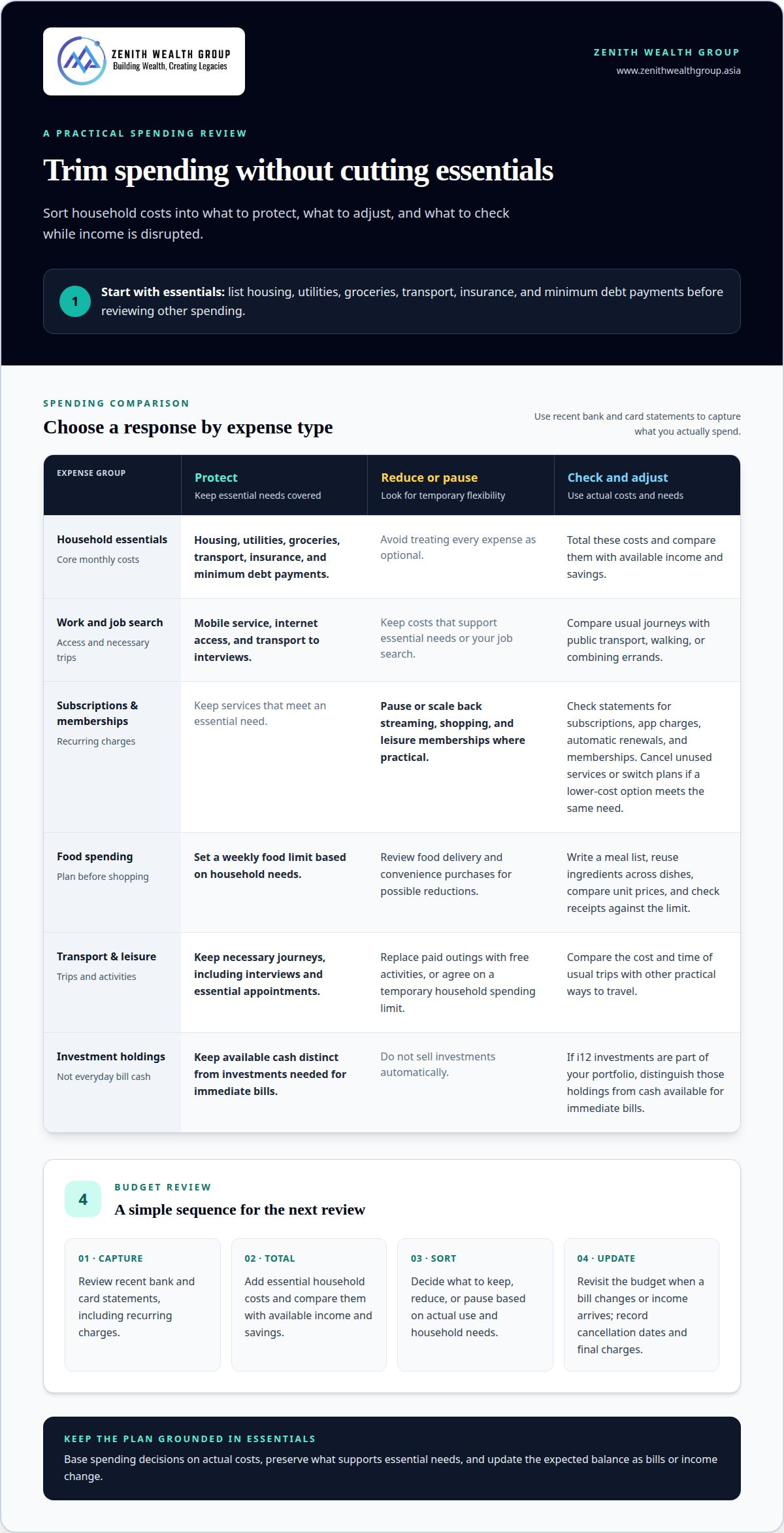
3. Cutting back on non-essential expenses
Build a bare-bones monthly budget by listing essential household costs first: housing, utilities, groceries, transport, insurance, and minimum debt payments. Check recent bank and card statements to capture actual spending, then total the essentials. Compare that figure with available income and savings to identify which costs need attention now.
Next, sort other expenses into three groups: pause, reduce, or keep. You may be able to pause or scale back streaming subscriptions, food delivery, shopping, and leisure memberships. Keep costs that support essential needs or your job search, such as mobile service, internet access, and transport to interviews. Base each decision on how you actually use the service.
Review recurring payments in your bank and card statements. Look for subscriptions, app charges, automatic renewals, and memberships. Cancel services you no longer use, and switch plans if a lower-cost option meets the same need. Record cancellation dates and final charges so your next budget reflects what you’ll actually pay.
Plan groceries before visiting a supermarket in Singapore. Write a meal list, use ingredients across several dishes, and compare unit prices for products you regularly buy. Set a weekly food limit based on your household’s needs, then review your receipts against it. This helps you spot whether convenience purchases are pushing essential spending higher.
For transport, compare your usual trips with the cost and time of public transport, walking, or combining errands. Keep necessary journeys, including interviews and essential appointments, in the plan. For leisure, replace paid outings with free activities, or agree on a temporary household spending limit together.
Review your budget whenever a bill changes or income arrives. Update the expected balance, mark upcoming payment dates, and make cuts before a shortfall develops. Don’t treat every expense as optional: preserve spending that supports health, access to employment, and essential household needs. A practical budget is one you can follow consistently.
4. Managing debt and financial responsibilities
List each debt in one place: lender, balance, minimum payment, due date, and interest terms. Include credit cards, personal loans, car financing, and housing payments. Mark essential bills separately from flexible expenses, then compare due dates with expected income. This gives you a clear order for managing commitments while income is reduced.
Contact lenders before a payment becomes overdue. Explain that your income has stopped and ask what repayment arrangements are available for your account. Record the discussion, any agreed terms, and the next review date. If you have several debts, prioritise essential household costs and contractual minimum payments while you clarify options with each lender.
Job loss changes employment-linked contributions, so review your CPF contribution records alongside your MediSave balance and health insurance documents. Check how premiums are funded, when they’re due, and what your policy says about continued cover. Include these details in your monthly cash-flow plan.
Withdrawing from an insurance policy or investments can affect the value you retain and, depending on the product terms, benefits or cover. Read the policy or investment documents for applicable charges, withdrawal conditions, and effects before acting. Selling investments can also mean accepting the available market value at that time. Don’t treat i12 investments or other holdings as equivalent to cash for immediate bills.
For an HDB loan, add each upcoming payment date to your calendar and compare the amount with accessible funds. One interviewee described having a two-year runway for HDB loan payments without CPF top-ups. Treat this as an individual example, not a target: your own runway depends on available funds and scheduled payments.
Keep a simple debt tracker and update it whenever a lender changes an arrangement. If you’re weighing investment withdrawals against longer-term priorities, discuss your investment management priorities before making a decision.
His household’s 2-year runway was specific to that interviewee; it should not be taken as evidence that another household can manage the same payment period.
Zenith Wealth: Retirement Planning
Zenith Wealth Group can help you revisit retirement planning if job loss changes your income, savings, or timeline. Once you’ve accounted for urgent bills, consider how your current cash-flow plan affects longer-term goals. You can also review how education funding, wealth protection, or legacy planning fits your household priorities. A financial planner can help connect these goals in a practical plan while keeping immediate responsibilities in view.
Contact Zenith Wealth to discuss your retirement planning priorities.
Build your next financial chapter
Losing a job can prompt a wider review of the goals your income supports. Knowing how to handle a sudden job loss financially in Singapore also means considering how today’s decisions support the future you want to build. Once your immediate plan is in place, identify which priorities need attention as you move toward your next role.
A thoughtful approach to how to handle a sudden job loss financially in Singapore connects short-term decisions with longer-term plans. Consider how retirement planning, education funding, and wealth protection fit your circumstances. A financial planner can help you assess these priorities together and organise next steps around your changing situation.
When you’re ready to explore those priorities, contact Zenith Wealth to discuss your financial plan. Take the next step at a pace that feels manageable. A considered plan can help you move forward with greater clarity.
Frequently Asked Questions
What financial support is available after retrenchment in Singapore, including eligibility and application steps?
Check your final salary, contractual notice arrangements, any retrenchment benefit, and SkillsFuture Jobseeker Support. Retrenchment benefits aren’t mandatory, although they’re commonly expected after two years of service. To prepare for a scheme application, organise your employment records and information about your job search or skills upgrading, then follow the application instructions. Your employer must pay your final salary within seven days after your last working day.
How much unemployment support does Singapore's SkillsFuture Jobseeker Support scheme provide, and who qualifies?
According to the Ministry of Manpower, the scheme provides temporary financial support for up to six months. To qualify, you must be a Singapore citizen who became involuntarily unemployed and is actively seeking work or upgrading skills. Use the amount awarded to you when planning cash flow rather than assuming it will replace your former salary.
How can I reduce or defer mortgage, rent, credit card, and personal loan payments in Singapore after job loss?
Contact your HDB loan servicer or lender, landlord, and credit-card or personal-loan providers before missing a payment. Explain the change in income and ask what revised payment dates or repayment arrangements may be available. Compare proposed terms with your budget, and get any agreed changes in writing. Don’t assume a payment is deferred until the provider confirms the arrangement.
What happens to CPF contributions, MediSave, and health insurance when I lose my job in Singapore?
Employment-linked CPF contributions change when you lose your job. Review your CPF contribution records and MediSave balance, and check your health insurance documents for how premiums are funded, when they’re due, and what they say about continued cover.


