

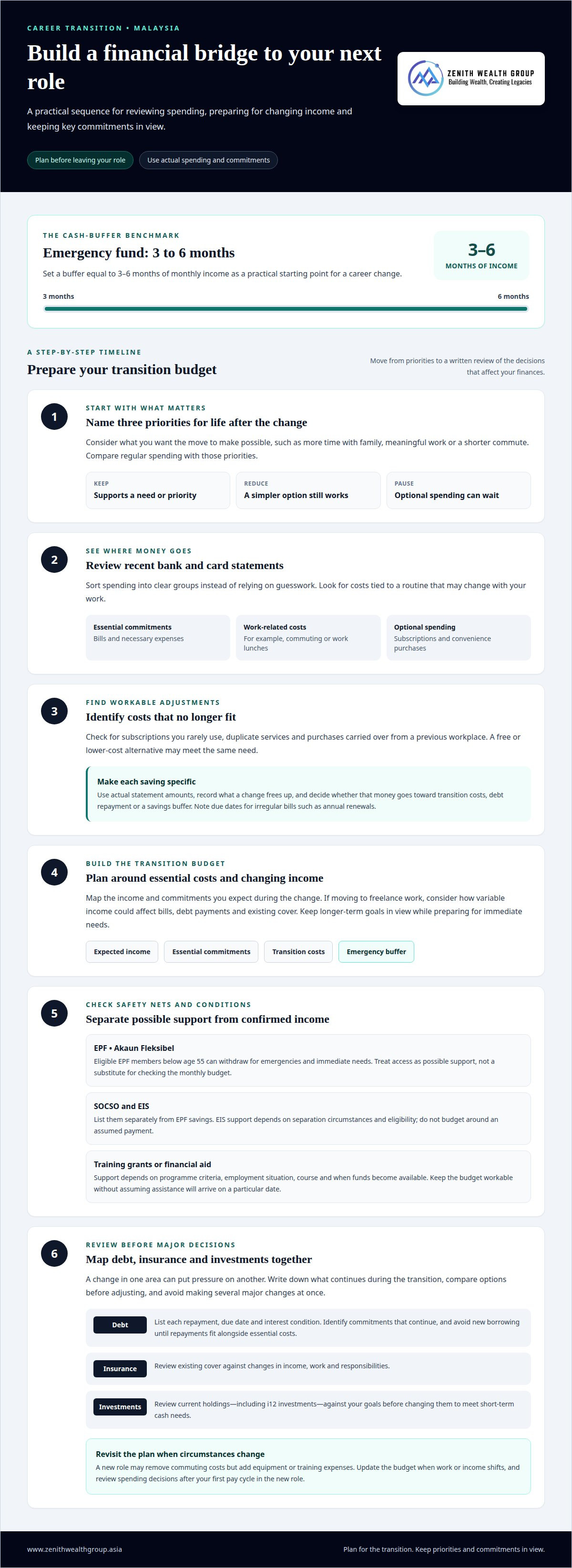
A career change needs a cash buffer, not just a new-job plan. For people planning a career change in Malaysia, a practical starting point for financial planning for career changers in Malaysia is an emergency fund equal to 3 to 6 months of monthly income.
It makes sense to focus on the opportunity ahead, but changing careers can also affect your income, regular expenses and long-term goals. A clear budget shows what you can adjust and how much financial flexibility you have during the transition.
This guide explains how to align spending with your priorities, identify expenses to reduce and avoid common financial pitfalls. You’ll also learn to shape a transition budget around your income and commitments, so you can make your next move with a clearer picture of your finances.
Key Takeaways
- Set priorities for the life you want after changing careers, then use them to guide spending decisions.
- Review regular expenses to find costs you can cut and redirect that money toward transition needs.
- Map debt, insurance and investments before making a move so one decision doesn’t create avoidable pressure elsewhere.
- Build a transition budget around essential commitments and changing income, while keeping longer-term retirement goals in view.
Aligning spending with personal values
A career change can alter your schedule, income and sense of purpose. Start by naming what you want the move to make possible, such as more time with family, meaningful work or a shorter commute. Choose three priorities, then compare your regular spending with them. If flexible time matters most, paying for convenience may serve you better than spending on things that bring little lasting value.
Connect each expense with its purpose. List essential commitments, work-related costs and optional spending separately. For every optional expense, ask whether it supports a priority or simply continues an old routine. For example, someone leaving an office role could review commuting costs, work lunches and subscriptions before deciding what to keep. You don’t need to remove every small pleasure. Instead, direct available money toward the life and work your career change is meant to support.
In Malaysia, eligible EPF members below age 55 can withdraw from Akaun Fleksibel for emergencies and immediate needs. Treat that access as a possible source of emergency support, not as a reason to overlook how your monthly budget will work after leaving a job.
SOCSO and EIS are separate from your EPF savings, so list them separately in your job-exit checklist. EIS support depends on your separation circumstances and eligibility. Don’t build your transition budget around an assumed payment.
Make the review practical: write down one spending choice you’ll keep, one you’ll reduce and one you’ll pause during the career change. Revisit these choices when your income or work pattern shifts. If estate planning is a priority, consider how the transition affects the plans you want in place for your family. This keeps daily decisions connected to your longer-term intentions instead of letting a temporary work change shape them by default.
This is a useful test of whether a small recurring cost supports one of your priorities. During a career change, choices like this can make room for the schedule and working life you want.
Identifying unnecessary expenses
A career transition can make familiar spending harder to justify. The Institute for Financial Literacy’s career-transition course recommends reviewing spending, identifying unnecessary expenses and setting a budget for the change. Start with recent bank and card statements. Sort expenses into essential commitments, work-related costs and optional spending. This replaces guesswork with a clear picture of where your money goes.
Look for costs that continue automatically or no longer fit your routine, such as subscriptions you rarely use, duplicate services and convenience purchases tied to a previous workplace. A book is another useful test: Lori chose to borrow one free from a library instead of buying it. The point isn’t to cut every enjoyable expense. It’s to notice when a free or lower-cost option meets the same need.
Use this review to make specific decisions:
- Keep: spending that supports essential needs or a clear priority.
- Reduce: costs where a simpler option still works, such as unused subscription features.
- Pause: optional purchases that can wait until your new work routine settles.
Estimate each change using your actual statements, not a rounded figure. If you cancel a service, record how much that frees up and decide where the money will go. You could put it toward transition costs, debt repayment or a savings buffer. For irregular expenses, such as annual renewals, note their due dates. This helps distinguish a genuine saving from a bill that has simply shifted to another month.
Review the list again when your work pattern changes. A new role could remove commuting costs but add equipment or training expenses, so reassess both sides. Keep a short record of decisions and revisit it after your first pay cycle in the new role. If you want to connect daily spending choices with longer-term plans, you can discuss your financial priorities.
Use this example to pause before optional spending: identify the need a purchase would meet, then check whether an existing or no-cost alternative would do the job. If it would, keep the money available for a priority instead of treating the purchase as automatic.
Avoiding financial pitfalls
A career change can reveal gaps between your plans and your actual finances. Before resigning, review your income, regular commitments, spending plan, insurance and investments together. For example, someone moving from salaried work to freelance projects should consider how variable income could affect bills, debt payments and existing cover. A decision in one area can affect the others.
Pay particular attention to debt. List each repayment, due date and interest condition, then identify which commitments will continue during the transition. Don’t take on new borrowing to fund a career move until you understand how repayments fit alongside essential costs. If your income changes, update your plan rather than relying on your old salary pattern. This makes potential pressure visible before it leads to a missed payment.
For retraining in Malaysia, treat government grants or financial aid as conditional support. Whether assistance helps depends on the programme’s criteria, your employment situation, the training course and when funds become available. Keep your transition budget workable without assuming support will arrive on a particular date.
Use this review before making major financial decisions:
- Debt: map repayments and identify which continue during the change.
- Insurance: review existing cover against changes in income, work and responsibilities.
- Investments: understand how your current holdings fit your goals before changing them to meet short-term cash needs.
Selling an investment to cover a shortfall, for example, may change your longer-term plan. Compare that option with adjusting expenses or rescheduling a training commitment. Avoid making several changes at once, since that makes it harder to see which decision is causing strain. Record the reason for each major adjustment, then review it when your work or income situation changes.
A career-transition course also recommends reviewing your finances and spending plans, managing debt and avoiding financial pitfalls. Turn that advice into a written checklist before leaving your role. Include debt, insurance, investments and any retraining support you plan to use. Clear decisions help you avoid treating uncertain funding or future earnings as money already available.
Budgeting during a career transition
A practical part of financial planning for career changers in Malaysia is building a budget around likely income, essential commitments and training needs. Compare each role’s overall value before resigning, then plan for the gap between paycheques.
Comparing New-Role Compensation and Stability
Compare take-home pay, benefits, work arrangements and income reliability. A higher salary may be offset by extra commuting or equipment costs. For contract or commission-based work, separate predictable earnings from variable income and check whether the reliable portion can cover essential bills. Weigh benefits according to what matters to your household, rather than comparing roles on salary alone.
Retraining and Certification Costs
Retraining and certification costs in Malaysia depend on the course provider, programme length, assessment fees and required materials. Request a full breakdown for your chosen training, including costs beyond tuition. Compare the total commitment with your available funds and expected study schedule. This helps you budget for the entire programme, not just tuition.
Financial Preparation Before Resigning
Before resigning, map out bills, debt repayments, training expenses and expected income changes. Confirm the new role’s terms, schedule upcoming payments and revise your cash-flow plan when income begins. Changing jobs can affect annual income and payroll deductions; tax relief depends on eligible circumstances and documented claims. Sound financial planning for career changers in Malaysia also means keeping short-term cash needs separate from long-term goals.
If i12 investments are part of your finances, include them in your overall review rather than treating them as immediate spending money.
Emergency Savings Planning
For a career change in Malaysia, aim for an emergency fund equivalent to 3 to 6 months of monthly income. Base your target on essential commitments, such as housing, food, debt payments and necessary transport. If earnings may vary, build the budget around reliable income and keep emergency funds accessible for genuine disruptions.
For help connecting a career transition with longer-term financial priorities, start a financial planning conversation.
Zenith Wealth: Retirement Planning
Zenith Wealth Group provides Retirement Planning for people reassessing long-term goals during a career change. A shift in income or work plans can be a useful time to review how retirement priorities fit your budget and future direction. If the transition also affects family plans, Education Funding and Wealth Protection may be relevant to consider.
Include existing commitments in that review, including any investments held through i12 investments. This can help you see how a career decision connects with retirement and other financial goals, without treating each choice in isolation.
If you’re ready to discuss how your changing career fits your retirement priorities, contact Zenith Wealth.
Make your next move with a clear plan
A career change can reshape more than your working day. It may also affect how you support family goals and prepare for the future. Treat the transition as a chance to connect your next role with the life you want to build, not simply as a change in monthly income.
A useful next step in financial planning for career changers in Malaysia is to decide which long-term priorities need attention alongside immediate career choices. Zenith Wealth Group offers Retirement Planning, Education Funding and Wealth Protection to support planning across these areas. Identify the goals that matter most, then bring them into a conversation about your broader financial direction.
You don’t need to settle every future decision before you begin. A clear starting point helps you see what needs attention now and what you can review later. Take the next step at your own pace, with your goals in view.
Contact Zenith Wealth to discuss your financial priorities and move forward with confidence.
Frequently Asked Questions
How should Malaysians budget for a period without income during a career change?
Build a month-by-month cash-flow plan using the date your salary ends and when you expect income to begin. Prioritise housing, food, utilities, debt payments and necessary transport, then schedule bills by their due dates. For example, if your final salary arrives before a training course starts, set aside course costs separately from household funds. Keep the plan flexible and update it when start dates or income expectations change.
What are the financial risks of switching from employment to freelance or self-employment in Malaysia?
The main risks are irregular earnings, delayed client payments and business costs that continue during quiet periods. Unlike predictable payroll, freelance cash flow depends on project timing, payment terms and repeat work. A completed project, for example, may not bring in cash straight away, while software, transport or equipment costs still fall due. Track invoices and payment dates, separate business and household cash flow, and plan for tax obligations.


