

Don’t make resignation the first step in starting a business. A sound plan for financial planning for leaving a corporate job to start a business in Singapore includes keeping 6-12 months of expenses in an emergency fund and preparing for the possibility that business revenue may take time to arrive. If you can test demand and build a financial buffer before leaving, you can make the decision with a clearer view of the risks.
It’s understandable to want a clean break from corporate life, especially when you’re ready to focus on your business full-time. But business income can be uneven while household bills and operating costs continue. A transition budget that includes both can help you decide what to prepare before handing in your notice.
This guide explains how to set a transition budget, manage retirement savings, reduce debt and plan for delayed revenue. You’ll also learn how to separate personal and business finances and build a forecast to guide your next steps. Start with the numbers, then decide when the move makes sense for you.
Key Takeaways
- Build a forecast that separates household needs from business costs, so you can see how long your available cash may need to last.
- Review discretionary spending and debt repayments before you leave, then decide what you can reduce without disrupting essential needs.
- Prepare a backup plan for slow revenue, including which costs to pause and how to protect personal finances while sales build.
- Connect retirement planning, business succession and i12 investments to your wider financial goals before making the transition.
Business budgeting and financial forecasting
Plan for income to change after you leave salaried work. A strong month may bring in more than two months of employment income, but business revenue may also be delayed or stop for a time.
Income-Change Budget
The Institute for Financial Literacy advises people in career transition to review spending, identify unnecessary expenses and set a transition budget. Start with your current monthly income, then list essential household bills and business commitments separately. Compare those outgoings with a cautious estimate of business income, not your best sales month. This makes gaps visible before you rely on revenue to cover regular costs.
Transition Budget
Map the move from salary to business ownership in stages. List employment income and household spending, then add expected business costs, such as tools, stock or marketing, where relevant. Mark which costs begin before revenue arrives. For example, if you need to commission technical systems from software firms like Linkdip Technologies Limited or purchase stock before opening, include that outlay in your transition budget rather than treating it as a later expense.
Build a forecast that tracks expected income and outgoings over time. Update it when customer demand, sales timing or operating costs change. Cash flow management helps a business meet day-to-day obligations and plan for expansion, while forecasts support decisions about allocating funds. Use them to spot when a projected shortfall may call for a slower launch or a change in planned spending.
Keep personal and business transactions distinct. A separate business bank account and accounting software make it easier to track income and expenses, review cash flow, and see whether the business can meet its commitments. Include household obligations and investment commitments, such as i12 investments, in your personal budget so business funds aren’t mistaken for money available to spend.
Cutting discretionary spending and paying down debt
Before leaving a salary, review spending line by line. The Institute for Financial Literacy advises people in career transition to identify unnecessary expenses and set a budget. Separate essentials, such as housing and groceries, from optional costs, such as subscriptions, dining out and nonessential purchases. Cancel services you rarely use, then redirect the released cash towards debt or transition savings.
Make debt repayment deliberate. List each balance, its interest rate and required payment. Keep up with required payments, then direct any extra available cash towards a high-interest balance. For example, pause a planned electronics upgrade and use that money to reduce credit card debt. Avoid new borrowing for discretionary purchases while your income is changing.
Review employer-linked benefits before your final workday. Flexible Spending Account (FSA) funds may be use-it-or-lose-it, so use eligible funds before quitting rather than leaving a balance unused. Also review recurring insurance and household payments in your budget. Cutting optional spending should not mean overlooking essential protection or bills that continue after employment ends.
Set a clear rule for any surplus. The recommended approach for entrepreneurs is to set aside at least 10-20% of what they earn and invest it for retirement. Treat that as a planning target alongside debt reduction, not a reason to invest money needed for near-term bills. A financial planner can help connect these choices to your wider goals. If you’d like to discuss your broader financial plan, start a conversation when it suits you.
Contingency planning if business revenue is delayed
Build a backup plan for slow sales before resigning. In Singapore, account for household commitments while keeping enough funds for the business to operate.
Living Expenses and Runway
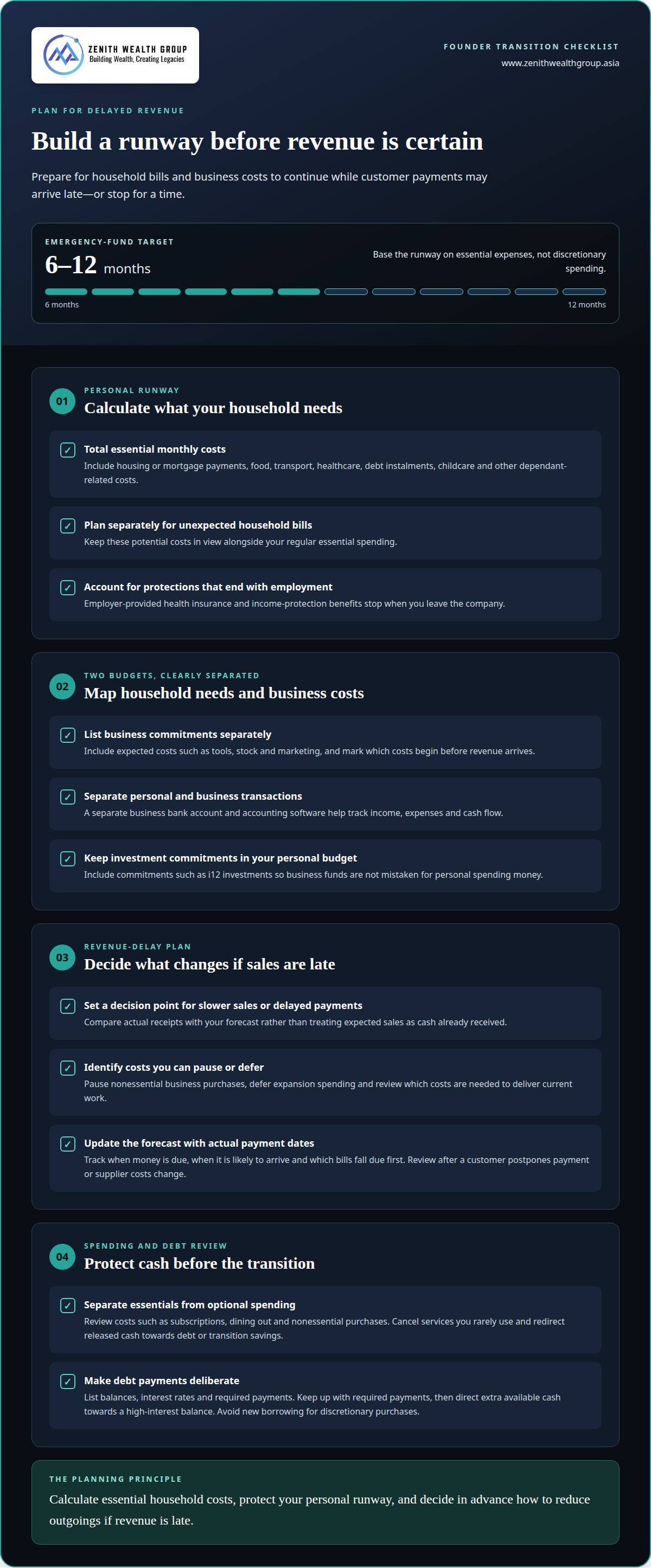
Typical living expenses depend on housing, food, transport, healthcare and dependants, so total your own monthly essentials rather than relying on a generic estimate. People leaving employment to become full-time entrepreneurs are advised to keep 6-12 months of expenses in an emergency fund. Use essential outgoings, not discretionary spending, to calculate that runway.
Mortgage and Emergency Planning
Before leaving a salaried job, list mortgage payments, debt instalments, childcare and other dependant-related costs alongside essential monthly spending. Include these commitments in your emergency-fund calculation, and plan separately for unexpected household bills. Employer-provided health insurance and income-protection benefits stop when you leave the company, so account for the loss of those protections in your contingency planning.
Revenue-Delay Contingency
Set a decision point for delayed customer payments or slower-than-expected sales. If receipts fall behind your forecast, pause nonessential business purchases, defer expansion spending and review which costs are needed to deliver current work. Keep household and business funds separate, then update your cash-flow forecast with actual payment dates. This helps you see whether your available runway can cover both.
Founder Cash-Flow Risks
First-time founders can run into trouble by treating expected sales as cash already received, overlooking payment delays or mixing personal and business spending. Your forecast should show when money is due, when it is likely to arrive and which bills fall due first. Review it regularly, especially after a major customer postpones payment or a supplier’s costs change.
The practical takeaway is simple: calculate essential household costs, protect 6-12 months of personal runway and set clear steps for reducing outgoings if revenue is late. That preparation helps you manage challenges without assuming sales will arrive on schedule.
How much personal savings should I have before leaving a corporate job to start a business in Singapore?
Use essential monthly expenses to estimate your personal savings target. People leaving employment to become full-time entrepreneurs are advised to keep 6-12 months of expenses in an emergency fund. Add housing, food, transport, utilities, debt payments and dependant costs to your monthly total. Multiply that total by your chosen number of months to set a starting target.
Keep personal runway separate from business capital. Your savings calculation should cover household needs, while a separate business budget accounts for setup costs and operating expenses. For example, don’t count money reserved for stock, equipment or rent as available for groceries or mortgage payments. This separation shows whether your household can manage if sales arrive later than planned.
Next, account for the change in employment benefits. Employer-provided health insurance and income-protection benefits stop when you leave the company. Include the cost of replacing essential protection in your planning, alongside ongoing bills and expected income gaps. If you support dependants or have a mortgage, include those commitments before estimating how much money remains for the business.
Review the target against your actual cash and likely business timeline. If projected revenue is delayed, decide in advance which optional expenses you could reduce and which household payments must continue. A financial planner can help you assess how the transition affects your wider financial goals. For a conversation about your financial planning, get in touch with Zenith Wealth.
Zenith Wealth: Business Succession Planning
Zenith Wealth can help connect your business plans with your personal financial priorities as you prepare to leave salaried work. Consider Business Succession Planning if you want to think ahead about how ownership or responsibilities could transition if your circumstances change. It can form part of a wider plan to protect the business and the people who depend on it.
Retirement Planning can help you consider how leaving employment affects long-term savings and retirement goals. This is relevant when business income may be uneven or when you need to balance reinvesting in the business with building personal financial security. Include i12 investments in a wider view of your personal finances, alongside the role business cash may need to play.
If you’re supporting children or planning for future study costs, Education Funding can bring those goals into the same financial picture. Consider how education commitments fit alongside household expenses and the capital needed to start or grow a business. Setting these priorities out together can make trade-offs clearer as your income changes.
Wealth Protection may be relevant when moving into self-employment changes how you think about financial risks and protecting your family. Review it alongside plans for the loss of employer-provided benefits and the responsibilities you’ll carry as a business owner. Considering these planning areas together can help you weigh immediate commitments and longer-term goals without separating business finances from personal life.
Bring your business plans and personal priorities into one conversation. Contact Zenith Wealth to discuss your next steps.
Make your next move with a clear plan
Leaving a corporate role is more than a single financial decision. It changes how your business ambitions, household responsibilities and long-term priorities fit together. Before choosing a resignation date, consider what needs to be in place for the move to feel manageable, and what you would do if your plans changed. That gives you a practical decision framework, not just a target date.
Financial planning for leaving a corporate job to start a business in Singapore can connect business ownership with personal goals over time. Zenith Wealth’s Retirement Planning, Education Funding and Wealth Protection offerings may be relevant as you consider future savings, family commitments and financial resilience. The right focus depends on the priorities you want your plan to address.
You don’t need to have every detail settled before starting a conversation. Bring your questions and current priorities, then explore how they fit together. Contact Zenith Wealth to plan your transition. A thoughtful next step can help you move towards business ownership with greater clarity.
Frequently Asked Questions
Should I quit my day job before starting a business?
Not necessarily. Validate demand with potential customers before deciding whether to leave your salary. Ask what problem they need solved, what they currently use and what would make them pay for a different solution. If early conversations show interest, use that evidence to shape a launch plan. Compare a staged transition with immediate resignation against your household needs and business commitments.
Will quitting my job hurt my chances of getting a loan or funding?
Leaving employment can change the evidence available to support an application, especially if your personal income becomes variable. Prepare a clear business plan, cash-flow forecast, customer records and details of existing debts. For example, distinguish signed customer work from sales you hope to make. A lender or funding provider assesses applications against its own criteria, so avoid building your launch plan around money you have not secured.
How do I calculate startup costs and monthly cash flow for a new business in Singapore?
List one-off setup items separately from recurring monthly expenses. For example, record equipment and initial stock as startup costs, then track rent, software, supplier payments and expected customer receipts by month. Note when invoices are due, not just when sales are recorded. A forecast should show whether cash arrives before bills fall due, helping you adjust spending or launch timing if there’s a gap.
What happens to CPF contributions and healthcare coverage when I leave employment to start a business in Singapore?
Employer-provided health insurance and income-protection benefits stop when you leave your company. Self-employed people with annual net trade income of more than S$6,000 must contribute to MediSave. Voluntary contributions to all three CPF accounts can qualify for tax relief of up to 37% of net trade income, subject to the CPF Annual Limit of S$37,740. Include these changes in your transition calculations.
What taxes, GST registration rules and tax incentives apply to new businesses in Singapore?
If you’re self-employed, report income from business operations as business income rather than salary. Track business receipts and expenses so your tax planning reflects actual operations. Forecast tax payments separately from everyday costs. GST registration and tax incentives depend on the business’s circumstances and applicable eligibility criteria, so include them in your financial planning as sales and operations develop.
What government grants, startup funding and loans are available to entrepreneurs in Singapore?
Funding options may include grants, loans or private investment, but eligibility and terms differ. Start by defining the specific business need, such as equipment, working capital or product development, then map the amount and timing against your forecast. Keep supporting documents together, including a business plan, cost estimates and cash-flow projections. Compare repayment commitments and conditions with the business’s expected ability to meet them.


