

Public acceptance of digital assets doesn't guarantee your loved ones can access them. In Singapore, there are no specific laws or regulations governing what happens to digital accounts after death, so digital asset inheritance planning needs to address access as well as who should inherit each asset.
It’s understandable to expect an executor to handle everything, but digital accounts and cryptocurrency may have separate access controls. Digital asset inheritance planning can help your representatives understand what exists, how you want it handled and where to find secure access instructions.
This guide explains how RUFADAA relates to fiduciary access, what a digital executor does, and how inventories and secure records can support your wishes. It also considers public acceptance of digital assets in legacy planning, showing how practical preparation can help preserve access for the people you intend to benefit.
Key Takeaways
- Understand why rules developed in the United States may not determine how digital accounts are handled in Singapore.
- Learn what to consider when appointing someone to handle digital assets and how that role can complement an executor’s responsibilities.
- See how a clear inventory and secure access records can help beneficiaries locate assets without exposing sensitive credentials.
- Explore why public acceptance of digital assets is only one part of legacy planning; access and your wishes for each asset matter too.
RUFADAA and fiduciary access to digital assets
Singapore has no specific laws or regulations governing what happens to digital accounts after death. Digital asset inheritance planning should distinguish the wishes in estate documents from access controlled by account providers.
Fiduciary Access Under RUFADAA
RUFADAA is a United States model law adopted in 2015 to address fiduciary access to digital assets. In jurisdictions operating under these standards, estate planning practices such as The Village Law Firm assist families with digital asset administration, where an executor seeking access must obtain court approval and show the assets are relevant to settling the estate. This framework is not Singapore law. A will can express wishes about digital holdings, but banks and online platforms have their own procedures for deceased users’ accounts. Heirs may need to establish their authority through those processes.
Private-Key Access for Heirs
A financial planner can help document how heirs should access cryptocurrency held in wallets or exchange accounts. A will can record wishes for cryptocurrency, NFTs, online accounts and cloud-stored files, but practical access still depends on keys and platform procedures. Heirs may need to follow an exchange’s estate process, while a private key may be required for a wallet. Lost keys can make cryptocurrency inaccessible, so digital asset inheritance planning should account for key security and intended beneficiaries.
Recording Account Access Details
A financial planner can help organize account names, access instructions, intended actions and secure credential-storage details. Keep passwords and private keys separate from a will. If i12 investments form part of the wider financial picture, keep related planning records distinct from account credentials. Professional help with making or updating a will can involve reviewing assets, beneficiaries and document changes. To reduce fraud and asset-loss risks, record ownership clearly, restrict credential access and consider relevant tax implications in estate discussions.
Designating a trusted digital executor can help address digital asset security and access risks. Store passwords securely, such as with encryption or a password manager, and plan how intended beneficiaries can access cryptocurrency. Update digital asset lists and access instructions as they change.
Appointing a digital executor with professional guidance
A digital executor is a trusted person appointed to help manage digital accounts and assets after the owner dies. The role can be useful when cryptocurrencies, online businesses or extensive digital records require specific knowledge. In Singapore, treat this appointment as part of succession planning, not as automatic authority to access every platform or a replacement for the estate’s executor.
A financial planner can help you identify the skills and judgement the role requires. For example, someone familiar with a crypto wallet may understand why a private key needs different handling from a social media account. A planner can also help clarify whether one person should manage both conventional and digital assets, or whether separate responsibilities would suit the estate better.
Start by defining the digital executor’s scope. A document can specify which accounts they should locate, which assets they should preserve or transfer, and who should receive updates. It can also distinguish administrative tasks from decisions about ownership. Clear instructions can reduce confusion when family members encounter unfamiliar accounts or changing platform procedures.
Professional guidance can connect the appointment to wider estate planning. A planner can help coordinate the asset inventory, intended beneficiaries and access instructions, while identifying questions that may need legal advice. Rules and platform processes can differ across asset types, so naming a trusted person does not necessarily grant account access. Keep instructions separate from credentials and review them after major changes, such as opening an exchange account or replacing a wallet.
Choose someone dependable, capable of keeping sensitive information confidential, and willing to take on the role. Discuss the responsibilities while the owner can explain their wishes. For support aligning digital responsibilities with wider succession priorities, discuss your planning needs.
Digital asset inventories and secure credential storage
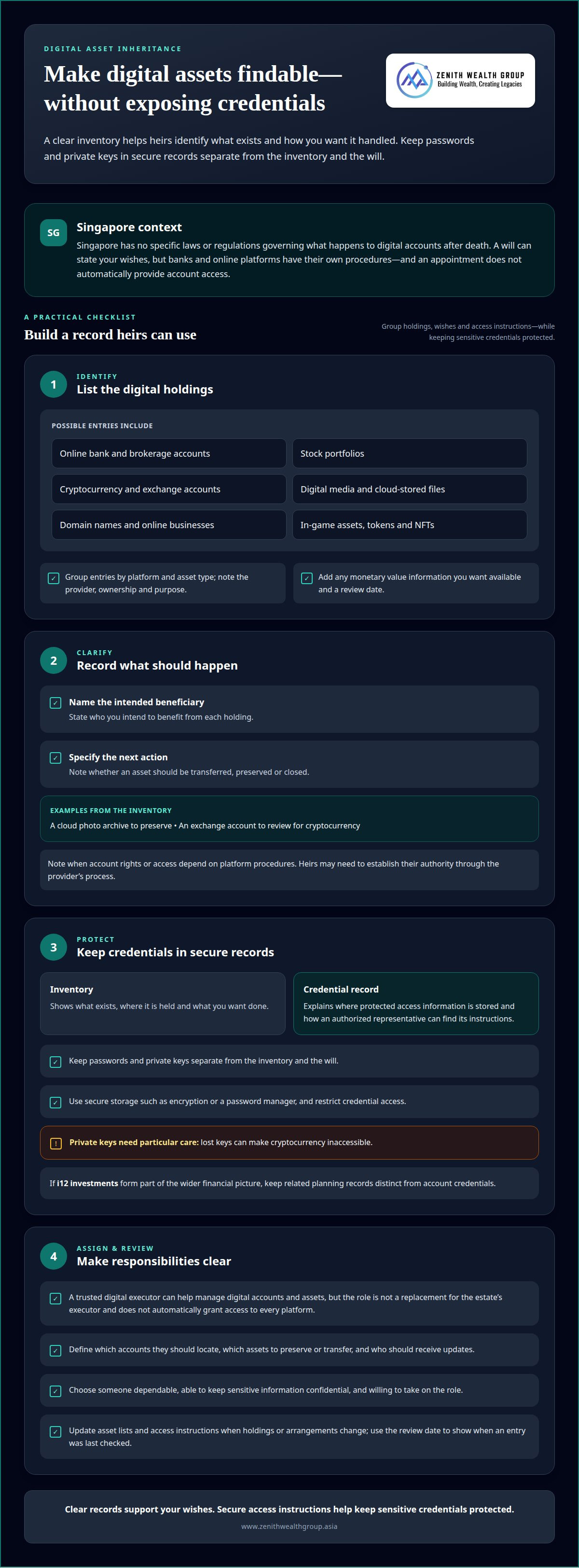
In Singapore, digital assets can include online bank and brokerage accounts, stock portfolios, cryptocurrencies, digital media, domain names, in-game assets, tokens and NFTs. A financial planner can help document these holdings and organize secure access instructions, without putting passwords or private keys in a will.
Creating a Digital Asset Inventory
A digital asset inventory records your digital holdings and the information needed to identify them. It matters because heirs cannot manage assets they don’t know exist. A financial planner can group entries by platform, asset type, ownership, intended beneficiary and next action. For example, an entry could distinguish a cloud photo archive to preserve from an exchange account to review for cryptocurrency.
The inventory can also record the account provider, the asset’s purpose and any monetary value information you want available. Adding a review date helps show when an entry was last checked, especially if balances or holdings change. A planner can organize instructions for transfer, preservation or closure, while noting where account rights or access depend on platform procedures. This structure helps heirs navigate unfamiliar services and reduces the chance that an overlooked account is left out of estate discussions.
Securely Documenting Credentials
Secure credential records keep access instructions organized while limiting exposure of passwords and private keys. A financial planner can help separate the inventory from sensitive credentials, then record where protected access information is stored and how the intended representative can find it. This distinction matters: an account list can guide heirs without putting every password in a will or ordinary document.
For example, the plan can identify a password manager or encrypted storage method, then explain how an authorized person can find its access instructions. Private keys need particular care because losing them can make cryptocurrency inaccessible. A planner can help you identify which key belongs to which wallet, who should receive access and what action is intended. Review the inventory and instructions after account changes, new purchases or wallet replacements. These steps address practical security challenges without exposing credentials during routine estate administration.
Public acceptance of digital assets in legacy planning
Acceptance can make digital wealth relevant to family discussions, but it doesn’t grant heirs access. In Singapore, a legacy plan still needs to connect your wishes with practical arrangements for accounts, platforms and assets such as cryptocurrencies or NFTs.
A Thailand survey of 630 participants found 77.9% agreed that digital assets are viable for inheritance, while 22.1% disagreed. These responses show differing views among those surveyed, not the position of Singapore residents. They also address whether digital assets can be inherited, not whether a beneficiary can retrieve a private key or manage an account.
That distinction matters for families. A beneficiary may welcome an inherited digital photo archive but have no interest in managing cryptocurrency. Another may value a token but lack access instructions. A digital executor can help carry out the owner’s stated wishes, but planning should identify what each asset means to its intended recipient.
Make the legacy decision specific to each holding. For an online account, you might want its contents preserved or the account closed. For a crypto wallet, identify the intended recipient and the access arrangements needed. These choices connect personal values with practical steps, rather than treating every digital holding as wealth to transfer in the same way.
Technology and platform processes can change, so review the plan when accounts, wallets or intended beneficiaries change. Consider whether each instruction remains relevant, whether the named digital executor can carry it out, and whether heirs can find the necessary records. Public acceptance may encourage these family conversations; clear instructions help turn them into an actionable legacy.
For help connecting digital holdings with wider legacy priorities, discuss your legacy planning.
The study found that the majority of surveyed users and experts strongly agreed that planning for digital assets through digital inheritance is relevant. This finding supports including the subject in broader legacy discussions, while leaving individual choices and implementation questions to be addressed separately.
Agreement on relevance is a starting point, not a substitute for deciding what should happen to each holding. Families can use the discussion to clarify priorities, then ensure the owner’s instructions reflect those priorities and can be followed.
Zenith Wealth
Zenith Wealth helps bring digital inheritance questions into broader legacy planning. If you’re deciding how digital holdings fit with family priorities, wealth protection or retirement planning, a financial planner can help connect those decisions with your overall financial picture. Keep investment decisions, including any involving i12 investments, distinct from the secure instructions heirs may need to access accounts.
Consider professional guidance when your digital assets form part of a wider estate plan, or when intended beneficiaries and access arrangements need to work together. The aim is a clearer plan for handling your wealth and legacy, not a promise of access to every platform or account.
Contact Zenith Wealth to discuss your legacy planning.
Make your legacy plan reflect your priorities
Your digital legacy is part of a wider picture: the people you want to support, the wealth you aim to protect and the choices you want respected. Treat digital asset inheritance planning as one part of that picture. Consider how your digital holdings fit with your family’s needs and broader financial priorities, rather than planning for each account in isolation.
Zenith Wealth can help connect these priorities through Legacy Planning, Retirement Planning, Education Funding and Wealth Protection. This may be relevant when you’re aligning future support for loved ones with other financial goals. A financial planner can help you consider how these priorities fit together and shape a plan around your circumstances.
Start a conversation when you’re ready to bring these decisions together. Contact Zenith Wealth about your legacy plan. A considered next step can help you move forward with greater clarity.
Frequently Asked Questions
How can financial planners support executors in accessing, valuing and transferring digital assets after death in Singapore?
A financial planner can help an executor organize financial information about digital holdings and understand the owner’s intentions. For example, exchange statements and transaction records may help clarify what an account held and when its value was recorded. A planner can also help distinguish assets requiring a transfer decision from accounts holding personal material. They can’t compel a platform to grant access or replace the executor’s legal authority.
What are the risks of sharing passwords or private keys in a will?
Including working credentials in a will can expose them to anyone who handles or reads it, and the details may become outdated after a password change. A copied password could enable account misuse, while a stolen crypto private key could allow assets to be moved. For example, a changed exchange password may leave heirs with unusable instructions. Keep the will focused on wishes, not usable secrets.
What are the costs and steps for making or updating a will for digital assets in Singapore?
A financial planner can help review your assets and beneficiaries and document changes to your will. Record your wishes for digital holdings, but keep passwords and private keys separate from the will.


