

The best exit for a Malaysian SME may not be the fastest sale. Choosing exit strategies for SME owners in Malaysia starts with what you want after the transition: a clean break, a continuing role, or a future for the business within your family.
It’s natural to focus on the buyer or handover, but preparation matters just as much. Exit planning can begin three to ten years before a transaction or transition, giving you time to strengthen the business and consider routes that fit your priorities.
This guide covers what to prepare, how financial and other advisers can support the process, and the differences between family succession, a third-party sale, a management buyout, a merger and closure. Your desired level of involvement, the business’s readiness and a successor’s needs can all shape the decision. Use these considerations to choose a route that serves your goals, rather than letting urgency decide for you.
Key Takeaways
- Prepare financial records, contracts and operations early so potential buyers can assess the business with greater clarity.
- Understand how financial consultants can help you weigh transaction options and the reasons a family business might consider an M&A exit.
- Plan family succession around both business continuity and family priorities, not ownership transfer alone.
- Choose a route by weighing your desired role after exit, the future you want for the business and your personal goals.
What Should Companies Prepare for a Business Exit?
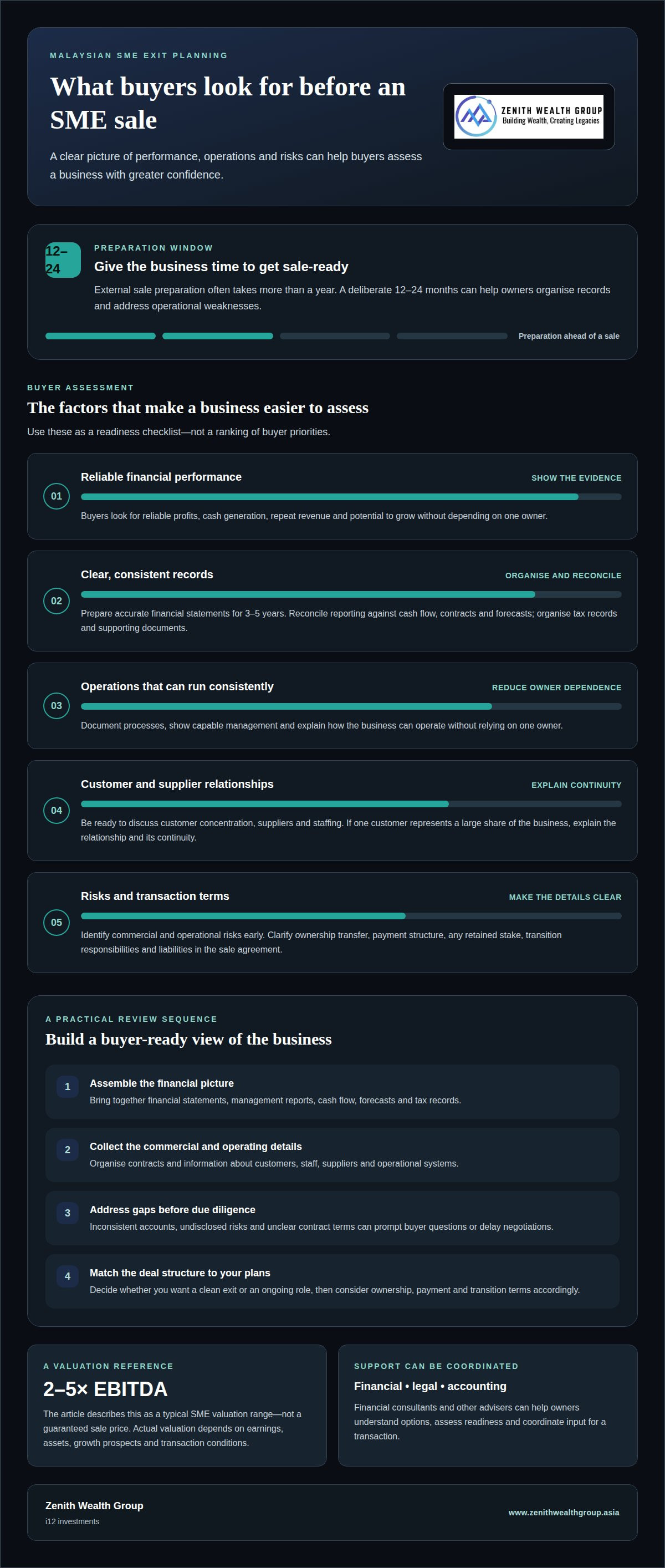
External sale preparation often takes more than a year, so timing matters. A deliberate 12-24 months of preparation can give owners time to organise records and address operational weaknesses.
Buyer Expectations and Business Appeal
Buyers assess whether a company can deliver reliable profits, generate cash, retain repeat revenue and grow without depending on one owner. Clear reporting, capable management, documented processes and diversified customer relationships help demonstrate that the business can operate consistently.
Start with financial statements and management reports, then reconcile them against cash flow, contracts and forecasts. Buyers may also examine customer concentration, suppliers, staffing, tax, operational systems and commercial risks. For example, a business reliant on one customer should be ready to explain the relationship and its continuity. Preparation helps buyers understand performance and identify issues during due diligence.
Strategic and Financial Buyers
A strategic buyer is another company; a financial buyer is an investor. A strategic buyer may value commercial fit, such as access to customers, suppliers or complementary operations. Private equity firms typically aim to generate a significant return within a few years of investing.
A financial buyer may provide growth capital while allowing the owner to retain a stake and participate in the company’s development. A third-party sale can involve selling 70% while keeping minority ownership. Before negotiations, decide whether you want a clean exit or an ongoing role, then match the proposed ownership and transition terms to that goal.
Due Diligence and Sale Risks
Due diligence is the buyer’s review of a company’s financial, commercial and operational position before completing a sale. Malaysian SME owners should prepare accurate financial statements for 3-5 years, organised contracts, tax records, forecasts and information about customers, staff, suppliers and systems.
What due diligence, negotiation and sale agreement risks should owners prepare for? Inconsistent accounts, undisclosed commercial risks and unclear contract terms can prompt buyer questions or delay negotiations. Define the proposed ownership transfer, payment structure, any retained stake and transition responsibilities. Review sale agreements carefully for conditions, allocation of liabilities and commitments after completion. Preparing early helps identify gaps before buyers raise them and gives both sides a clearer basis for decisions.
What Role Do Advisors Play in Successful Exit Planning?
Advisers connect an owner’s goals with the business, transaction structure and personal finances. For owners comparing exit strategies for SME owners in Malaysia, their input can clarify trade-offs when succession, a sale or financial pressure affects the timing.
Exit Planning and Adviser Support
Exit planning assesses readiness, possible routes and priorities before a transaction becomes urgent. Advisers can help a distressed business organise its position, understand options and prepare for discussions with potential partners. Across ASEAN, timing depends on the country, entity structure, route and outstanding obligations. Management or family buyouts may use buyer capital, borrowing or staged payments, depending on available resources and deal terms. Advisers can coordinate financial, legal and accounting input. Government programme support depends on eligibility and business needs; advisers can help owners identify relevant support and plan succession or a transaction.
Business Valuation and Sale Costs
Valuation estimates what a buyer may pay, using earnings, assets, growth prospects and transaction conditions. A typical SME valuation range is 2-5 times EBITDA, but the multiple isn’t a guaranteed sale price. Advisors can explain assumptions and how profitability affects an estimate. Legal, accounting and M&A adviser costs depend on the work required, transaction structure and complexity. Include these costs when comparing an outright sale with a staged transition.
Legal Requirements, Taxes, and Duties
Malaysia’s private M&A deals are primarily governed by the Companies Act 2016 and Contracts Act 1950. Securities Commission or Bursa Malaysia approval isn’t required for private M&A unless a listed company is involved. Tax and duty treatment depends on transaction structure and assets. Share sales generally attract lower stamp duty than asset sales; RPGT and other tax implications require assessment against the deal. Legal and tax advisers can clarify obligations before signing.
Family Businesses and M&A Exits
A family business may consider an M&A exit when succession is uncertain, relatives have different goals, or new ownership could support growth. A merger can combine businesses while allowing an owner to exit gradually or retain a stake. An adviser can compare exit strategies for SME owners in Malaysia against family priorities and continuity goals. For personal planning alongside a transition, discuss your succession and legacy priorities.
Family succession
Family succession transfers leadership or ownership to relatives, but the two changes need not happen together. A transition often spans several years, giving the family time to plan roles and protect business continuity.
Family Wealth and Ownership Continuity
Succession planning connects business ownership with the family’s wider wealth and continuity goals. A written transition plan can clarify who may own shares, who receives business income, and how decisions will be made. Only 42% of business owners have a formal transition plan, so documenting family expectations can help prevent uncertainty later.
For example, one relative might take operational leadership while other family members retain ownership. Make the distinction between owning the company and running it clear to everyone involved. This structure can preserve family participation while matching responsibilities to each person’s ability and interest.
Leadership Succession and Continuity
Leadership succession prepares the next person to guide the company, rather than relying on an abrupt handover. Identify the key decisions the owner currently makes, then assign those responsibilities gradually to a successor. This gives employees, customers and business partners time to adjust to new leadership.
A family member may be the intended successor, but readiness matters more than the relationship alone. Define the role, decision-making authority and development needs before the transfer. Because family business transitions often span several years, a planned overlap can help preserve operational knowledge and customer relationships.
Ownership Transfer Options
Malaysian family businesses can plan a gradual ownership transfer, pass ownership to a family successor or consider an external sale. The right structure depends on the family’s goals, the successor’s ability to lead and whether the owner wants to retain a stake after stepping back.
For a staged transition, the current owner may transfer responsibilities and ownership over time, with clear terms agreed among family members. An external financial investor may also provide growth capital while allowing the owner to retain a stake and remain involved in the business’s development. Compare each route against family wealth, leadership continuity and the desired timing of the exit.
Choosing an exit route based on owner goals
Choose a route by deciding what matters most: a clean break, continued involvement, family ownership or an orderly closure. Market conditions and the company’s stage of development can also shape the timing.
How do a buyer sale, management buyout, family succession and winding up compare for Malaysian SMEs? A buyer sale transfers ownership externally, while a management buyout transfers it to the existing management team or employees. Family succession keeps the business within the family; winding up closes it, sells assets, pays creditors and releases any remaining value.
- Sell to an external buyer: Consider this when you want to exit or bring in a buyer with strategic fit or investment capital. A strategic buyer is another company; a financial buyer is an investor. You may also sell a majority stake and retain minority ownership.
- Management buyout: Consider this when existing leaders can take ownership and preserve operational knowledge. It can take longer than an external sale because the management team must secure financing and develop leadership.
- Family succession: Choose this when continuity under family ownership matters and a successor is prepared to lead. Ownership and management can transfer at different times, allowing the outgoing owner to step back gradually.
- Winding up: Consider this when continuing or transferring the business does not fit your goals. The process closes the company and sells assets to address creditors and any remaining value.
A merger offers another route: it combines the business with another company and may let the owner exit gradually or retain a stake. Compare each option against your desired role after the transition, the business’s ability to continue, family priorities and appetite for further involvement. The strongest fit is not automatically the route with the highest headline offer; it is the one that supports your priorities and the company’s position.
Map your personal objectives alongside ownership and succession decisions through a conversation about your exit goals.
Zenith Wealth
Zenith Wealth helps you connect a business transition with your personal financial priorities. Consider this support when weighing how an exit may affect retirement plans, family goals, wealth protection or legacy arrangements. Planning around these priorities can help you look beyond the transaction itself, while recognising that personal financial planning and business-sale advice are distinct tasks.
Business Succession Planning, Retirement Planning, Education Funding, Wealth Protection and Legacy Planning can each relate to different parts of that personal picture. For owners also thinking about investment management, i12 investments is another relevant part of the wider financial conversation.
Start a conversation about how your exit goals fit your plans. Contact Zenith Wealth.
Shape the next chapter around your priorities
Your exit plan is also a personal transition. Before committing to a route, consider what you want your time, responsibilities and finances to look like afterward. This perspective can help you judge whether a proposed handover supports the life you’re planning, as well as the company’s next stage.
Choosing among exit strategies for SME owners in Malaysia means weighing business outcomes alongside your family’s longer-term needs. Zenith Wealth’s Retirement Planning, Education Funding and Wealth Protection can help you consider how those priorities fit into your financial plans after a business transition.
You don’t need every decision settled before starting a conversation. Share what you hope to achieve and where you feel uncertain. Contact Zenith Wealth about your exit planning and take a considered step toward the future you want.
Frequently Asked Questions
When Should SME Owners Start Exit Planning?
Begin exit planning three to ten years before a transaction or transition. This timeframe gives owners room to consider different routes, build a successor’s experience or reduce reliance on the owner. For example, an owner considering a management buyout can plan leadership development and financing discussions before a handover becomes urgent.
How can you generate interest in your business from potential buyers?
Present a clear business case explaining how the company earns revenue, serves customers and can grow. Prepare a concise overview of its products, customer segments, leadership and growth opportunities, then approach buyers whose interests fit the business. Keep sensitive details for later discussions and organise supporting records so serious prospects can assess your claims efficiently.
What Does a Merger and Acquisition Process Look Like in Malaysia?
A private M&A process commonly moves from initial discussions to an offer, due diligence, negotiation and signed transaction documents. Private company M&A transactions in Malaysia typically close within three to four months. The Companies Act 2016 and Contracts Act 1950 primarily govern private M&A deals. The chosen structure, outstanding obligations and findings during due diligence affect the work involved.
What are the most common exit strategies for business owners?
Common routes include selling to an external buyer, transferring ownership to family, arranging a management buyout, merging with another business or winding up. A sale can transfer all ownership or leave the former owner with a continuing stake. The choice depends on whether the owner prioritises a clean break, ongoing involvement, family continuity or closing the company.
What options are available?
Options include a third-party sale, family succession, a management buyout, a merger, an initial public offering or liquidation. A merger may allow an owner to leave gradually or retain a stake in the combined business. Liquidation closes the business and sells its assets to pay creditors and release any remaining value. Compare the routes against your desired future role.
Why Is an Exit Strategy Critical for SMEs?
An exit strategy gives owners a framework for decisions about ownership, leadership and personal finances before circumstances force a rushed choice. It can also clarify what the company needs to maintain continuity if the owner steps back. For example, documenting who handles key customer and operational decisions can make a future transition easier to understand and manage.


