

Leaving a large sum of money to an unprepared heir isn't a gift. It's a massive risk that keeps many Singaporean parents awake at night. You want to ensure your hard earned wealth funds their education rather than a lifestyle they aren't ready to handle. It's natural to feel overwhelmed by the 65% ABSD rates on residential property trusts or the new 2026 MAS compliance standards. You know that setting up a trust fund for my child in Singapore is the right move for protection, but the complexity often feels like a barrier to entry.
This guide provides the clarity you need to move forward. You'll learn how to manage the legal landscape, from the new ASGD tax IDs to strategic growth through i12 investments. We'll outline a clear roadmap for setup and explain how a professional financial consultant can help you secure your child's future. By the end, you'll have the confidence to stop worrying about inheritance risks and start building a legacy that lasts.
Key Takeaways
- Understand why modern trusts are essential for protecting your child’s education funding from future creditors and legal complexities in 2026.
- Follow our clear, 5-step roadmap for setting up a trust fund for my child in Singapore to ensure your legacy is managed exactly as you intended.
- Learn to move beyond low-yield savings accounts by incorporating i12 investments to drive strategic, long-term growth within the trust.
- Discover how a professional financial consultant simplifies the setup process by coordinating between legal experts and investment houses.
Why Consider a Trust Fund for Your Child in Singapore?
The 2026 financial environment demands a move away from simple savings. Many parents now realize that setting up a trust fund for my child in Singapore is no longer a luxury. It's a practical necessity. This structure protects your family assets from external threats like future creditors or potential divorce claims. It creates a dedicated space where wealth can grow undisturbed. With the 65% ABSD rate currently applying to residential property transfers into trusts, having a clear strategy is more important than ever.
One of the biggest fears for parents is "sudden wealth syndrome." Giving a young adult a massive lump sum can lead to poor decisions and lost opportunities. A trust solves this. You decide when and how the money is released. Understanding How a Trust Fund Works is the first step in creating these boundaries. You act as the settlor, defining the rules that keep the inheritance safe until your child is mature enough to manage it.
Setting up a trust fund for my child in Singapore offers several key advantages:
- Asset Shielding: Protection from future litigation or bankruptcy.
- Managed Payouts: Control over the timing and conditions of distributions.
- Speed: Seamless transition of wealth without the long probate delays associated with Wills.
Trust vs. Will: Which is Better for Your Child?
A Will is a vital document, but it has limits. It must go through probate, a legal process that can take months or even years. During this time, your child might not have access to the funds they need for daily living. A trust bypasses probate. It provides immediate liquidity for emergencies or maintenance. This speed is a cornerstone of a solid legacy planning strategy. While a Will says who gets what, a trust ensures they get it safely and quickly.
The Role of Education Funding within a Trust
Education is often the primary goal for parents. By earmarking specific assets for education funding in Singapore within a trust, you ensure tuition fees are covered. This remains true even if you are no longer around to provide for them. A financial consultant can help you calculate the exact capital required for future university costs. They can also guide you toward growth through i12 investments. This ensures the fund keeps pace with rising tuition inflation, turning a static pot of money into a dynamic resource for your child's university dreams.
How a Trust Fund Works: The Essential Mechanics
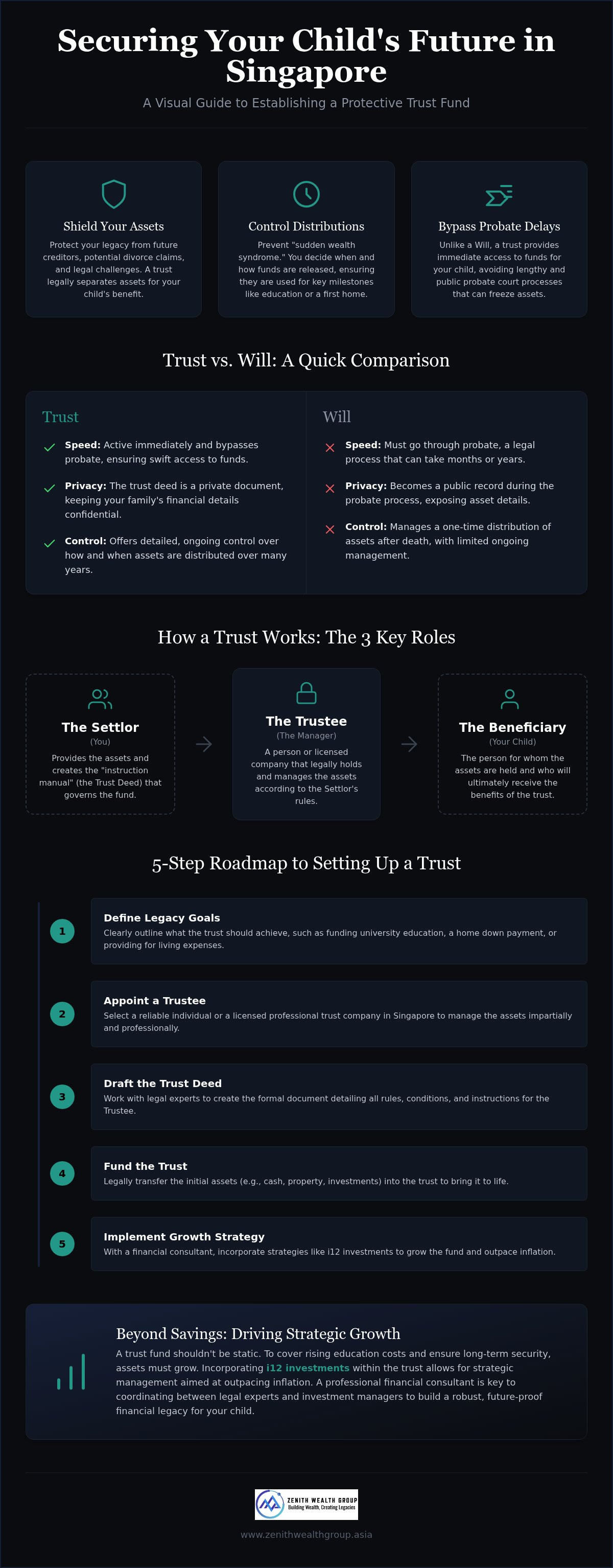
Think of a trust as a protective container for your assets. It isn't just a bank account; it's a legal relationship. When you're setting up a trust fund for my child in Singapore, you're creating a three-party structure designed for stability. You, as the Settlor, provide the assets. You also set the rules for how that wealth should be used. This role is about vision and legacy.
The Trustee is the person or company that holds the legal title to those assets. They don't own the money for their own benefit. Instead, they manage it according to your specific instructions. In Singapore, many families choose licensed trust companies for their permanence and professional standards. Finally, the Beneficiary is your child. They hold the equitable interest. This means that while they don't control the fund yet, the law ensures the assets are managed solely for their advantage.
Managing these assets often involves strategic growth. For example, incorporating i12 investments within the trust allows the trustee to target long-term educational goals. It's about moving beyond simple cash holdings to ensure the fund's value stays ahead of inflation and rising costs. If you're feeling unsure about the technicalities, a financial consultant can help you navigate these requirements.
The Trust Deed: Your Instruction Manual
The trust deed is the engine of the entire arrangement. It's the most critical document you'll sign during the setup process. This deed outlines exactly when your child receives payouts and what the funds can be used for, such as university tuition or a first home down payment. Unlike a Will, which becomes a public document during the probate process, a trust deed remains private. This keeps your family's financial details away from prying eyes. You can include flexible clauses that allow the trustee to adapt to your child's changing needs over time.
The Legal Framework in Singapore
Singapore offers a robust environment for asset protection. The Singapore Trustee Act provides the primary rules, ensuring trustees act in the best interests of your child. As of August 2026, there are 67 licensed trust companies in Singapore, all of which must comply with strict MAS guidelines. These regulations were updated in January 2026 to include enhanced verification and stricter operational standards. This high level of oversight gives parents peace of mind that their legacy is in safe hands.
Staying compliant in 2026 also means understanding new tax administrative changes. For instance, the transition to the 9-character ASGD tax reference IDs starting in July 2026 is a detail your professional team will manage. You can learn more about the legal nuances through the Ministry of Law’s resources on The 5-Step Process to Setting Up Your Child's Trust. This framework ensures that your efforts in setting up a trust fund for my child in Singapore are legally sound and future-proof.
Strategic Asset Growth: Integrating i12 Investments
Many parents view a trust as a vault. They think the goal is simply to keep the money safe. But if you leave those assets in a low-yield savings account for fifteen years, you aren't protecting your child's future. You're letting inflation erode it. When you're setting up a trust fund for my child in Singapore, growth is just as vital as legal protection. This is where the i12 investments philosophy comes into play. It balances aggressive growth with calculated risk mitigation to ensure the capital lasts. Using this approach while setting up a trust fund for my child in Singapore transforms a static inheritance into a dynamic legacy.
Diversification is the foundation of this approach. Instead of keeping all eggs in one basket, a professional portfolio spreads assets across global equities, bonds, and alternative investments. A financial planner ensures this investment mandate aligns perfectly with your trust's timeline. If your child is five, you have a longer runway for growth than if they are fifteen. The goal is to build a structure that grows alongside your child's needs.
Managing Risk for Long-Term Beneficiaries
The risk profile of your trust should evolve as your child grows. Stagnant funds face a massive 10-20 year inflation hurdle that can significantly reduce purchasing power. By utilizing strategic investment management, you can target returns that outpace these rising costs. It's also helpful to consult the Public Trustee's Office guidelines for minors' trusts to understand how guardians can access funds for maintenance. Balancing these short-term needs with long-term growth is the key to a successful strategy.
Tax Efficiency in Singapore Trusts
Income generated within a trust is generally taxed at the trustee level at a flat rate of 17%. This is the prevailing rate for the Year of Assessment 2026. Structuring payouts correctly can help manage this burden for the beneficiary. A financial consultant works alongside tax professionals to ensure your distributions are as efficient as possible. They also handle administrative shifts, like the new 9-character ASGD tax reference IDs being issued from July 2026. This level of coordination ensures that while you focus on your child's dreams, the technical details are handled with precision.
The 5-Step Process to Setting Up Your Child's Trust
Moving from a general idea to a legal reality requires a structured approach. It isn't a task you should rush. When you begin setting up a trust fund for my child in Singapore, you need to follow a methodical path to ensure no detail is missed. This isn't just about paperwork. It's about codifying your intentions for the next generation. A clear process helps you manage the 2026 regulatory changes while keeping your family's specific needs at the center of the conversation.
The journey typically follows these five essential steps:
- Define the Objective: Decide if the fund is for monthly maintenance, specific university milestones, or a later lump-sum inheritance.
- Select Your Trustee: Choose between a trusted individual or a licensed professional trust company.
- Identify the Assets: Determine if you'll fund the trust with cash, property, or a portfolio of i12 investments.
- Draft the Trust Deed: Work with a financial planner and legal experts to write the "instruction manual" for your assets.
- Fund the Trust: Execute the formal transfer of legal ownership to the trustee, ensuring all tax IDs like the new ASGD reference are in place.
Each step requires careful thought. For instance, identifying assets involves more than just picking a number. You must consider the 65% ABSD on residential property trusts or the long-term growth potential of your investment choices. If you're ready to start this journey, reaching out to a financial consultant can help you map out these steps with precision.
Choosing Your Trustee: Professional vs. Personal
Many parents initially think of appointing a sibling or a close friend as a trustee. It feels personal and cost-effective. However, personal trustees can face conflicts of interest or lack the technical knowledge to manage complex i12 investments. As of August 2026, there are 67 licensed trust companies in Singapore. These professional firms offer continuity. They don't fall ill or move away. They provide a neutral, expert hand to ensure your trust deed is followed exactly as written, even decades from now.
Costs of Setting Up and Maintaining a Trust
You should view the costs of a trust as an investment in your child's security. There are two main layers to consider: the initial setup fees and the ongoing annual administration charges. While these costs vary based on complexity, they're often a small price to pay for robust wealth protection. You'll also need to budget for professional investment management fees. These ensure the assets within the trust actually grow. Balancing these costs ensures the structure remains sustainable for the long term.
How a Financial Consultant Streamlines Your Legacy
Large retail banks often provide a "one-size-fits-all" approach to estate planning. They focus on the product, not the person. When you're setting up a trust fund for my child in Singapore, you need a strategy that reflects your family's unique dynamics. A financial consultant serves as the architect of this plan. They don't just sell a trust; they coordinate the entire ecosystem. This includes working with lawyers to draft the deed, selecting the right trustee, and managing the investment houses. They bridge the gap between your legal documents and your financial reality.
This coordination is vital because a trust isn't a "set and forget" arrangement. As your child grows, their needs change. A toddler's maintenance requirements are vastly different from a university student's tuition fees. Regular reviews ensure your trust remains relevant to these milestones. Your financial planner also ensures this strategy fits within your broader retirement planning in Singapore. You shouldn't have to choose between your child's inheritance and your own financial freedom. A balanced plan protects both generations simultaneously.
The Zenith Wealth Approach
At Zenith Wealth, we prioritize human interaction over institutional coldness. We are authorized representatives of finexis advisory, specializing in legacy and education planning. Our approach is proactive. We don't wait for you to call us with questions about the 2026 MAS regulations or the transition to 9-character ASGD tax IDs. We reach out to you. By utilizing i12 investments, we power your child's trust with a focus on long-term resilience and growth. We understand the local Singapore landscape. We know how to navigate the intricacies of the Trustees Act while keeping your family's goals at the forefront. You get a partner who is ready to engage and grow alongside you.
Taking the First Step Toward Your Child's Future
Waiting for the "perfect time" is a common mistake. In estate planning, time is your most valuable asset. Every year you delay is a year of lost compounding growth within your i12 investments. It's also a year where your assets remain unprotected from life's uncertainties. Setting up a trust fund for my child in Singapore starts with a simple, honest conversation. A discovery call can clarify your goals and remove the noise of legal complexity. It's about moving from "I should do this" to "it's done." Ready to secure your family's future? Contact a Zenith financial consultant today.
Start Building Your Child's Future Today
Securing your child's inheritance isn't just about the numbers. It's about ensuring they have the support they need when they're ready for it. Setting up a trust fund for my child in Singapore provides a robust shield against creditors and mismanagement while targeting growth through i12 investments. This dual approach ensures your assets don't just sit idle; they evolve alongside your family's needs.
As authorized representatives of finexis advisory, Zenith Wealth offers a boutique, human-centric approach to wealth. We are specialists in i12 investment strategies and help you manage the 2026 legal landscape with ease. You don't have to handle these complexities alone. A dedicated financial consultant can act as your guide, ensuring every detail of your legacy is handled with precision and care.
Secure your child's legacy with a personalized consultation. Let's start the conversation and build a lasting foundation for your child's dreams.
Frequently Asked Questions
What is the minimum amount needed to set up a trust fund in Singapore?
There is no legally mandated minimum amount for setting up a trust fund for my child in Singapore. However, you should consider the setup costs and annual administration fees, which typically make a trust most cost-effective for assets starting in the mid-six figures. A financial planner can help you weigh these expenses against the long-term protection benefits for your specific situation.
Can I change the terms of the trust once it has been set up?
Your ability to change terms depends on whether you establish a revocable or irrevocable trust. A revocable trust offers maximum flexibility, allowing you to alter instructions as your child grows. An irrevocable trust is much harder to change but provides superior protection against creditors and legal claims. Most parents work with a financial consultant to find the right balance between flexibility and security.
How is a trust fund taxed in Singapore for 2026?
Trust income is generally assessed at the trustee level at a flat rate of 17% for the Year of Assessment 2026. You should also prepare for administrative updates, as the IRAS began issuing new 9-character ASGD tax reference numbers in July 2026 to replace the old system. These changes ensure your trust remains compliant with the latest Singaporean tax transparency standards.
What happens to the trust if the trustee passes away?
The trust does not end if a trustee passes away; instead, a successor trustee takes over based on the instructions in your trust deed. This is why many families choose licensed trust companies rather than individuals. Professional firms provide "perpetual succession," meaning the management of your i12 investments continues without interruption, regardless of what happens to any single person.
Can I set up a trust for my child if I am an expat living in Singapore?
Yes, expats are fully permitted to establish trusts in Singapore, and there are no residency restrictions for the settlor or the beneficiaries. However, the trustee must be either a Singapore resident individual or a Singapore-incorporated licensed trust company. This makes Singapore an attractive hub for international families looking to secure their child's education funding through stable, local legal structures.
Is a trust fund protected from my own creditors in the event of bankruptcy?
An irrevocable trust generally protects assets from your personal creditors, provided the transfer wasn't made to intentionally defraud them. Singapore law includes specific "look-back" periods to ensure the trust was established in good faith. By setting up a trust fund for my child in Singapore early, you create a legal "firewall" that keeps their inheritance safe from future business risks or personal liabilities.
How does a trust differ from a Junior ISA or a simple savings account?
A trust offers far more control and protection than a standard bank account or a Junior ISA. While a savings account is just a pot of cash, a trust is a legal structure that dictates exactly how and when money is spent. It protects the capital from "sudden wealth syndrome" and ensures the funds are used for specific goals, such as tertiary education or property deposits, rather than being spent all at once.
Can I be the trustee of my own child's trust fund?
You can legally act as your own trustee, but it requires you to manage all administrative, tax, and legal filings personally. Many parents find it difficult to balance these fiduciary duties with active investment management. Most choose to appoint a professional firm to handle the technical side of i12 investments, ensuring the trust remains compliant with MAS regulations while they maintain their role as the guiding settlor.


