

Did you know that a 2026 survey revealed 56% of Singaporeans still don't have a formal will? For many, estate planning for property owners Singapore feels like a hurdle best left for another day. You've worked hard to secure your home or investment units. It's natural to feel protective of that legacy. You likely worry about your children facing a heavy Additional Buyer’s Stamp Duty (ABSD) bill on their future homes or dealing with family friction over an illiquid asset. We understand these concerns and are here to help.
This guide shows you how to protect your assets while ensuring a seamless transfer of wealth. You'll learn how to manage ownership structures, handle CPF nominations, and balance your property portfolio with liquid options like i12 investments. Our goal is to provide a clear roadmap that minimizes tax exposure and brings you peace of mind. A dedicated financial consultant can help you turn these legal complexities into a simple, human-centric plan. Let's explore the essential steps for your 2026 strategy.
Key Takeaways
- Understand the critical differences between Joint Tenancy and Tenancy-in-Common to ensure your property shares are distributed according to your specific wishes.
- Learn how to protect your heirs from the "ABSD trap," ensuring that inherited property doesn't trigger massive tax burdens on their future home purchases.
- Discover why estate planning for property owners Singapore requires a balance between illiquid real estate and diversified assets like i12 investments for better family liquidity.
- Identify when a standard Will falls short and how testamentary trusts can provide a secure safety net for minor children or vulnerable beneficiaries.
- See how a financial consultant acts as your professional guide, turning complex property laws into a clear, actionable roadmap for your family’s future.
Understanding Estate Planning for Singapore Property Owners
Estate planning is a proactive strategy to manage and distribute real property and financial assets efficiently. In our local market, where real estate values are high and regulations are tight, this process is about more than just a legal document. It's about ensuring your family isn't left with a logistical nightmare. Proper estate planning for property owners Singapore requires a deep understanding of how illiquid assets interact with your total wealth. Without a clear plan, the Intestate Succession Act dictates how your assets are split. This rigid law follows a fixed formula that may not align with your family's actual needs or your personal wishes.
The Property Wealth Gap in Singapore
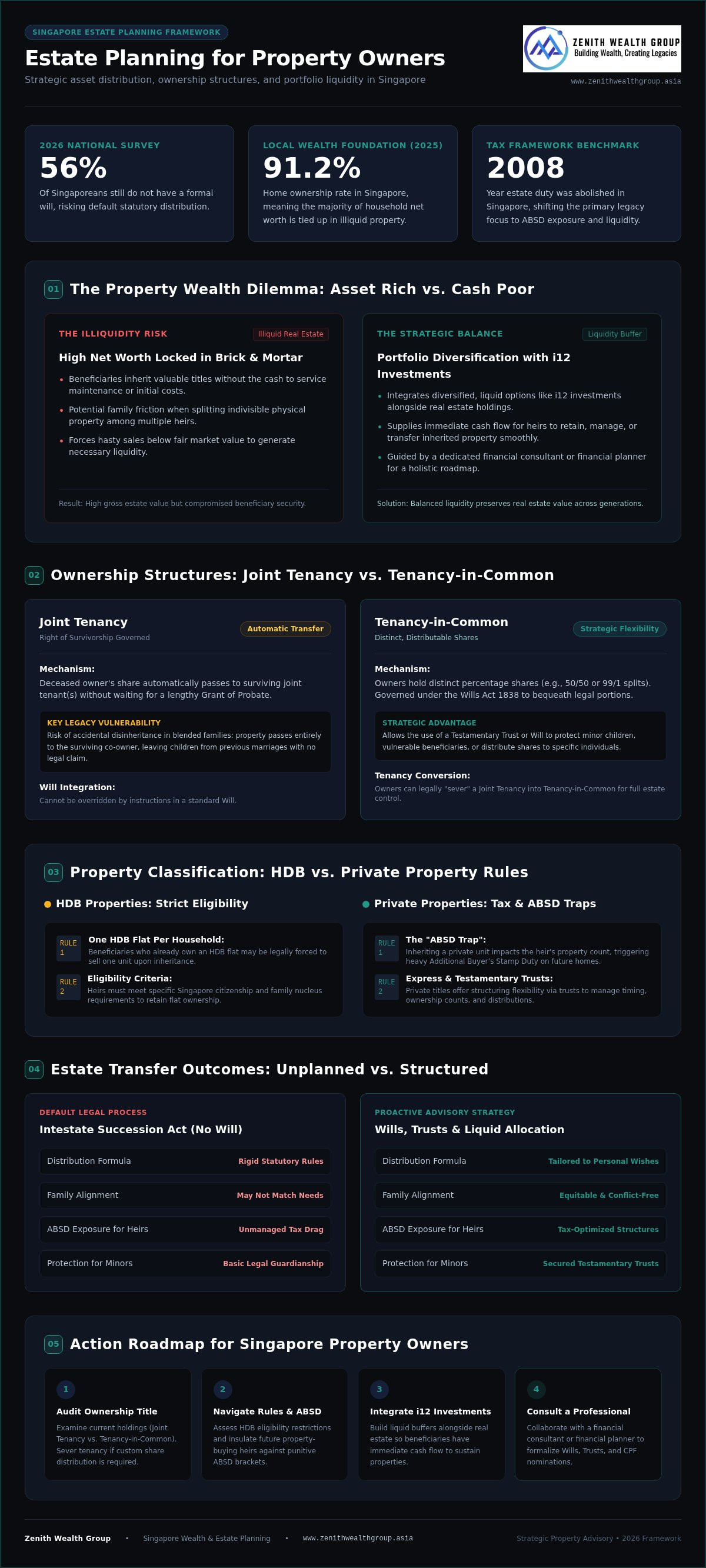
Most Singaporean households have their net worth tied up in their homes. With a home ownership rate of 91.2% as of 2025, property is the cornerstone of local wealth. However, this often leads to being "asset rich but cash poor." When a property is passed down, beneficiaries might lack the liquid funds to maintain the asset or cover immediate costs. A financial consultant plays a vital role here by building a holistic roadmap. We look at balancing your property portfolio with liquid instruments like i12 investments. This strategic mix ensures your heirs have the cash flow they need to manage the legacy you've built without being forced into a hasty sale.
HDB vs. Private Property: Different Rules Apply
The rules for inheriting a home depend heavily on the type of property you own. HDB flats come with strict eligibility requirements. For instance, the "one HDB flat per household" rule means a beneficiary who already owns an HDB might be forced to sell one. They must also meet specific citizenship and family nucleus criteria to keep the flat. Private property offers more flexibility in terms of who can own the title, but it presents different challenges. While Singapore abolished estate duty in 2008, inheriting a private unit still impacts a beneficiary’s property count. This can trigger significant Additional Buyer’s Stamp Duty (ABSD) if they plan to buy their own home later. Some owners explore an Express trust to manage these distributions, though this requires precise planning. You can contact our team to discuss which structure fits your specific family situation.
Ownership Structures: Joint Tenancy vs. Tenancy-in-Common
The way you hold the title to your home is the bedrock of your estate strategy. In Singapore, many couples default to Joint Tenancy without considering the long term impact on their legacy. This choice determines whether your property passes automatically to a co-owner or follows the instructions in your will. Effective estate planning for property owners Singapore starts with choosing the right structure to match your family's future needs.
The Pros and Cons of Joint Tenancy
Joint Tenancy is defined by the Right of Survivorship. When one owner passes away, their share automatically transfers to the surviving joint tenant. It's a fast, seamless process. You don't have to wait for a lengthy Grant of Probate to manage the property. However, this simplicity carries risks. It can lead to accidental disinheritance. For example, in blended families, a property might pass entirely to a surviving spouse, leaving children from a previous marriage with no legal claim to the family home. It's a rigid structure that leaves little room for specific legacy wishes.
Strategic Use of Tenancy-in-Common
Tenancy-in-Common offers the flexibility that many modern families require. Under this structure, each owner holds a distinct, separate share of the property. You might choose a 50/50 split, or a 99/1 arrangement to manage stamp duties. Because these shares are separate, you can distribute them through your will. When drafting a will under the Wills Act 1838, you can only bequeath what you legally own in your own name. This structure is essential if you want to use a Testamentary Trust to protect a child's inheritance or ensure a specific family member receives your portion of the home.
If you currently hold a property in Joint Tenancy but want to change your distribution plan, you can "sever" the tenancy. This legal process converts the ownership into Tenancy-in-Common. It's a proactive step that gives you full control over your legacy. A financial consultant can help you decide if this move is right for you. They look at your whole picture, balancing your real estate with liquid assets like i12 investments. This ensures your heirs aren't just inheriting a title deed, but a functional, well funded future. If you're ready to clarify your ownership status, a financial planner can help you start the conversation today.
Wills, Trusts, and Property: Which One Do You Need?
A basic Will is a good start, but it has limits. If you own multiple properties, relying solely on a Will can lead to delays and administrative hurdles. Efficient estate planning for property owners Singapore requires a more robust toolkit. You need to decide if a Will, a Trust, or a combination of both serves your family best. Integrating Legacy Planning in Singapore ensures your real estate works alongside your other assets for long term success.
The Role of the Will in Property Transfer
Your Will acts as your voice. It identifies who inherits your titles. However, you must choose an executor who understands the local market. Dealing with the Singapore Land Authority (SLA) or HDB requires specific knowledge and attention to detail. Your Will should clearly state specific devises for certain properties. Don't just leave everything in a residuary estate clause if you want specific heirs to have specific homes. Keep in mind that marriage automatically revokes a Will in Singapore. Every new property purchase is a signal to review your documents. Understanding Singapore's land ownership policies helps you see how these legal transfers actually happen on the ground.
When to Consider a Property Trust
Trusts offer a level of control that a Will can't match. A Testamentary Trust is vital for minor children or vulnerable heirs. It ensures they don't receive a massive asset before they're ready to manage it. For those looking further ahead, a Living Trust can hold property for future generations. This can protect the asset from potential creditors or legal claims against individual heirs. It also simplifies the distribution of rental income across your family tree.
Setting up a trust involves professional costs. You'll need to weigh these against the benefits of asset protection and tax efficiency. A financial consultant helps you run this cost-benefit analysis. They ensure your plan balances illiquid property with liquid assets like i12 investments. This liquidity is crucial for paying trust maintenance fees or property taxes. It keeps your legacy running smoothly without draining your heirs' personal savings. If you're unsure which path to take, a financial planner can help you map out the right structure for your needs.
Mitigating ABSD and Protecting Generational Wealth
Singapore doesn't have inheritance tax, but that doesn't mean passing down property is free. The "ABSD Trap" is a major concern for estate planning for property owners Singapore. If your child inherits even a small share of your home, it counts as their first property. When they decide to buy their own residence later, they'll face a 20% Additional Buyer's Stamp Duty (ABSD) on that second property purchase. This can effectively lock them out of the market or drain their hard earned savings. Proactive planning is the only way to avoid these unintended financial hurdles.
Liquidity Planning for Beneficiaries
Ownership brings hidden costs. Legal fees, maintenance, and property taxes don't stop when an owner passes away. If your heirs are "asset rich but cash poor," they might struggle to maintain the family home. Integrating Wealth Protection strategies ensures the value of the asset isn't eroded by these immediate financial pressures. Some families use "de-coupling" early on to ensure titles are held in a way that minimizes future tax exposure. It's about protecting the value of your legacy, not just the title deed. You want your heirs to inherit a blessing, not a financial burden.
The Strategic Role of i12 Investments
A balanced legacy requires more than just brick and mortar. Real estate is notoriously illiquid. You can't sell a bedroom to pay a tax bill or settle a legal dispute. This is where i12 investments come into play. These assets provide the necessary liquid funds to cover stamp duties or legal costs without disrupting your real estate portfolio. i12 investments can act as a liquidity buffer to prevent forced property sales. By diversifying your wealth away from pure real estate, you protect your family from local market volatility. It gives your heirs the flexibility to choose whether to keep or sell the property based on their needs, not their bank balance.
A financial consultant can help you structure these assets seamlessly. They'll look at your current holdings and project the potential tax impact on your heirs. It's better to plan now than to let your children face a six-figure tax bill later. You've worked hard for your assets; let's make sure they stay in the family. If you want to review your tax exposure and build a robust strategy, speak with a financial planner to build your liquidity plan today.
How a Financial Consultant Secures Your Property Legacy
A Will is the script, but your financial strategy is the execution. Effective estate planning for property owners Singapore requires a professional who can bridge the gap between legal titles and actual cash flow. While lawyers focus on the validity of your documents, a financial consultant ensures those documents don't trigger a financial crisis for your heirs. 2026 is a pivotal year for a review. With the recent adjustments to property holding periods and HDB inheritance criteria, what worked two years ago might be obsolete today. We help you stay ahead of these regulatory shifts by ensuring your plan is as dynamic as the market itself.
The Zenith Wealth Approach
We believe in looking at the entire picture. Our process involves a deep dive into your property titles, CPF balances, and current investment portfolios. For parents and those nearing retirement, we create a roadmap that protects your lifestyle while building a bridge to the next generation. By incorporating strategic insights like i12 investments, we help you maintain a balanced portfolio that isn't overly exposed to real estate market fluctuations. This holistic view is closely tied to our Retirement Planning Guide, ensuring your legacy doesn't come at the expense of your own long term security. We prioritize your current needs just as much as your future wishes.
Start Your Legacy Conversation Today
Taking the first step is often the hardest part, but we make it simple. Your initial session with a financial planner is designed to be a conversation, not a high pressure sales pitch. We focus on listening to your concerns about family dynamics and wealth preservation. To get the most out of our time, prepare your property tax statements and CPF nomination details for review. We invite you to experience a more human, approachable style of advisory. You've spent years building your assets; let's spend an hour ensuring they stay protected. The landscape of estate planning for property owners Singapore is changing, and we're here to guide you through every step. Connect with Zenith Wealth to begin your personalized legacy review today.
Take Charge of Your Generational Legacy
Your property is likely your most significant asset. Protecting it requires more than just a basic will. Choosing the right ownership structure and preparing for potential tax hurdles like the "ABSD trap" ensures your heirs aren't burdened by unexpected costs. By balancing real estate with liquid options like i12 investments, you provide your family with the flexibility they need during a difficult time. It's about ensuring your hard-earned wealth remains a blessing, not a logistical headache.
Comprehensive estate planning for property owners Singapore is about peace of mind. As authorized representatives of finexis advisory Pte Ltd, we've provided human-centric financial planning since 2005. We focus on building holistic roadmaps that protect your generational wealth while simplifying complex local regulations. Don't leave your family's future to chance. Let's start a proactive conversation about your property portfolio. Secure your property legacy with a personalized consultation. Your family's future is worth the effort.
Frequently Asked Questions
Do I need estate planning if I only own one HDB flat in Singapore?
Yes. Even with a single HDB flat, you need to navigate specific eligibility rules. If your beneficiary already owns an HDB, the 'one flat' rule might force them to sell their current home or the inherited one. Effective estate planning for property owners Singapore helps you manage these transitions while ensuring your family isn't caught off guard by HDB's strict ownership and citizenship requirements.
Can my foreign spouse inherit my Singapore property?
Yes, but with specific legal restrictions. Under the Residential Property Act, foreign spouses can inherit residential property, but they may need approval from the Land Dealings Approval Unit (LDAU) to retain ownership. If approval isn't granted, the property usually must be sold within a set timeframe. A financial planner can help you structure your ownership to provide long term security for your spouse.
What happens to my property if I die without a Will in Singapore?
Your property will be distributed according to the Intestate Succession Act. This law follows a rigid formula that typically splits assets between your spouse and children in fixed proportions. This can lead to complicated co-ownership situations or family disputes, especially if heirs have different views on whether to sell or keep the home. It leaves no room for your personal preferences.
Will my children have to pay ABSD if they inherit my condo?
No ABSD is payable at the point of inheritance. However, inheriting a condo increases your child’s property count. If they decide to buy their own residential property later, they'll face the current 20% ABSD rate for Singapore Citizens on their second home. This can significantly drain their savings. Proper planning helps you understand how your legacy affects their future purchasing power.
How does a Testamentary Trust differ from a Living Trust for property?
A Testamentary Trust is created through your Will and only begins after you pass away. It's a common choice for protecting assets for minor children. A Living Trust is established during your lifetime, allowing you to transfer property titles into the trust immediately. This provides earlier asset protection and can help your family avoid the public and often lengthy probate process after you're gone.
Can I use my CPF savings to pay for estate planning services?
No, you can't use CPF savings to pay for professional estate planning fees. CPF funds are strictly reserved for retirement, healthcare, and approved housing costs. However, ensuring your CPF nomination is updated is a critical part of estate planning for property owners Singapore, as CPF funds aren't covered by your Will. A financial consultant can help you align these nominations with your property legacy.
How often should I review my estate plan with a financial consultant?
You should review your plan every three to five years or whenever a major life event occurs. Marriage, a new property purchase, or the birth of a child are all critical times to update your strategy. A financial planner can also help you adjust your plan if there are changes to HDB rules or stamp duty regulations, ensuring your roadmap remains effective and relevant.
What is the role of i12 investments in a property-heavy estate?
i12 investments serve as a vital liquidity buffer for your heirs. Since property is an illiquid asset, your family might struggle to pay for immediate costs like maintenance, property taxes, or legal fees. These investments provide the cash flow needed to manage these expenses without forcing a hasty sale of the family home. This balance ensures your real estate remains a stable part of your legacy.


