

Holding excess cash during uncertain times feels safe, but inflation quietly erodes your purchasing power while you wait on the sidelines. If you worry that a sudden market drop could derail your retirement savings, you aren't alone. True defense doesn't mean retreating from the markets entirely. Instead, implementing proactive risk management strategies for investors allows you to cushion painful drawdowns while keeping your capital positioned for long-term growth.
Discover how to shield your portfolio against economic shocks while maintaining steady momentum. In this guide, we break down the practical balance between broad diversification, structured asset allocation, and modern approaches like i12 investments. Working alongside a dedicated financial planner can bring clarity to complex currency shifts and volatile cycles. Here is your roadmap to building a resilient portfolio that protects what you have built and keeps your financial future secure.
Key Takeaways
- Master effective risk management strategies for investors to protect long-term capital from severe market downturns without sacrificing growth potential.
- Learn the difference between short-term price volatility and permanent loss, identifying how market-wide swings impact your portfolio differently than individual asset risks.
- Discover how strategic asset allocation, cross-asset diversification, and multi-asset solutions like i12 investments build balance against currency shifts and inflation.
- Uncover tactical downside controls, including defensive hedging and stop orders, while learning how to avoid common execution pitfalls during volatile sessions.
- Align your risk capacity with your specific life stage by partnering with a dedicated financial consultant to stress-test your portfolio objectively.
Understanding Investment Risk: What Every Modern Investor Faces
Real risk is not merely a momentary red dip on a digital screen. True risk is the permanent destruction of your capital. When evaluating sound financial risk management, you must separate routine market volatility from unrecoverable wealth loss. For Singapore investors allocating across global markets, silent threats like persistent inflation and foreign exchange swings also erode purchasing power over time. Building effective risk management strategies for investors starts with identifying these distinct threats before they disrupt your balance sheet.
Market Volatility Versus Permanent Capital Impairment
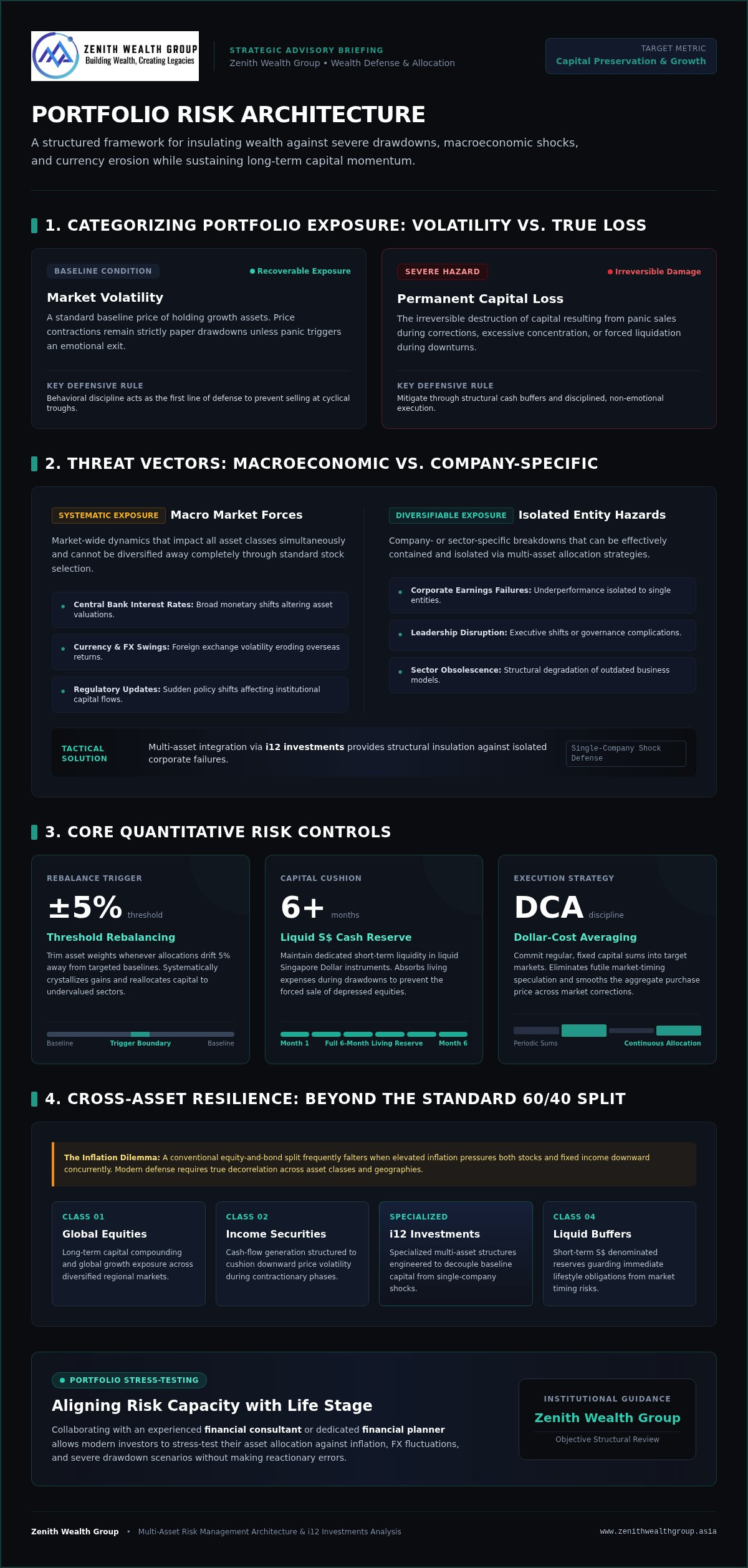
Market swings feel uncomfortable, but volatility is simply the baseline price of holding growth assets. A paper drawdown only turns into a permanent loss when you lock it in. Emotional panic during sharp market drops often pushes investors to sell at the bottom, turning temporary declines into permanent damage. Behavioral discipline is your first line of defense. Staying anchored to an objective plan prevents emotional trade decisions that derail your compounding over time.
Systematic Macro Risks Versus Diversifiable Hazards
Every investment portfolio contends with two distinct categories of exposure:
- Systematic macro risks: Broad factors such as shifting central bank interest rates, currency swings, and sudden regulatory updates impact entire markets at once. You cannot diversify away systematic risk entirely.
- Diversifiable hazards: Isolated events like poor corporate earnings, leadership changes, or sector-specific obsolescence affect individual companies.
You don't need to expose your wealth to concentrated corporate failures. Implementing robust risk management strategies for investors through multi-asset structures, including specialized options like i12 investments, insulates your baseline capital from single-company shocks. Collaborating with an experienced financial planner ensures your asset positioning reflects both your need for growth and your capacity to weather broad macroeconomic surprises.
Core Risk Management Strategies for Building Resilient Portfolios
Predicting market directions with exact timing is impossible. Building a resilient structure that weathers shifting economic tides, however, is entirely within your control. Practical risk management strategies for investors focus on disciplined asset architecture rather than guesswork, turning volatile market cycles into orderly opportunities for capital protection.
Strategic Asset Allocation Across Uncorrelated Assets
A simple equity-and-bond split often falters when high inflation drives both stocks and fixed income downward together. Modern portfolio resilience requires true decorrelation across equities, income-generating securities, and specialized multi-asset structures like i12 investments. Spreading exposure across global regions, currencies, and alternative asset classes reduces overall portfolio variance, ensuring that a single macroeconomic headwind doesn't pull down your entire balance sheet.
Systematic Rebalancing and Dollar-Cost Discipline
Portfolios naturally drift over time as winning holdings outgrow their initial parameters. Without regular adjustments, your portfolio quietly takes on higher risk levels than you intended. You can maintain control with two proven techniques:
- Threshold rebalancing: Trim asset weights whenever they shift 5% away from your baseline target. This systematically locks in gains and reallocates capital into undervalued sectors.
- Dollar-cost averaging: Commit fixed periodic sums into the market. This smooths your average entry price across market dips and removes counterproductive attempts to time market bottoms.
Applying these disciplined risk management strategies for investors ensures that unexpected corrections won't force you out of your core positions prematurely.
Liquidity Buffers and Capital Preservation Reserves
No portfolio survives without dedicated short-term liquidity. When life expenses strike during a market downturn, selling depressed equities locks in painful capital losses. Maintain a multi-tiered cash reserve in liquid S$ instruments to cover at least six months of living costs. This capital cushion absorbs immediate shocks, giving your long-term assets the necessary time to rebound. If you are ready to evaluate your allocation mix, connect with a dedicated financial consultant to review your current portfolio structure.
Tactical Risk Mitigation: Hedging, Stop-Losses, and Downside Controls
Tactical downside protection is about precision engineering. Passive buy-and-hold approaches work well during prolonged bull markets, but steep corrections demand active safeguards. Integrating tactical controls into broader risk management strategies for investors ensures that unexpected drawdowns don't derail your long-term progress.
Stop-Loss Controls and Risk-Reward Position Sizing
Stop-loss and trailing-stop orders seem like straightforward safety nets, yet they carry real execution risks. Markets rarely drop in smooth, predictable increments. During sudden geopolitical shocks or earnings surprises, asset prices often gap down sharply below your specified trigger price. A stop order set at an 8% drop might execute at a 15% discount if liquidity dries up at the open.
Strict position sizing provides far better protection than conditional market orders alone:
- Cap single exposures: Limit individual company positions so no single holding represents more than 3% to 5% of your total investable net worth.
- Protect your baseline: If an unforeseen event hits an individual company, the mathematical impact on your overarching balance sheet remains minimal.
Evaluating Hedging Instruments and Defensive Alternatives
Protective put options and derivative overlays offer safety, but they come with a catch: continuous cash-flow drag. Paying recurring premiums for tail-risk options behaves like an expensive insurance policy that frequently expires worthless. Over time, that cost erodes portfolio compounding.
A more cost-effective hedge combines defensive dividend-generating equities, resilient global fixed income, and specialized multi-asset solutions like i12 investments. Dependable cash dividends and coupon payments provide consistent baseline cash flow regardless of market sentiment. This recurring income cushions capital drawdowns and supplies ready dry powder to redeploy at market bottoms. Discussing these defensive overlays with a dedicated financial consultant helps ensure your tactical hedges protect your wealth without draining long-term returns.
Tailoring Risk Management Strategies to Your Life Stages
Risk capacity changes as your life evolves. A portfolio blueprint that serves an ambitious professional in their thirties could devastate someone five years from retirement. Effective risk management strategies for investors must align with your time horizon, your liquidity requirements, and your earning power over time.
Early Career Accumulators: Leveraging Time Horizons
Young wealth accumulators possess an invaluable asset: decades of future earnings. Even with modest initial capital, your high risk capacity lets you absorb equity drawdowns without jeopardizing immediate living standards. Your primary risk during this stage isn't market volatility; it's failing to outpace inflation. Channel regular cash flow into diversified growth engines and multi-asset portfolios like i12 investments. Tolerating temporary paper declines early on fuels compounding returns later.
Pre-Retirees: Managing Sequence-of-Returns Risk
The decade leading into retirement demands a structural shift. Sequence-of-returns risk becomes your greatest threat. A steep market drop right before you begin withdrawals forces you to liquidate assets at depressed valuations, permanently shortening your portfolio's lifespan.
Protect against this timing hazard by structuring a tiered withdrawal framework:
- Short-term liquidity bucket: Hold two to three years of projected living expenses in capital-guaranteed S$ instruments.
- Medium-term income bucket: Position stable dividend-paying assets and high-grade bonds to replenish cash needs.
- Long-term growth bucket: Maintain disciplined equity allocations to counter multi-decade inflation.
Retirees and Legacy Planners: Longevity and Transfer Risk
Reaching retirement doesn't mean moving entirely into cash. With longer life expectancies across Singapore, moving entirely into ultra-conservative vehicles introduces longevity risk, where inflation quietly exhausts your purchasing power over a thirty-year retirement. Modern wealth preservation bridges disciplined investment management with comprehensive estate planning. Coordinating your portfolio with trusts and legacy structures ensures smooth, tax-efficient wealth transfer to the next generation without triggering probate delays or family disputes.
Ready to structure an age-appropriate protection plan? Schedule a consultation with our advisory team to tailor your portfolio to your exact life stage.
Building Your Personalized Risk Management Plan with Professional Guidance
A theoretical strategy is useless if it cracks under actual pressure. Constructing resilient risk management strategies for investors requires moving past generalized rules of thumb into an objective, customized roadmap. It starts by identifying hidden vulnerabilities across your entire balance sheet.
Stress-Testing and Comprehensive Balance-Sheet Audits
Many investors hold assets across multiple platforms without realizing how closely those holdings correlate during an economic downturn. A structured stress test simulates past historical market drops against your actual holdings. It answers practical questions: If global equity markets drop 20%, how does that impact your retirement timeline? Will your household cash flow hold steady?
A written Investment Policy Statement gives you the operational blueprint to answer these questions with confidence. This document sets clear boundaries:
- Target allocation bands: Define exact thresholds for each asset class before adjustments take place.
- Rebalancing schedules: Establish whether rebalancing occurs on set calendar dates or via percentage triggers.
- Drawdown response guidelines: Document pre-planned actions during market corrections to eliminate emotional panic.
Partnering with a Qualified Financial Planner
Managing volatility without emotional bias is challenging when your own life savings are on the line. Partnering with a dedicated financial consultant introduces cold, disciplined objectivity to your investment management. They help you construct a comprehensive defense, pairing broad wealth protection with consistent long-term growth.
Through institutional solutions like i12 investments, you gain access to specialized multi-asset portfolios built to manage downside risk across shifting macroeconomic environments. Because your financial circumstances continuously evolve, schedule semi-annual reviews with your financial planner to audit your risk capacity, adjust cash allocations, and keep your legacy goals on track.
Ready to strengthen your portfolio against upcoming market cycles? Reach out to Zenith Wealth to audit your current asset exposure and design a clear, stress-tested plan for the future.
Take Control of Your Portfolio's Future Today
Navigating volatile economic cycles doesn't require guessing market tops or retreating to cash. True long-term financial security comes from deliberate portfolio architecture. By implementing disciplined risk management strategies for investors, you shield your balance sheet from unrecoverable capital drawdowns while keeping your assets positioned for steady growth.
Whether you are safeguarding your upcoming retirement or structuring an enduring family legacy, collaborative guidance provides essential clarity. As authorised representatives of finexis advisory Pte Ltd, the team at Zenith Wealth delivers comprehensive planning across wealth management and retirement. We provide access to specialized global multi-asset solutions, including i12 investments, helping you build a balanced portfolio tailored to your unique risk tolerance and goals.
Take the first step toward lasting financial confidence. Connect with our advisory team to build your resilient investment plan and navigate upcoming market cycles with complete peace of mind.
Frequently Asked Questions
What is the single most effective risk management strategy for long-term investors?
Strategic asset allocation across genuinely uncorrelated asset classes is the most reliable strategy. Rather than attempting to predict market tops or bottoms, setting a target distribution between equities, fixed income, and alternatives ensures that a crash in one sector doesn't wipe out your portfolio. This deliberate structure enforces discipline, dampening volatility while allowing compounding growth over multi-year horizons.
How does strategic asset allocation differ from basic portfolio diversification?
Basic diversification simply spreads capital across different assets, while strategic asset allocation deliberately balances exposure across fundamentally non-correlated asset categories. Buying ten different technology stocks is diversified, but they will all fall together during a tech rout. Strategic asset allocation combines growth equities, defensive fixed income, and alternative structures. This intentional baseline ensures true protection across shifting macroeconomic environments.
Can young investors afford to ignore portfolio risk management strategies?
No, young investors cannot afford to overlook portfolio defense. While young accumulators have decades to recover from market drawdowns, ignoring risk management strategies for investors often results in severe emotional panic during market drops. If you lack a clear framework, an unexpected downturn can trigger an impulsive sell-off, permanently crystallizing losses. Sound risk controls preserve human capital and establish the steady habits required for compounding.
What is sequence-of-returns risk and why does it matter before retirement?
Sequence-of-returns risk is the danger that severe market declines occur just before or in the early years of withdrawing retirement income. When you liquidate depreciated assets to fund daily living expenses, you permanently reduce the capital base available to participate in future recoveries. For pre-retirees in Singapore, managing this hazard means establishing segregated cash reserves and income buckets to sustain retirement spending without panic selling.
How often should an individual investor rebalance their portfolio to manage risk?
Most private investors should review their portfolios semi-annually or adopt threshold-based rebalancing. Rather than making frequent, reactionary adjustments, a disciplined framework involves resetting allocations whenever an asset class shifts 5% beyond its target weight. This systematic approach automatically trims expensive outperforming sectors and redirects capital into undervalued holdings. It locks in gains without introducing emotional market-timing errors or excessive transaction costs.
What role do specialized solutions like i12 investments play in risk reduction?
Specialized solutions like i12 investments introduce multi-asset decorrelation that traditional retail portfolios often lack. Standard portfolios relying solely on local equities and domestic bonds struggle when inflation or rising interest rates hit both categories simultaneously. Incorporating institutional-grade structures gives investors exposure to alternative strategies and global markets. This additional layer cushions steep drawdowns and stabilizes net asset value across volatile economic cycles.
How does working with a financial consultant help manage behavioral investment risk?
A dedicated financial consultant serves as an objective sounding board, eliminating emotional decision-making during severe market volatility. Fear and greed frequently cause investors to buy at euphoric peaks and sell at terrifying bottoms. Working with a dedicated financial planner ensures that your risk management strategies for investors stay grounded in an objective Investment Policy Statement, keeping your retirement and legacy goals on track through every market cycle.


