

What if the 4.0% interest rate you've relied on for your retirement vanished the moment you handed in your passport? Renouncing your citizenship is more than just a change of address. It's a significant wealth transition event that turns your passive savings into a strategic investment challenge. It's common to feel a sense of urgency about what happens to my CPF after I renounce citizenship, especially with the 12-week processing time and the loss of those high government-guaranteed interest rates.
We understand that you want your hard-earned money to continue working for you, even after you leave Singapore's shores. This 2026 guide provides the clarity you need to navigate the automatic account closure rules with quiet confidence. You'll learn how to successfully withdraw your funds while managing tax obligations and maintaining your retirement goals through proactive planning. We'll preview how a financial consultant can help you transition your wealth into sophisticated options like i12 investments. By the end of this article, you'll have a clear roadmap for your legacy planning and a strategy to keep your global wealth secure.
Key Takeaways
- Understand the 12-week processing timeline and the mandatory documentation needed to close your accounts efficiently.
- Gain clarity on what happens to my CPF after I renounce citizenship, specifically regarding the interest rate cliff when Special and MediSave accounts lose their 4% floor.
- Protect your savings from wealth leaks by moving beyond standard bank accounts into strategic growth frameworks like i12 investments.
- Navigate the tax implications of your withdrawal in your new country while securing your family's future through robust legacy planning.
- Learn how a dedicated financial consultant can help you transition from forced government savings to a bespoke, globally mobile wealth strategy.
Understanding CPF Account Closure After Renunciation
The Central Provident Fund (CPF) is a social security system built for residents. It provides for retirement, housing, and healthcare. When you choose to renounce your citizenship, you are no longer part of this residency framework. As a result, you must close your accounts and withdraw your savings. This is a mandatory step in your relocation journey.
A significant policy shift in April 2024 ended the practice of leaving funds in CPF after renunciation. Previously, some former residents kept their accounts open to enjoy high interest rates. This is no longer an option. If you are asking what happens to my CPF after I renounce citizenship today, you need to prepare for total liquidation. The Board is now proactively identifying and closing accounts belonging to non-citizens.
The 2026 Reality: Automatic vs. Manual Closure
For individuals who renounced citizenship before April 2024, the deadline is approaching. You have until March 2027 to manually withdraw your funds. After this date, the Board will automatically close any remaining accounts. If you're renouncing in 2026, don't wait for the system to find you. Take immediate action to manage the release of your capital.
Manual closure allows you to control the timing of your funds' release. This is crucial for coordinating your move. If you let the process happen automatically, you might face administrative bottlenecks. Taking the initiative ensures you can plan your next financial move without waiting on bureaucracy. It's about maintaining authority over your wealth transition.
Impact on Ordinary, Special, and MediSave Accounts
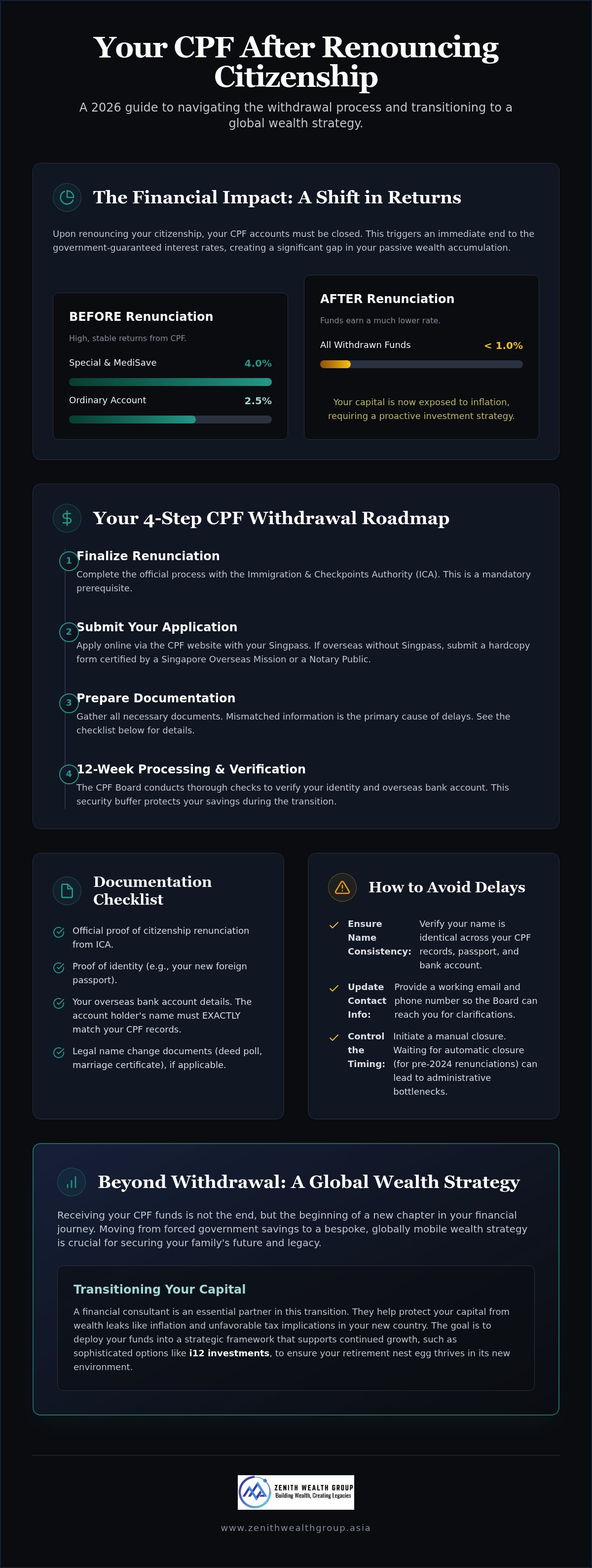
The most immediate impact is the cessation of guaranteed interest. Currently, the Special and MediSave accounts earn 4.0% per annum. The Ordinary Account earns 2.5%. These are some of the most stable returns available in Singapore. Once your accounts close, these rates stop immediately. This change creates a significant gap in your wealth accumulation strategy.
Your funds will then earn a commercial bank interest rate as a temporary concession. This is usually much lower than the rates you've enjoyed for years. Working with a financial consultant at Zenith Wealth is the best way to bridge this gap. They can help you transition these funds into a bespoke strategy, potentially involving i12 investments. This proactive approach protects your capital from inflation. It ensures your retirement nest egg continues to grow in your new home country. Contact our team to start your relocation strategy today.
The Step-by-Step Process to Withdraw Your CPF Savings
Withdrawing your savings is a formal procedure that begins only after you've finalized your status with the Immigration & Checkpoints Authority (ICA). You must officially renounce your citizenship or permanent residency before the CPF Board can act. When considering what happens to my CPF after I renounce citizenship, it's important to view this as a security-first process that requires your active participation and precise documentation.
You can apply online through the CPF website using your Singpass if it remains active. If you've already moved and your Singpass has lapsed, you'll need to submit a hardcopy form by mail. This requires certification by a Singapore Overseas Mission or a Notary Public. This layer of verification ensures your life savings are protected from unauthorized access during your relocation, providing peace of mind as you settle into your new home.
Documentation Checklist for a Smooth Withdrawal
Success depends on administrative precision. Any mismatch in your records can stall the disbursement of your funds. Prepare the following items before starting your application:
- Official renunciation proof from ICA or a certificate of loss of nationality.
- Proof of identity, such as your foreign passport or citizenship certificate.
- Bank account details where the account holder's name matches your CPF records exactly.
- For those in West Malaysia, specific submission routes are available through the Singapore Consulate-General in Johor Bahru.
If you've legally changed your name, you must provide the relevant deed poll or marriage certificate. Small clerical errors, such as a missing middle name or a misspelled street address, are the primary causes of administrative friction.
Common Delays and How to Avoid Them
The 12-week processing window is a necessary security buffer. During this time, the Board verifies your identity and the legitimacy of your overseas account before releasing your capital. To avoid unnecessary waits, keep your contact details updated throughout the process. If the Board needs to clarify a detail, a working email or phone number can save weeks of back-and-forth mail. A "thorough check" is conducted to ensure your funds reach you safely in your new jurisdiction.
Once your funds are released, the focus shifts to wealth preservation. Moving your capital into a standard savings account often means losing out to inflation over the long term. This is where a financial consultant from Zenith Wealth becomes an essential partner. They can help you map out a transition into i12 investments to ensure your capital continues to grow alongside your global ambitions. If you're feeling overwhelmed by the paperwork, reach out to our team for a clear path forward.
Financial Implications: Moving from CPF to Private Wealth
Renouncing your citizenship shifts your financial foundation from a government-guaranteed safety net to the open market. It's a significant change in risk management. When you consider what happens to my CPF after I renounce citizenship, the most immediate reality is the "interest rate cliff." For years, you've benefited from the 4.0% floor on your Special and MediSave accounts, which has been extended through the end of 2026. This guaranteed return vanishes the moment your account is liquidated. You're left with a lump sum that no longer compounds at those preferential rates, requiring you to find comparable growth elsewhere.
The end of CPF LIFE is another major implication. This scheme acts as longevity insurance, providing monthly payouts for as long as you live. Upon renunciation, your participation ends. You'll receive your remaining premiums as part of your final disbursement. While this provides immediate liquidity, it removes the security of a lifelong income stream. You must now take active responsibility for creating a sustainable cash flow through private wealth management and legacy planning.
Tax Clearance and Your Final Payout
Before you receive your funds, the Inland Revenue Authority of Singapore (IRAS) must verify your tax status. Tax clearance is a mandatory step for any non-citizen leaving the country permanently. Your employer usually triggers this process, but IRAS also checks your status during the CPF withdrawal. If you have outstanding income tax or property tax, these amounts are deducted directly from your balance. Consulting a financial planner at Zenith Wealth ensures you've settled these obligations correctly. This prevents administrative friction during your 12-week disbursement window.
The Shift in Retirement Strategy
A lump-sum withdrawal feels like a windfall, but it's vulnerable to inflation and market volatility. Without the disciplined structure of the CPF system, your wealth can leak away. You need a strategy that mirrors the security you're leaving behind. Many global residents transition their funds into i12 investments to maintain growth while protecting capital. You should also consider how your other assets fit into this move. For instance, Mastering the SRS Account offers insights into tax-efficient alternatives for your supplementary savings. Moving to private wealth is about building a sustainable future in your new home.
Strategic Reinvestment: Beyond the Withdrawal
Receiving your CPF payout is a major milestone in your relocation journey. However, the work doesn't stop once the funds hit your bank account. If you leave your capital in a standard savings account after the March 2027 interest rate concessions end, you are effectively choosing a "wealth leak." Inflation and low commercial interest rates will slowly erode the purchasing power of your retirement nest egg. Understanding what happens to my CPF after I renounce citizenship means recognizing that you are now the primary manager of your financial future. You must transition from a passive saver to an active investor to maintain your lifestyle abroad.
This transition requires a balance between immediate liquidity for your move and long-term growth. You'll need cash for housing deposits and relocation costs in your new country. At the same time, the bulk of your withdrawal should be put to work immediately. For a deeper look at managing this transition, explore our guide on Strategic Investment Management. A financial consultant can help you build a bridge between your Singapore-based past and your global future.
I12 Investments for Global Portfolios
Moving your funds into i12 investments provides a robust framework for long-term growth. This approach allows you to maintain a diversified exposure to global markets, which is essential when you no longer have the safety net of the Singapore government. Professional management becomes even more vital when you are residing in a different time zone. By aligning your new lump sum with a wealth protection strategy, you ensure that your capital stays resilient against market volatility. It's about creating a bespoke "private CPF" that follows you wherever you go.
Legacy and Estate Planning for Non-Residents
One often overlooked detail is the cessation of your CPF nominations. Once your account is closed, any previous nominations you made through the CPF Board become void. You must take immediate steps to update your will and estate plan. Ensuring your global assets are protected across multiple jurisdictions is a complex task. Our 2026 guide to Legacy Planning in Singapore provides a roadmap for non-residents. You don't want your hard-earned wealth caught in legal limbo because of an outdated nomination. Take control of your family's future by speaking with a financial planner who specializes in cross-border wealth. Contact us today to ensure your legacy remains secure after you leave Singapore.
How a Financial Consultant Helps Navigate Your Renunciation
Transitioning out of Singapore is a complex life event that requires more than just administrative box-ticking. It's a significant shift in how you manage your long-term wealth security. A financial planner serves as your strategic coordinator, ensuring your exit strategy is seamless and your capital is protected. At Zenith Wealth, we don't just see numbers on a screen. We see a person navigating a major life change. We help you move from the "forced savings" environment of the CPF system to a bespoke financial roadmap that matches your global ambitions.
Many people only focus on the immediate question of what happens to my CPF after I renounce citizenship when they should be looking at the next thirty years. We help you start this conversation well before you submit your renunciation papers to the ICA. This proactive approach allows us to align your withdrawal with your broader investment management goals, ensuring no capital sits idle during your move. We're here to turn a bureaucratic requirement into a strategic wealth-building opportunity.
Personalized Retirement Roadmaps
Without the safety net of CPF LIFE, your retirement math changes overnight. We help you recalculate your retirement age and income goals based on private market realities rather than government-guaranteed schemes. By integrating your lump-sum withdrawal into a diversified plan featuring i12 investments, we replace the lost CPF interest rates with strategic global growth. A financial consultant provides the critical bridge between Singapore's regulatory requirements and the complexities of managing cross-border wealth in a new jurisdiction.
This planning goes beyond just the withdrawal. We look at your entire portfolio to ensure your relocation doesn't create gaps in your wealth protection or legacy planning. It's about maintaining the same level of security you had in Singapore, but with the flexibility that a global lifestyle requires.
Next Steps: Connect with Zenith Wealth
Your portfolio needs a proactive review today, not after you've already moved. We invite you to start a conversation to discuss your specific renunciation timeline and how it impacts your future. Our team at Zenith Wealth, as authorized representatives of finexis advisory, is ready to partner with you on this journey. We'll help you navigate the 12-week processing window and ensure your funds are reinvested according to your new retirement roadmap. Let's ensure your wealth transition is as smooth as your move. Contact a financial planner at Zenith Wealth to begin your strategic review.
Securing Your Global Legacy Beyond Singapore
Your move from Singapore marks a new chapter in your global wealth story. We've explored the rules for account closure and the specific steps for a smooth withdrawal. You now have a clearer picture of what happens to my CPF after I renounce citizenship, from the 12-week processing period to the loss of those stable 4.0% interest rates. Transitioning your lump sum into sophisticated options like i12 investments ensures your retirement goals remain on track even without government-backed schemes. It's about moving from a system of forced savings to a bespoke strategy that follows you across borders.
As authorized representatives of finexis advisory, Zenith Wealth specializes in legacy planning for global residents. We provide approachable, professional guidance to help you navigate this transition with quiet confidence. Our team prioritizes human interaction alongside high-level advisory services. Don't let your hard-earned savings sit idle in a standard bank account where inflation can erode its value. Plan your wealth transition with a Zenith financial consultant today. We're ready to start the conversation and grow alongside you in your new home. Your future is waiting, and we're here to help you lead the way.
Frequently Asked Questions
Can I leave my CPF money in the account after renouncing my citizenship?
No, you cannot leave your funds in your account indefinitely. Following the April 2024 policy shift, the CPF Board has begun proactively closing accounts for non-citizens and non-PRs. If you renounce in 2026, you're required to close your account immediately. Any funds remaining after March 2027 will be automatically transferred to a bank account, losing the high government-guaranteed interest rates. It's best to consult a financial planner from Zenith Wealth to reinvest these funds into i12 investments before they sit idle.
How long does it take to receive my CPF money after I apply for withdrawal?
You should expect a processing time of approximately 12 weeks from the date of your application. This duration is necessary for the CPF Board to conduct thorough security verifications and identity checks. These steps ensure your life savings are disbursed safely to your verified overseas bank account. To avoid delays, ensure your personal particulars and contact information are updated before you submit your papers. This 12-week window is a standard part of what happens to my CPF after I renounce citizenship.
Will I lose my CPF LIFE monthly payouts if I renounce my PR or citizenship?
Yes, your participation in the CPF LIFE scheme will end upon renunciation. Because CPF LIFE is reserved for residents, you'll receive your remaining pro-rated premiums as a lump sum during your final withdrawal. While this provides immediate cash, it removes your lifelong monthly income stream. You'll need a new strategy to replace this longevity insurance. A financial consultant from Zenith Wealth can help you transition this capital into private annuities or growth-focused i12 investments to secure your retirement abroad.
What interest rate will my CPF money earn after my account is closed?
Once your account is closed, your funds immediately stop earning the prevailing CPF interest rates of 2.5% to 4.0%. As a temporary concession, your balance will earn a commercial bank interest rate. This rate is typically much lower than what you enjoyed as a resident. This "interest rate cliff" is a primary reason why you should have a reinvestment plan ready. Moving your capital into i12 investments can help you maintain a diversified global portfolio and combat inflation effectively.
Do I need to pay taxes on my CPF withdrawal when I leave Singapore?
Singapore does not tax the withdrawal of your CPF savings when you renounce your citizenship. However, you must obtain tax clearance from the Inland Revenue Authority of Singapore (IRAS) before your funds are released. Any outstanding income or property taxes will be deducted from your final balance. You should also check the tax regulations in your new home country. Some jurisdictions may view the lump-sum withdrawal as taxable income or a capital gain, so professional advice is vital.
Can I still use my CPF for my HDB mortgage after I renounce my citizenship?
No, you cannot continue using CPF for your HDB mortgage after renouncing your citizenship. Since your accounts must be closed and the funds liquidated, the monthly deduction for housing installments will cease. You'll need to settle your outstanding mortgage or switch to cash payments using a commercial bank loan. This change is a significant part of what happens to my CPF after I renounce citizenship. Discussing these housing transitions with a financial planner early can help prevent unexpected cash flow issues.
What happens to my MediShield Life coverage after I renounce?
Your MediShield Life coverage will cease the moment you are no longer a Singapore citizen or Permanent Resident. This national health insurance scheme is designed specifically for residents. Once you leave, you'll be responsible for your own healthcare costs. It's essential to secure comprehensive private health insurance or international medical coverage before you move. Integrating health protection into your broader wealth management plan ensures that medical emergencies don't derail your retirement goals in your new country.
How do I withdraw my CPF if I am already living in another country?
If you're already residing overseas, you can submit a hardcopy application for withdrawal via post. You'll need to have your application and supporting documents witnessed and certified by a Singapore Overseas Mission or a Notary Public in your current location. This process ensures the security of your funds when you're unable to visit a CPF Service Centre in person. Ensuring your bank details match your CPF records exactly is the best way to prevent administrative delays during the 12-week verification period.


