

Could the biggest financial challenge after divorce be rebuilding everyday stability, not dividing assets? The financial implications of divorce in Singapore can reach well beyond a settlement. Housing, CPF savings, debts, children’s needs and monthly cash flow may all shape what comes next. If your finances or family commitments also connect with Indonesia, Malaysia, the Philippines or Thailand, include those in your overview too. It’s understandable to feel unsure about what to organise first.
A clear picture can make the next steps easier to manage. This guide explains the main financial areas divorce may affect and how to prepare an overview of your assets, liabilities, income and expenses. It also covers housing decisions, maintenance, planning for children and longer-term goals that may need a new timeline.
Start by gathering the facts, then build a workable plan around your circumstances. A financial planner can help organise your cash flow and review future priorities, including investment plans and i12 investments. Financial planning can support practical decisions alongside legal advice, but it cannot determine legal rights or outcomes. The aim is to help you make informed financial choices and move forward with greater clarity.
Key Takeaways
- The financial implications of divorce in Singapore depend on individual circumstances. Build a complete picture of assets, liabilities, income, expenses, housing and future commitments.
- Keep identifying assets separate from deciding who owns or receives them. Seek legal advice on rights and outcomes, including matters involving CPF savings and housing.
- Compare your current shared-household budget with the costs of running separate households, including childcare, transport, insurance, debt payments and emergency savings.
- Take financial steps in sequence: organise documents, map cash flow, review commitments, then set new goals for investment, protection and retirement.
- A financial planner can help organise your finances and review future priorities, including i12 investments, but financial planning does not determine legal rights or outcomes.
What Financial Implications Can Divorce Have in Singapore?
There isn’t one financial outcome that applies to every divorce. The financial implications of divorce in Singapore depend on each couple’s circumstances, assets, obligations and decisions during the process. Start with a complete financial picture rather than assuming what might be divided or what either person will receive.
Divorce-related financial planning means organising your assets, liabilities, income, expenses, housing needs and future commitments so you can make informed financial decisions as your circumstances change. It can help you prepare and consider practical options, but it doesn’t determine a settlement or establish legal rights. Singapore’s legal and administrative rules may depend on the details of your situation. The Women's Charter is a general reference; seek qualified legal advice about how current law applies to your case.
Which parts of your finances may change after divorce?
Asset division and financial obligations need case-specific legal assessment. Don’t assume an asset will automatically be treated as separate, shared or transferred in a particular way. Housing decisions can also affect your budget, available cash and ongoing commitments, so consider them as part of the broader financial picture.
Day-to-day cash flow can change when one household becomes two. Costs that were shared may need to be managed separately, while children’s expenses and suitable housing remain important considerations. The effect on your monthly savings will depend on your income, commitments and eventual arrangements. A general rule of thumb cannot reliably predict the outcome.
Why is a complete financial picture the right starting point?
Gather information before making longer-term plans. Create a record of accounts, property interests, debts, income and regular expenses. Include commitments that may not appear in a monthly household budget, such as insurance payments and other ongoing obligations. Keep relevant statements and documents together, and note anything that needs clarification.
Consistent records help you and your advisers discuss options using the same information. A financial planner can help organise cash flow and liabilities, then review longer-term priorities such as protection, retirement and investments, including i12 investments where relevant. This preparation supports planning, but does not determine legal entitlement or replace legal advice. Start with facts you can establish, then address legal questions through the appropriate advice process.
How Singapore Divorce Can Affect Assets, CPF Savings and Housing
Divorce can bring several financial questions into focus at once, but an account or property list is only a starting point. How assets are treated depends on the facts and applicable Singapore law. Identifying what exists is different from deciding ownership, division or transfer. For an overview of the legal topic, see the Ministry of Social and Family Development’s Asset Distribution and Maintenance information, then seek legal advice about your circumstances.
That distinction matters for the financial implications of divorce in Singapore: a personal inventory can help you plan, but it cannot determine what is legally a matrimonial asset or what either party may receive. Focus your financial planning on understanding your position and preparing for future decisions.
How should you organise assets, debts and financial records?
Gather bank and investment account statements, property records, insurance details and information about loans or other liabilities. For each item, note whose name it is held in, the balance or value shown, and the statement date. Include investments such as i12 investments where applicable, without assuming that the account label or account holder settles how an asset will be treated.
Gather bank statements, investment records, property details, insurance documents and liability statements, noting the dates and balances shown on each. Keep the information factual and organised. This inventory supports discussions with your financial planner and legal adviser; it is not a legal classification of matrimonial assets.
What should you understand about CPF savings and the family home?
CPF savings, HDB flats and private housing can raise specific questions in Singapore divorce proceedings. Their treatment and available options depend on current rules and the details of the case. Don’t assume how savings or property must be divided, transferred or retained. Take questions affecting legal rights to a lawyer for advice based on current requirements.
Consider practical effects alongside legal questions. Keeping, transferring or selling a home can change available cash, ongoing housing costs and where each person can live. A decision that looks workable on paper also needs to fit daily routines and children’s needs. When legal and housing decisions become clearer, review how they affect your financial plan. If those changes prompt a review of future family arrangements, explore legacy planning in Singapore. A financial planner can help organise the wider picture as you consider your next steps through a financial planning discussion.
How Divorce Changes Cash Flow, Maintenance and Financial Choices
A shared household budget can hide the cost of running two homes. After separation, housing and utilities may no longer be shared in the same way, while childcare, transport, insurance and debt payments still need to fit within available income. The financial implications of divorce in Singapore are not only about assets. They can also affect monthly cash flow and how much you can set aside for unexpected expenses.
A post-separation budget is useful when it reflects realistic take-home income, likely expenses and commitments you can reasonably expect to continue. Use current statements and bills where possible. Mark estimates clearly, then update them as arrangements become clearer.
How can you build a realistic post-divorce budget?
Start with reliable take-home income, then group expenses into essential, flexible and irregular categories. Identify shared commitments and debts that may need review as circumstances change. Compare your shared household budget with two potential separate budgets, without assuming every cost will simply be split in half.
Use this blank worksheet to organise your figures. Add monthly amounts in S$ where relevant, and note whether each figure is confirmed or estimated:
- Housing and utilities: Shared household [ ]; Household A [ ]; Household B [ ]
- Childcare and children’s expenses: Shared household [ ]; Household A [ ]; Household B [ ]
- Transport and insurance: Shared household [ ]; Household A [ ]; Household B [ ]
- Debt payments and emergency savings: Shared household [ ]; Household A [ ]; Household B [ ]
- Irregular expenses: Shared household [ ]; Household A [ ]; Household B [ ]
The comparison can show where costs may rise, which commitments need attention and whether there’s room to save. It’s a planning exercise, not a prediction of either person’s final financial position.
How might children’s needs and maintenance affect planning?
Give child-related costs their own budget category. Depending on your circumstances, this might include childcare, school-related expenses, transport or healthcare. Record the assumptions behind each estimate, such as the arrangement or frequency it reflects. Review the figures as children’s needs and practical arrangements change.
Maintenance arrangements and legal outcomes are specific to each case. A budget can help you understand what different scenarios might mean for cash flow, but it cannot establish an entitlement or decide care arrangements. For procedural information, refer to Singapore Courts divorce proceedings and seek legal advice about your situation.
Once you have a clearer view of income and commitments, revisit longer-term choices such as protection, retirement saving and investment contributions, including plans involving i12 investments. A financial planner can help organise these priorities as part of a post-separation review. You can arrange a financial planning discussion when you’re ready to map out the next steps.
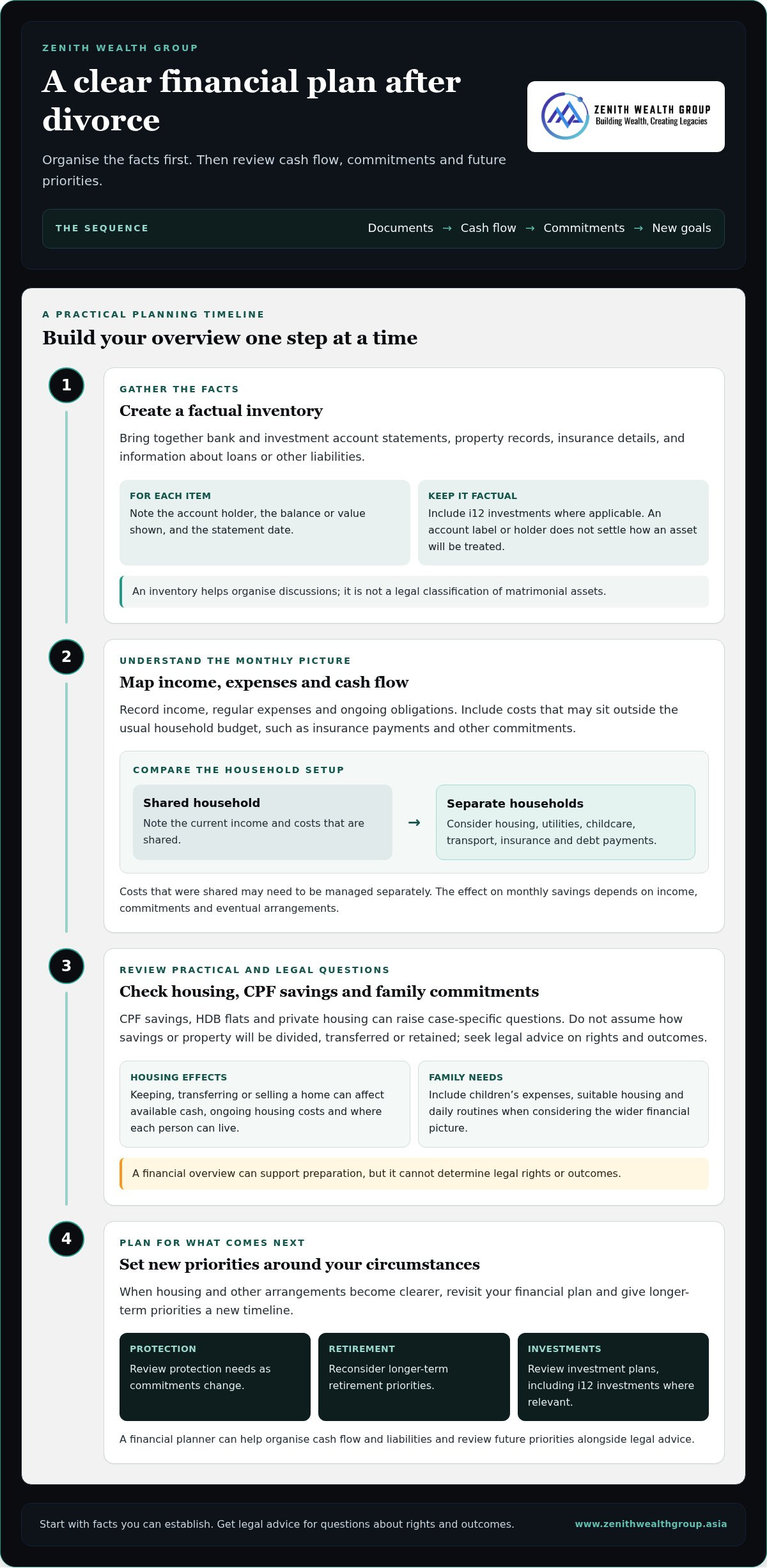
What Financial Steps Should You Take Before and After Divorce?
Take the financial reset in stages. First, organise records. Next, map cash flow and identify commitments that may change. Then review protection and set new goals once your circumstances are clearer. This sequence turns the financial implications of divorce in Singapore into practical planning steps, without rushing into major decisions before you understand your position.
Which financial records and commitments should you review first?
Gather current bank and investment statements, insurance policies, loan details, property records and income information. Keep copies in a secure, organised place. List recurring payments and note which depend on shared accounts, a shared home or existing household arrangements. This can help you identify bills that need attention as circumstances change.
Keep records accurate and transparent. Don’t move or conceal assets as part of your planning. Questions about financial rights, disclosure or appropriate steps during proceedings require legal advice.
- Organise: Bring key financial documents together and note when each record was issued.
- Map: Compare income with regular and irregular expenses, including debts and shared commitments.
- Review: Identify payments, accounts and arrangements that may need administrative attention.
- Reset: Once immediate needs are clearer, set goals for protection, investments and retirement.
How should you reset protection, investments and long-term goals?
After urgent cash-flow and administrative tasks, review whether your insurance coverage still fits your responsibilities and budget. Check beneficiary details and estate documents against your changed family circumstances. Rules and effects can vary when you change nominations or documents, so verify the relevant requirements before making updates. For broader context, explore wealth protection planning and retirement planning in Singapore.
Review investments with care. Consider your need for accessible funds, comfort with risk and time horizon before making major portfolio changes. Include existing holdings or plans involving i12 investments in that review, without assuming one approach suits everyone. A financial planner can help organise your assets, liabilities and goals, while legal questions remain separate.
Build your plan around what’s known now, then revisit it as decisions and responsibilities change. For support organising your next financial steps, discuss your financial planning needs.
How a Financial Planner Can Help You Rebuild Financial Security
Once the immediate changes are clearer, a financial planner can help turn your updated financial information into a practical plan. This may include mapping income and expenses, organising assets and liabilities, reviewing protection needs and setting priorities for future goals. The aim is to help you understand your financial choices, not promise a particular outcome.
Financial planning has a clear boundary. It can support decisions about cash flow, investments and longer-term priorities, but it doesn’t determine legal rights, asset division or maintenance outcomes. Keep legal questions with your lawyer, and use financial planning to understand how decisions and changed circumstances may affect your broader plan.
What can a financial consultant or financial planner help you assess?
A financial planner can bring your financial details together into a clear overview, then help you decide what needs attention first. That may mean reviewing regular spending and debt payments before considering investment management, wealth protection, retirement or legacy goals. Recommendations can be tailored to your circumstances and priorities, without assuming the same approach suits everyone.
Include existing holdings and plans involving i12 investments in an investment review where relevant. Consider your liquidity needs, time horizon and comfort with risk before making changes. A review can help clarify trade-offs, but it cannot guarantee investment returns or a particular level of financial security.
How can you prepare for a first financial planning conversation?
Bring a current financial inventory and budget, along with the questions you want to address. Include income, regular expenses, assets, debts, insurance and ongoing commitments. You don’t need to have every answer. Note what’s confirmed, what’s estimated and what still depends on legal or practical decisions.
Separate urgent matters from those that can wait. For example, you may need to understand immediate household affordability before revisiting long-term investment or retirement contributions. A short list of priorities can keep the discussion focused and help identify a practical next step.
Zenith Wealth provides tailored financial planning for people at different life stages, helping them organise their financial picture and consider longer-term plans. If you’re ready to review your priorities after separation, start a financial planning conversation.
Build Your Next Financial Plan with Clarity
The financial implications of divorce in Singapore can affect far more than how assets are considered. Housing, CPF savings, monthly cash flow, children’s needs and longer-term goals all deserve a careful review. Start with an organised picture of your income, assets, liabilities and expenses, then update your budget and priorities as circumstances become clearer.
Keep financial planning distinct from legal decisions. A financial planner can help you assess cash flow, protection, investments and future goals, including how i12 investments fit into your broader review. Legal advice is needed for questions about rights, asset division and maintenance.
Zenith Wealth is a Singapore-based financial advisory firm offering tailored financial planning across different life stages. Its representatives are authorised representatives of finexis advisory Pte Ltd. Take the next step at a pace that feels manageable. Start a financial planning conversation to organise your priorities and shape a practical plan for what comes next. You can move forward one informed decision at a time.
Frequently Asked Questions
Is divorce likely to affect how assets are treated in Singapore?
Yes, divorce can affect how spouses’ assets are considered, but the outcome depends on the circumstances and applicable Singapore law. An asset’s name alone may not settle how it is treated. Create an accurate inventory of accounts, property interests, investments and debts, then discuss legal questions with your lawyer. A financial planner can organise this information and help you consider how different possible outcomes may affect your wider financial plan.
Can CPF savings be affected by divorce in Singapore?
CPF savings may be relevant to divorce-related financial discussions, but their treatment depends on the situation and current Singapore law. Don’t assume balances will automatically be split or remain unaffected. Review current CPF and legal guidance for your circumstances. For planning, record relevant balances and consider how different possible outcomes could affect housing, access to funds and longer-term goals. A financial planner can help assess these planning implications.
How does divorce affect the family home in Singapore?
The family home can shape both financial decisions and practical living arrangements after divorce. Consider ownership details, outstanding housing commitments, affordability and where each person may live. Legal treatment depends on individual circumstances, so avoid relying on general assumptions. Build a budget for plausible housing scenarios, including ongoing costs, and seek legal guidance on rights or property decisions before acting. This keeps practical planning distinct from legal determinations.
What happens to joint debts when a couple divorces?
Don’t assume a joint debt disappears or is automatically reassigned after divorce. List each debt, the account holders, repayment terms and regular payments, then get advice on the legal and contractual position. Include ongoing repayments in each possible household budget while responsibilities are being clarified. Track due dates and continue managing payments as agreed or required, rather than changing arrangements based on assumptions about how the debt will eventually be handled.
Do I need to update my financial plan after divorce?
A financial review can help if your income, expenses, housing, dependants or priorities have changed. Revisit your budget, emergency savings, insurance, investments and longer-term goals as your circumstances become clearer. Review beneficiary details and estate arrangements where relevant, and verify applicable requirements before making changes. A financial planner can help organise your financial picture and future priorities, while legal questions about rights and obligations should be handled separately.
How should I plan for children’s expenses after divorce?
Start by listing recurring and occasional costs based on your actual circumstances. These could include education, care, healthcare and transport. Keep budget estimates separate from legal decisions about maintenance or care arrangements. Record the assumptions behind your estimates and use confirmed arrangements where possible. Review the plan as children’s needs or household circumstances change, so expected costs reflect your current situation rather than generic figures.
Should I change my investments during divorce?
Avoid major investment decisions based only on stress or incomplete information. First review your holdings, need for accessible funds, liabilities, time horizon and any legal questions affecting the assets. Then assess whether your investment approach still fits your circumstances and priorities. A financial planner can help with that review, including consideration of i12 investments where relevant, but cannot determine legal ownership or entitlement. Seek legal advice about rights to specific assets.


